Ketuvot 11a ~ Conversion

תלמוד בבלי כתובות דף יא עמוד א

אמר רב הונא גר קטן מטבילין אותו על דעת בית דין. מאי קמ"ל? דזכות הוא לו

Rav Huna said: "A young child [whose father had died and] who is converting may be immersed in the mikveh by order of the Bet Din." Why did he teach this? Because [becoming Jewish] is a benefit...

Joining...and Leaving

How many Jews-by-choice do you know? (Perhaps you are one, or you are dating or married to one.) How many converts to Judaism do you know socially? How many do you pray with during the week and on Shabbat? I’ll bet the number is somewhere in the region of “quite a few, actually.” I know that’s the number I came up with - and that’s not counting all those Jews who I may know but of whose origins I am simply unaware. We are fortunate to live in an era when nearly all of us are blessed to have converts as part of our communities.

It wasn’t always like this. In fact a hundred years ago or so, the question would be different: How many Jewish converts to Christianity do you know? If you lived in Europe in the nineteenth century, or in America in the early twentieth, chances are you’d know – or be related – to several Jews who converted out. 

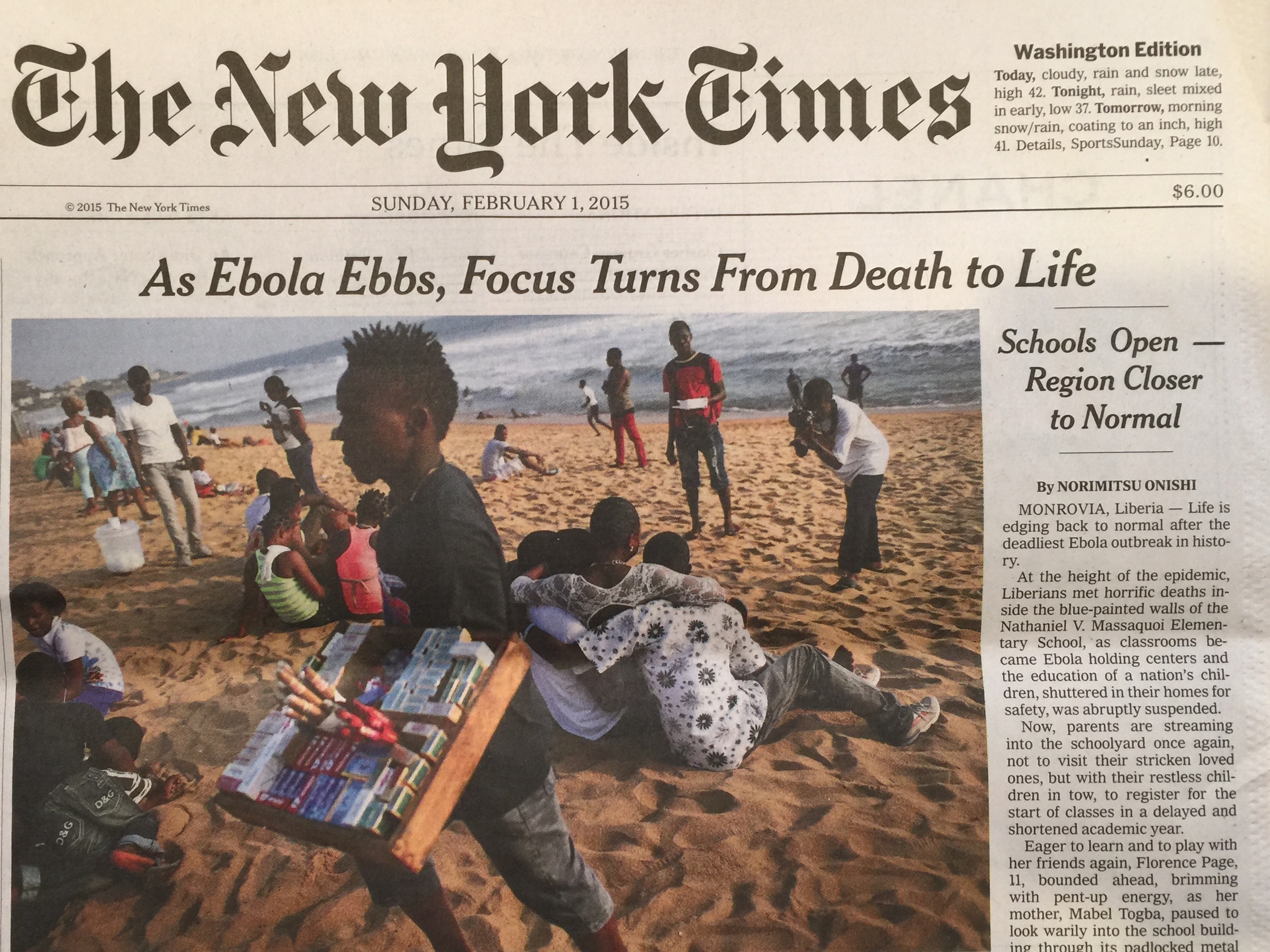
According to data compiled by Christian missionaries, about 200,000 Jews converted to Christianity during the nineteenth century (but beware, they probably had reason to inflate these numbers). Some 15,000 Polish Jews converted, the majority to Catholicism (here, p 245). Hayyim Zelig Slonimski (d.1904) is a personal hero of mine. He founded the Hebrew-language journal of science, Hazefirah (The Herald), in Warsaw in 1862. His life exemplified how a traditionally observant Jew could combine his interest in scientific matters with his faith. But his son Leonid wasn’t convinced, and converted. Slonimski was by no means the only prominent educator or rabbinic leader whose children left Judaism for Christianity.

“Especially well known in Jewish circles in the modern era are the tragedies that affected such prominent figures as Mendele Mokher Sforim (Yaakov Shalom Abramowitz) whose beloved son converted to Christianity; Shimon Dubnow, Ahad ha-Am and Mordeckai Ben-Hillel HaKohen, whose daughters married into Russian Orthodox families; and Rabbi Eliyahu Klatskin of Lublin, whose son Yaakov, a renowned philosopher and ardent Zionist, abandoned Judaism and married the daughter of a Protestant minister,” (ibid., 31–32.)

Oh, and don’t forget Moshe, son of the founder of the Lubavitch Hasidic dynasty, Rabbi Shneyur Zalman of Lyady. He converted to Christianity in 1820.

The Pew Study

In 2013 the Pew Research Center delivered its Portrait of Jewish Americans. It found that 2% of its 3,475 respondents had undergone some "formal conversion", (though be careful of drawing any big conclusions from this – the margin of error is +/- 3%). We are proud of that. But it also reported that 22% were Jews of no religion.  That’s a sizeable net loss. 

In today’s daf, we are reminded how to view our heritage – a heritage we may carry either by a deliberate choice or by an accident of birth. Rav Huna tells us that being Jewish is a זכות– a benefit, a privilege, and an honor. If only more of us felt that way.

Print Friendly and PDF

Ketuvot 10a ~ Virginity

תלמוד בבלי כתובות דף י עמוד א

ההוא דאתא לקמיה דרבן גמליאל אמר ליה פתח פתוח מצאתי אמר ליה שמא הטיתה אמשול לך משל למה הדבר דומה לאדם שהיה מהלך באישון לילה ואפילה היטה מצאו פתוח לא היטה מצאו נעול

A man came before Rabban Gamaliel and said to him, I have found an ‘open opening’ [i.e. he claimed his wife was not a virgin]. He [Rabban Gamaliel] answered him: Perhaps you moved aside. I will give you an illustration: To what may this be compared? To a man who was walking in the deep darkness of the night [and came to his house and found the door locked]; if he moves the bolt aside he finds the door open, if he does  not move the bolt aside, he finds it locked. 

Many, many years ago I celebrated by Bar Mitzvah by laying my parsha, (כי תצא). My instruction focussed on getting the trop right; understanding the content - not so much.  Which perhaps was just as well, because here's part of what I read:

דברים פרק כב, יג-כא 

כי יקח איש אשה ובא אליה ושנאה: ושם לה עלילת דברים והוצא עליה שם רע ואמר את האשה הזאת לקחתי ואקרב אליה ולא מצאתי לה בתולים: ולקח אבי הנער ואמה והוציאו את בתולי הנער אל זקני העיר השערה:  ואמר אבי הנער אל הזקנים את בתי נתתי לאיש הזה לאשה וישנאה:  והנה הוא שם עלילת דברים לאמר לא מצאתי לבתך בתולים ואלה בתולי בתי ופרשו השמלה לפני זקני העיר:  ולקחו זקני העיר ההוא את האיש ויסרו אתו: וענשו אתו מאה כסף ונתנו לאבי הנערה כי הוציא שם רע על בתולת ישראל ולו תהיה לאשה לא יוכל לשלחה כל ימיו: ואם אמת היה הדבר הזה לא נמצאו בתולים לנער:  והוציאו את הנער אל פתח בית אביה וסקלוה .נשי עירה באבנים ומתה כי עשתה נבלה בישראל לזנות בית אביה ובערת הרע מקרבך

If any man takes a wife and goes in to her and then hates her, and charges her with shameful deeds and publicly defames her, and says, "I took this woman, but when I came to her, I did not find her a virgin."  Then the girl’s father and her mother shall take and bring out the evidence of the girl’s virginity to the elders of the city at the gate. And the girl’s father shall say to the elders, "I gave my daughter to this man for a wife, but he hated her. And look, he has accused her saying, I did not find your daughter a virgin.' But this is the evidence of my daughter’s virginity." And they shall spread the cloth before the elders of the city. And the elders of that city shall take that man and chastise him. And they shall fine him a hundred shekels of silver and give them to the girl’s father, because he publicly defamed a virgin of Israel. And she shall remain his wife; he cannot ever divorce her.

But if this charge is true, that the girl was not found a virgin, then they shall bring out the girl to the doorway of her father’s house, and the men of her city shall stone her to death because she has perpetrated wantonness in Israel by playing the harlot in her father’s house. And you will purge the evil from among you. (Deut 22: 13-21.)

The first several pages of Ketuvot discuss issues around this passage from the Torah; they are  difficult reading for anyone with modern sensitivities. The Talmud takes most seriously the requirement that a woman be a virgin when she marries for the first time. (There is no similar Torah requirement for a man- though sex before marriage was generally frowned upon). In this page of Daf Yomi a man claimed his new wife was not a virgin, because he found "an open entrance". In reply, Rabban Gamliel suggested that perhaps she was indeed a virgin, but that he had "angled the entry" and in so doing had not felt the expected resistance.  Elsewhere (6b) we have read of the claim that some men (Abaye referred to them as בבליים) were knowledgeable about intercourse with a virgin "at an angle" - and that these men are certainly allowed to consummate their marriage on a Friday night, since they will not cause the bride to bleed. So far, in the first ten pages of Ketuvot, we've read a lot about virginity and about bleeding on a bride's wedding night. So let's talk about that. (If this makes you uncomfortable, I suggest you stop reading this and return to Daf Yomi at Bava Kama.)  

The Hymen

Hymen was the Roman-Greek god of marriage.  Anatomically, the hymen is a fleshy membrane that is part of the female external genitalia. The evolutionary explanation for the hymen is not certain, and several theories have been proposed - none of them very satisfying.  In the Talmud the assumption is that this membrane is intact until torn during a woman's first intercourse.  This causes bleeding, and hence the reference in the Torah of a father "spreading the bedsheets" to show proof that his daughter had been a virgin when she wed.


איבעיא להו: מהו לבעול בתחלה בשבת, דם מיפקד פקיד או חבורי מיחבר
— תלמוד בבלי כתובות דף ה עמוד ב

The Doctor Can't always Tell (and Neither Can the Husband)

In a 1978 paper, two gynecologists described a small study of women who were virgins, and concluded that the hymen is intact in only a proportion of cases. In a more recent study, 52% of women who had past intercourse were found on examination to have an intact hymen.  The doctor just can't tell. And neither can the husband. 

DON'T BLAME THE VICTIM

The Talmud elsewhere describes a family in Jerusalem whose women were allowed to carry chains around their legs on Shabbat. Why were they given this permission? Rabbi Yochanan picks up the story:

There was one family in Jerusalem who took large strides when they walked and consequently the hymenal membranes of the young girls in this family would fall out. (ArtScroll note: "This was unfortunate, since an intact hymenal membrane serves as proof of a bride's virginity".) The elders made garters for them and put a chain between the garters, so that their strides would not be large, and as a result their hymens did not fall out. (ArtScroll note: "According to one interpretation cited by Meiri, the chain makes a sound when the steps are too rapid and forceful; thus, the sound itself reminded the girls to take delicate steps.") 

This is, to say the least, a difficult story to understand. But modern medicine is fairly clear on the subject.  All girls born with a vagina have a hymen.  "If hymenal tissue cannot be identified" wrote three experts from the Department of Pediatrics and the Sexual Assault Center at the University of Washington, "traumatic disruption should be considered as a possible cause." And an Israeli study  from the Bellinson Medical Center in Tel Aviv of over 25,000 newborn girls came to the same conclusions.  I know other cultures have their own taboos around virginity, but their taboos are not my concern right now.  The taboos of my culture are.  And for every girl and woman who was a victim of them, I am sorry. So very sorry.

Rav MOSHE Feinstein on what's really important

In 1973 Rav Moshe Feinstein (d. 1986), was asked by a newly observant woman if she needed to reveal her sexual history to a man she was dating.  Rav Moshe's remarkable sensitivity to this question can be felt through the words of his legal response. Yes, here and there are some remarkably sexist words, but put them aside and look at the big picture. Look where Rav Moshe went with this.  


שו"ת אגרות משה אורח חיים חלק ד סימן קיח 

ובדבר אם צריכה את להגיד להבחור שירצה לישא אותך לאשה, ודאי את צריכה לגלות לו, אבל אינך צריכה להגיד לו בראיה והכרה דפעם ראשונה שעדיין לא ידוע אם ירצה בכלל השידוך וממילא אסור אז להגיד לו, ורק אחרי שתדעי שרוצה לישא אותך בברור שכבר אמר לך ודבר בדבר הנישואין, צריכה את לומר רק בזה שנזדמן איזה פעם בשעה שלא היה לך כובד ראש כל כך לעמוד נגד המפתה בדברי רצוי ופתוי הרבה ותיכף נתחרטת ומצטערת על זה שאירע דבר כזה עד שיכיר מדבריך שאין לו לחוש שיארע גם כשתהא נשואה לו, ואז מאחר שהוא רוצה בך מפני שהכיר המעלות שלך לא יחזור בו בשביל זה שאירע איזה פעם מאחר שיכיר אותך לנערה שומרת תורה ומצותיה שיש להאמין שלא חשודה את שוב בזה ותהי' אשה מסורה לבעלה כדין התורה. 

Regarding whether you must tell the man who may want to marry you [about your sexual past, and not being a virgin] you must indeed tell him, but you don't have to do so the first time that you meet- because at that  stage it is not clear that he wants you. In fact at that stage it would be forbidden to tell him. Only after you are certain that he wants to marry you - when he has already told you and spoken about the marriage arrangements - then you must tell him. [Explain it to him this way:] It once happened when you were not thinking clearly and you were not able to withstand the man seducing you, and you immediately regretted your actions and were sorry that you had done this. [When he sees your sincerity] he will understand from your words that he does not have to worry that this would happen again if you were married to him.  For he will see your qualities and and will not regret his decision [to marry] because of what happened in your past. He will recognize that you are a woman who observes the Torah and its mitzvot, and he will believe that you will not countenance repeating this behavior, and you will be a  woman who is in the service of her husband as the Torah mandates. 

But what about the Ketuvah - the marriage contract that is read aloud at (orthodox) Jewish weddings? The text is clear "that so-and-so is marrying this virgin"! How, asked this woman of Rav Moshe, how can we put this in the document when it is not true? 

בדבר כתיבת הכתובה אין צורך להגיד למסדר הקידושין, כי מאחר שהחתן יחתום על הכתובה הרי הסכים לכתובת בתולה ושוב ליכא קפידא ומחוייב בכתובת בתולה אף אם באמת אינה בתולה אם לא הטעתה אותו...והנני בברכה שהשי"ת יקבל תשובתך ולא תכשלי עוד בשום חטא ותתנהגי בדרך התורה ומנהגי ישראל קדושים ותבנה בית כשר ונכון בישראל, משה פיינשטיין

Regarding the writing of the Ketuvah, you need not tell the rabbi who is officiating.  Since the groom is signing the Ketuvah he is agreeing to the use of the term "virgin" - and there is nothing else to be worried about. He will  be bound to the legal terms as if you were a virgin, even if in truth you are not, so long as you did not mislead him....And I bless you that God will accept your repentance and that you will  not stumble again with any transgression; that you will follow the path of the Torah and build a fit and proper house in Israel. [signed] Moshe Feintsein

This letter from Rav Moshe reminds us what it is that is of real importance in a marriage: Honesty, fidelity, compassion and forgiveness.  It's a wonderful lesson to carry with us as we study the rest of Ketuvot.  

Print Friendly and PDF

Ketuvot 8b ~ When Some Plagues End, and Others Begin

 כתובות דף ח עמוד ב 

 רבון העולמים, פדה והצל, מלט, הושע עמך ישראל מן הדבר ומן החרב ומן הביזה, ומן השדפון ומן הירקון, ומכל מיני פורעניות המתרגשות ובאות לעולם, טרם נקרא ואתה תענה, ברוך אתה עוצר המגפה

Master of the worlds, redeem and save, deliver and help your nation Israel from pestilence, and from the sword, and from plundering, from the plagues of wind blast and mildew [that destroy the crops], and from all types of misfortunes that may break out and come into the world. Before we call, you answer. Blessed are You, who ends the plague.

In today's Daf Yomi, the secretary of Resh Lakish, a man by called Yehuda bar Nachmani, offers four blessings that may be said as part of the meal eaten at a house of mourning. Although the fourth blessing, "Who ends the plague" (עוצר המגפה) is not said usually today, we do have a tradition of giving thanks when a plague comes to an end.

The Prayer of Thanks After the Cholera Epidemic in London, 1850 

In the nineteenth century, London was ravaged by a series of brief but intense cholera epidemics that killed hundreds at a time in a matter of days. The infectious agent, we know today, was Vibrio Cholerae. If it finds its way into your intestine, its toxin will cause the cells of your gut to excrete water at a remarkable rate. The result is overwhelming dehydration, and death may follow in a matter of hours. (Water-borne cholera epidemics are still common. After the 2012 Haitian earthquake over 4,000 people died from it. That's 4,000 people who survived the earthquake itself, only to die from drinking water that was infected with cholera.)

Like all epidemics, cholera flares up and then disappears, even when no effective medical interventions are available.  It was when one of these devastating outbreaks of cholera had ended, that the Jews of London came together to do what Resh Lakish described. On Nov 1, 1850, they offered a prayer of thanks at the cessation of the plague of cholera.


 ידך היתה בבני ארצנו בחלי–רע לאין מרפא רבים חללים הפיל עד שאיש נבוב חת לקול אמות דפק על פתחו וחיל אחז אמין לב בגבורים. אך חנון ירחום אתה, לא לעולם תזנח ולא לנצח תטור אם הבאבת תחבוש, ואם תמחץ ידיך תרפינה. שלחת רוחך ותחלימנו צוית והמגפה נעצרה  


Your hand lay heavily on the inhabitants of this land. Cholera struck many down. The strongest heart trembled at the voice of death sounding at the threshold, and the boldest among the mighty were seized with terror and anguish. But gracious and and merciful are You; Your wrath does not last long, nor does Your anger last for ever. You strike some and heal. You wound but it is Your hand which prepares the calm. In the depths of our terror and affliction You sent Your spirit and there was a pause. You commanded, and the Plague ceased...
— Service of Thanksgiving on the Cessation of the Cholera, London, Nov 1850.

Why did the cholera epidemic end so quickly? There is, of course a scientific explanation:

[I]t's possible that the V. Cholerae's dramatic reproductive success...had been the agent of its own demise...it quickly burned through its primary fuel supply. There weren't enough small intestines to colonize....It's also possible that the Vibrio cholerae had not been able to survive more than a few days in the well water... With no sunlight penetrating the well, the water would have been free of plankton, and so the bacteria that didn't escape might have slowly starved to death in the the dark, twenty feet below street level...But the most likely scenario is that the bacterium was itself in a life-or-death struggle with another organism: a viral phage that exploits V. cholerae for its own reproductive ends the way V. cholerae exploits the human small intestine. One phage injected into a bacterial cell yields about a hundred new viral particles, and kills the bacterium in the process. After several days of that replication, the population of V. cholerae might have been replaced by phages that were harmless to humans. (Steven Johnson, The Ghost Map, 152).

But this explanation lessens not one bit the religious impulse to give thanks.  

THE END OF ONE PLAGUE, THE BEGINNING OF ANOTHER

In West Africa, the Ebola epidemic is slowly ending. Although there is neither an effective vaccine to prevent Ebola, nor an effective anti-viral to treat it, public health interventions have paid off, and life is slowly returning to normal.

Meanwhile, back in the US, another plague begins. This one, while far less lethal that Ebola, is all the more tragic; all the more tragic  because it is entirely preventable.  There have been more than 100 cases of measles in January alone (compared to about 600 for all of 2014), most of them linked to exposure in December at Disneyland in California.  I had the measles as a kid. If you were born before the 1970s, it's likely you've had it too. My aunt caught it when she was carrying my cousin, who was born deaf, the result of congenital measles infection.  Back then, there was no vaccine.  There is now.  And don't start with the autism-vaccination thing.  There is no link between autism and vaccination. None.  Yet in significant numbers, Jewish parents - and some of them educated, are refusing to vaccinate their children.  Vaccine denial is not limited to some haredi communities, (though in many cases their vaccination rates are remarkably  low).  It is seen in affluent neighborhoods with highly educated parents, where the vaccine denial movement has become a cult in which any and all scientific evidence is ignored. (And in an odd coincidence, see this op-ed in The New York Times.  Apparently, Jesus would have gotten the measles vaccine.)

In today's daf, the secretary of Resh Lakish offered a Prayer of Thanks when a plague ended. But precisely when did he say these words?  At a funeral. The funeral of a young child (ינוקא). The secretary of Resh Lakish offered these words of thanks at a child's funeral, and directed them towards "all Israel" (כנגד כל ישראל), that is, towards the survivors.  How ironic it is that it is the children who are most at risk in this measles epidemic. And how tragic that they face the complications of this illness (including pneumonia, diarrhea, encephalitis, subacute sclerosing pan-encephalitis, and death,) because of the reckless behavior of their parents.

Risk factors of underutilization of childhood immunizations in ultra-orthodox populations. From Muhsen K. el at. Risk factors of underutilization of childhood immunizations in ultraorthodox Jewish communities in Israel despite high access to health …

Risk factors of underutilization of childhood immunizations in ultra-orthodox populations. From Muhsen K. el at. Risk factors of underutilization of childhood immunizations in ultraorthodox Jewish communities in Israel despite high access to health care services. Vaccine 2012. 30; 2109–2115

Characteristics of parents who reported vaccine doubts. From Gust D. et al. Parents With Doubts About Vaccines: Which Vaccines and Reasons Why. Gust D. et al. Pediatrics 2008;122: 718–725

Characteristics of parents who reported vaccine doubts. From Gust D. et al. Parents With Doubts About Vaccines: Which Vaccines and Reasons Why. Gust D. et al. Pediatrics 2008;122: 718–725

Print Friendly and PDF

Ketuvot 5b ~ Earlobes and Spandrels

:כתובות ה

תנא דבי רבי ישמעאל מפני מה אוזן כולה קשה והאליה רכה? שאם ישמע אדם דבר שאינו הגון יכוף אליה לתוכה

A Baraisa was taught in the academy of Rabbi Yishmael: Why is the [upper part of the] ear hard, but the earlobe is soft? So that if a person overhears something inappropriate, he will be able to bend the lobe in the ear canal [and block out the sound]. 

In 1979 Stephen J. Gould (d. 2002) and Richard Lewontin published a paper that would rock the world of evolutionary biology.  They suggested that evolution by natural selection could not explain every feature of an organism. Sometimes, a feature is a non-functional byproduct of evolution, rather than a direct result of it. Gould and Lewontin give an example from the world of architecture, from the spandrels in the church of San Marco in Venice. A spandrel is a by-product, formed when a dome sits upon a rounded arch, shown in the pictures below.

"San Marco Spandrel" by Maria Schnitzmeier - Detail of Image.

"San Marco Spandrel" by Maria Schnitzmeier - Detail of Image.

These spaces - these spandrels- are accidental spaces, and yet are intricately decorated, as if they were deliberately designed to have been there in the first place.  The design of these spaces "is so elaborate, harmonious, and purposeful," wrote Gould and Lewontin, that

 we are tempted to view it as the starting point of any analysis, as the cause in some sense of the surrounding architecture. But this would invert the proper path of analysis. The system begins with an architectural constraint: the necessary four spandrels and their tapering triangular form.   

Just as spandrels are accidental, some features of an organism are not the result of natural selection, but instead are "spandrel-like"in their origin. This was not to suggest that natural selection was incorrect; only that it was not a complete explanation of an organism's form and behavior. 

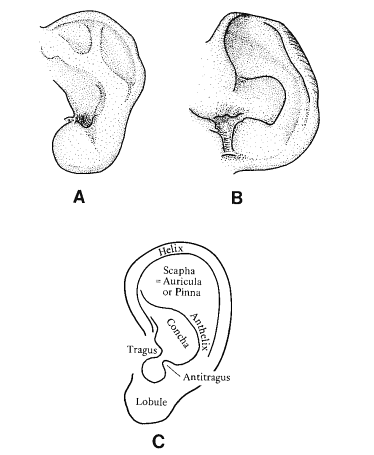
So what are earlobes for?  Indeed, are they for anything? Perhaps they are just spandrels, and can now happily be pierced and used to hold rings, studs, and other decorative ornaments. The Academy of Rabbi Yishmael disagree with this premise. Earlobes are not a spandrel-like by-product of evolution, but a designed part of our anatomy. And they are designed to act as an ear-plug when it would be best not to hear what is being said.  The Chofetz Chaim, Rabbi Yisrael Meir Kagan (d.1933) wrote a famous work on the laws of gossip, called ספר שמירת הלשון. In it, he cited today's passage, and wrote that the earlobe is better at blocking the sound than is a finger. Try it. Is he right? (I did. He isn't.) 

A: Ear of a treeshrew (TupiaB: Ear of a new world monkey (CebusC: Primate (& Human) ear and its constituent parts.  From Friderun Ankel-Simons, Primate Anatomy: An Introduction. Academic Press 2010.

We humans share much with our primate cousins.  We share an opposable thumb; we share much of our DNA, and we share our ear anatomy.  Rabbi Yishmael teaches us to put that ear anatomy to good use. 

Print Friendly and PDF