Sanhedrin 45 ~ Stoning and the Height of a Lethal Fall

In today's page of Talmud we continue with the rather gruesome details of judicial execution. Here the Mishnah details the procedure for execution by stoning:

סנהדרין מה, א

 בית הסקילה היה גובה שתי קומות אחד מן העדים דוחפו על מתניו נהפך על לבו הופכו על מתניו ואם מת בה יצא ואם לאו השני נוטל את האבן ונותנו על לבו אם מת בה יצא ואם לאו רגימתו בכל ישראל 

The elevation of the stoning grounds was twice the height of a man. One of the witnesses to the crime pushes him by his hips [so that he falls on his side]. If he falls onto his chest he is turned onto his hips. If he dies [from the fall] the court has fulfilled its obligation. If he is still alive the second witness takes a stone and places it on his chest. If the condemned man dies, the court has fulfilled its obligation.  If he is not dead, he is stoned by all of Israel...

The Talmud states that condemned is standing when he is pushed.  But why push him from twice the height of a person?  According to the Mishnah in Bava Kamma (50b), a fall into a pit that is only ten handbreadths deep is lethal. If this is case, why not push the condemned from that smaller height? Rav Nahman in the name of Rabbah bar Avuha explained that pushing from the greater height insures a quicker and less painful death, thereby fulfilling the biblical requirement of loving your neighbor by choosing a more swift execution. Still, it seems rather improbable that the condemned would be killed merely by falling from a twelve foot platform.  

ואהבת לרעך כמוך ברור לו מיתה יפה
Love your fellow as yourself, by choosing for him a better way to die
— Sanhedrin 45a

Let's take another look at what science says about the height of lethal falls, starting with that Mishnah cited from Bava Kamma:

החופר בור ברה"ר ונפל לתוכו שור או חמור חייב אחד החופר בור שיח ומערה חריצין ונעיצין חייב א"כ למה נאמר בור מה בור שיש בו כדי להמית עשרה טפחים אף כל שיש בו כדי להמית עשרה טפחים היו פחותין מעשרה טפחים ונפל לתוכו שור או חמור ומת פטור ואם הוזק בו חייב

If a man digs a pit on public ground and a bull or a donkey falls into it, he is liable for damages. Whether he dug a pit, or a ditch, or a cave, trenches, or wedge-like ditches, he is liable for damages that his digging caused. If so why is pit mentioned in the Torah? It is to teach the following: just as a standard pit can cause death because it is ten tefachim [handbreadths] deep, so too for any other excavation to have sufficient depth to cause death, it must be ten tefachim deep. Where, however, they were less than ten tefachim deep, and a bull or a donkey fell into them and died, the digger would be exempt.  But if then animal was only injured by falling into them, the digger would be liable. (Mishnah, Bava Kamma 50b.)

THE HIGHEST FALL SURVIVED (WITHOUT A PARACHUTE)

According to The Guinness Book of Records, Vesna Vulovic  holds the world record for the highest fall survived without parachute. And how high was that? Really, really high:

Vesna Vulovic (Yugoslavia) was 23 working as a Jugoslavenski Aerotransport hostess when she survived a fall from 10,160 m (33,333 ft) over Srbsk, Kamenice, Czechoslovakia (now Czech Republic), on 26 January 1972 after the DC-9 she was working aboard, blew up. She fell inside a section of tail unit. She was in hospital for 16 months after emerging from a 27 day coma and having many bones broken...She never suffered any psychological trauma as a result of the incident, and never experienced any fear of flying. She is still alive today, and flies with some regularity. However, Vulovic does not consider herself lucky. Thirty years after the crash, in an interview she said:  ''I'm not lucky. Everybody thinks I am lucky, but they are mistaken. If I were lucky I would never have had this accident and my mother and father would be alive. The accident ruined their lives too."

In my years as an emergency physician I saw countless patients with injuries from falls. Most injuries were relatively minor, but several of my patients died. Is there really a minimum height below which a fall would result in a trivial, or at least a non-fatal injury? Based on my experience, the answer is an unequivocal no.  A fall from any height, however low, can result in a serious or fatal injury, and that includes a fall from standing. But that's just my experience. What does the medical literature say? Does it agree with the assertion of the Mishnah that a fall below 10 tefachim (about 76 cm or 30 inches) cannot result in a fatal injury? Let's take a look...

“At autopsy, classic findings in falls from height include aortic lacerations and vertebral compression fractures, as well as ring fractures of the skull base...Severe head injuries most frequently occurred in falls from heights below 10m and above 25m, whereas in the group that fell from 10 to 25m, few head injuries were seen and they rarely were the cause of death.
— Turk, EM. Tsokos, M. American Journal of Forensic Medical Pathology 2004;25: 194–199

THE EPIDEMIOLOGY OF FALLS

Falls are very common. In the US they make up about a third of the injuries that lead to an ED visit in the each year - that's close to eight million visits.  In keeping with my experience, national data shows that only about 1% of all fall injuries that come to the ED are serious.  And here's another interesting finding that is in keeping with my own clinical experience: it's close to impossible to predict what kind of injury a person will have based on the height of the from which the victim falls. In a paper that examined over six-hundred fatal falls that occurred in Singapore, the authors noted that  

...there was much variability in the injury severity scores, in relation to the height of fall... Thus, a subject who had fallen through a height of 10 m, with primary feet impact, could have sustained complete traumatic transection of the thoracic aorta, with haemorrhage into the pleural cavities but little else by way of serious injury; while another, similar, subject could have fallen through 20 m and had sustained multiple head, thoracic and abdominal injuries...

In fact these authors had a very hard time coming up with a model that describes the height of fall and indicators of injury severity other than to give this rather useless nugget: "Our findings suggested that the height of the fall was significantly associated with ... the extent of injury." Well thanks. But it's one thing to fall 10m or more (that's over 30 feet for those if you not on the metric system). What about falls from less lofty heights?

FALLS DOWN THE STAIRS, AND FALLS FROM STANDING

Let's start with falls down the stairs. German forensic pathologists published a paper in Forensic Science International that addressed this aspect of falls in 116 fatal cases.  The most frequent victim was a man between 50 and 60 years old, and brain and skull injuries were the most common cause of death. About 8% broke their spines as they fell and (shocker) many were intoxicated. So stairs can kill.  

What about falls from standing? Well back to the German forensic pathologists, who this time published a retrospective analysis of 291 fatal falls. Of these, 122 -that's 42% - were falls from standing. About 80% of these ground-level falls were not immediately fatal, and the victim survived anywhere from three hours to almost a year post injury. Almost 60% of the men and 11% of the women who sustained a fatal ground-level fall were (shocker again) intoxicated.  So there we have it. The medical literature demonstrates that falls from standing can certainly be lethal.  Especially after kiddush.

From Thierauf A. et al. Retrospective analysis of fatal falls. Forensic Science International 2010. 198. 92–96. Forgive the English. It wasn't their first language

From Thierauf A. et al. Retrospective analysis of fatal falls. Forensic Science International 2010. 198. 92–96. Forgive the English. It wasn't their first language

The US federal government has also weighed in on the matter. OSHA, the Occupational, Safety and Health Administration has a ruled that a duty to erect fall barriers to protect employees only applies when the fall will be more than 6 feet (1.8m).  

Each employee who is constructing a leading edge 6 feet (1.8 m) or more above lower levels shall be protected from falling by guardrail systems, safety net systems, or personal fall arrest systems.
— 29 CFR 1926.501

Back to Stoning

How likely then, is it that executing a person by pushing him from a height of about 12 feet will result in his instant death? Not likely at all. We know (and the those German pathologists have shown) that a fall from standing can be lethal, but it doesn't happen very often, and is certainly not likely to be immediate. Remember, the pathologists found that of all lethal falls, about 42% were from a standing position. Which is not the same as saying that 42% of falls from a standing position are lethal.

There is another interesting data source that may help us, and it comes from a 1995 paper titled Fatal Work Related Falls from Roofs, published in the Journal of Safety Research.  It examined 288 falls from roofs and showed that falls from as low as 6-15 feet may be fatal. Again, this is an analysis of fatal falls, not of all falls. 

From Suruda A. Fosbroke D. Braddee R. Fatal work related falls from roofs. Journal of Safety Research 1995;26: 1-8

From Suruda A. Fosbroke D. Braddee R. Fatal work related falls from roofs. Journal of Safety Research 1995;26: 1-8

The LD50 for falls

The LD50 is used to describe toxins or medications, and is the dose which would kill 50% of those who ingested it.  The LD50 can also be used to describe falls, and is the height from which at least 50% of those who fell would die.  According to this medical text, the median lethal distance (LD50) for falls is four stories, which is about 48 feet, or 15 meters. Mortality increases to 90% when the fall is greater than seven stories.  

The Role of Alcohol

In considering the first step of the judicial process of stoning, there is one more factor to consider: the role of alcohol. The Talmud (Sanhedrin 43a) relates that when the convict was taken out to be executed, he would be given a drink of wine and frankincense, כדי שתטרף דעתו – in order to dull his senses. Perhaps this would make the twelve foot fall more likely to be lethal? It turns out not to be so.

Industrial-Construction-Signs-43876BBHPLYALU-lg.jpg

While you may be more at risk from a fall if you are drunk, drunk people who fall are not more likely to sustain a lethal injury when compared with those who are sober. Pushing a drunk person off a platform is not more likely to result in their death compared to pushing a sober person, though neither is recommended.

In conclusion, the first part of the penalty of stoning - that push of a twelve foot platform - would only very rarely result in the instant death of the criminal.  This meant that the execution would proceed to the second step - in which a heavy stone was placed on the chest to cause suffocation. The details are horrific, and thankfully have not been practiced in our legal system for nearly two thousand years.   

Print Friendly and PDF

The Great American Eclipse

It is coming. It cannot be stopped. On Monday August 21 there will be a solar eclipse visible to millions of people across north America.  It will be the first total eclipse to cross the continental United States since 1918, and the first to touch any part of the U.S. since 1979. 

I will be traveling to Charleston, South Carolina, to witness the totality.  (Charleston is also hosting the American Atheist Eclipse Convention, if you are interested.)  Brith Sholom Beth Israel will have a viewing party from the roof of their synagogue -"the last place to see the eclipse on land." It will the first total eclipse for me, and I am ready with my viewing glasses.

What does the Talmud have to say about the cause of a solar eclipse? (You would be very surprised.) You can find my essay on the topic here, which will also be published in the journal Hakirah - sometime after the event....

Happy viewing.

The Forward, Sunday Jan 25, 1929

The Forward, Sunday Jan 25, 1929


Print Friendly and PDF

Sanhedrin 11b ~ The Tekufot

The Jewish leap year

The Jewish year usually contains twelve lunar months. In today's page of Talmud we learn the reasons that the rabbis may add an extra month to the Jewish calendar, and proclaim a thirteen month leap year:

סנהדרין יא, ב

תנו רבנן על שלשה דברים מעברין את השנה על האביב ועל פירות האילן ועל התקופה על שנים מהן מעברין ועל אחד מהן אין מעברין

The rabbis taught in a Baraisa. We may intercalate a month and declare a leap year on account of three things: On account of the grain's ripening after the month of Nissan, on account of the fruit ripening after Shavuot, and on account of a season [tekufah] that is scheduled to begin in the wrong calendar month. We intercalate the year if two of these reasons are present, but for just one of these reasons we do not intercalate.

Let's look at the last reason. If the season is scheduled to being in 'the wrong month', the rabbis adjust the length of the year to bring it back into line.  Pesach must always fall in the Spring, so if the 15th of Nissan is part of the season of winter, we add another lunar month to the previous year and so push Pesach into Spring. 

The Solar Year, according to Shmuel

Here is the thinking behind this.  The rabbis of the Talmud, led by Shmuel, believed that a solar year was 365.25 days long, or 365 days and 6 hours. No more and no less. (This is also the length of the Julian calendar, adopted by Rome and all of Europe, including the Catholic Church.  It was the prevailing calendar in Europe, so Shmuel was in good company. ) Shmuel also believed that each of the four seasons was precisely one quarter the length of the solar year, or 91 days and 7.5 hours. Jewish tradition taught that the Sun was created on what would have been a Tuesday at 6pm. This time was also considered by the rabbis to have been the vernal equinox and the start of  Spring in the first year of creation.  Summer would therefore have started 91 days and 7.5 hours later, and fall another 91 days and seven hours after that.  The cycle repeats itself every 4 years, at which time the start of Spring will once again be at precisely 6pm, though not on a Tuesday. (It takes 28 years for the start of Spring to once again fall on a Tuesday at 6pm - and the next day is when we celebrate the rare event of Birkat Hachama. But I digress.)

Two Problems with Shmuel's Jewish Calendar

The first problem is that the solar year is not exactly 365 days and 6 hours in length. In fact it is 365 days, 5 hours, 48 minutes and 46 seconds - or 11 minutes and 14 seconds shorter than the Julian/Talmudic year. That's a small difference to be sure, but it adds up to three days every 400 years.  As a result of this difference, Spring, as measured by the day of the equinox, kept falling behind. In the days of Julius Caesar it had started on March 21, but by 1582 it had fallen behind and coincided with March 11. To bring the calendar back on track, Pope Gregory XIII knocked ten days out of the calendar, declaring the day after October 4, 1582 to be October 15th.  He also instituted a leap year of one extra day every four years, (except for years divisible by 100).  Shmuel's calendar had no similar fix, and the start of Spring in that calendar is about two weeks away from the actual, measurable Spring equinox.  

Path of the sun as seen over the northern hemisphere. On June 21, the start of summer the sun is at its most northern position. On Dec 21, the start of winter, it is at its most southern position.    

Path of the sun as seen over the northern hemisphere. On June 21, the start of summer the sun is at its most northern position. On Dec 21, the start of winter, it is at its most southern position.    


A second problem with Shmuel's calculation of the four seasons is that he attributed the same length to each, when in fact the seasons are not of equal length. This is because the earth does not revolve around the sun in a perfect circle, but instead has an elliptical orbit.  When the earth is closer to the sun it speeds up, and when it is further away it slows down.  In fact not one of the four seasons are 91 days and 7.5 hours in length. Here are the actual lengths:

Spring - about 92 days

Summer  - about 93 days

Fall - about 90 days

Winter - about 89 days

Shmuel's orderly system has no astronomical basis, and his seasons do not follow an orderly and predictable pattern. If you were to ask, "what happens in the sky at the beginning of Spring according to Shmuel?"the correct answer is nothing.  If you were to ask the same question of the actual day and time on which Spring begins, the answer would be "on that day and at that precise moment, the tilt of the earth's axis is exactly perpendicular to the sun."

Here are the actual start days of the seasons for this year, and their start according to the calendar of Shmuel.  

Start of the Seasons
Season Astronomical Shmuel
Times are for Jerusalem
Spring March 20
6:29 A.M. EDT
April 7
6pm
Summer June 21
12:24 A.M. EDT
July 8
10.30 AM
Fall September 22
4:02 P.M. EDT
Oct 7
3.00AM
Winter Dec 21
11:28 A.M. EST
Jan 6
10.30AM

Shmuel's calendar is pretty accurate, but over time, small discrepancies become larger.  Pope Gregory instituted a fix, but we have yet to do so. By not tweaking our Jewish calendar, the average date of the first day of Pesach is one day later every 216 years compared to the Sun, and one day every 231 years compared to the Gregorian date. This may not seem like a problem now.  But around the year 15,000 CE [sic] the first day of Pesach will occur on June 22, which is clearly not in the Spring. But I guess by then it will be somebody else's problem to fix.

Print Friendly and PDF

Bava Basra 167a ~ Torture & coerced testimony

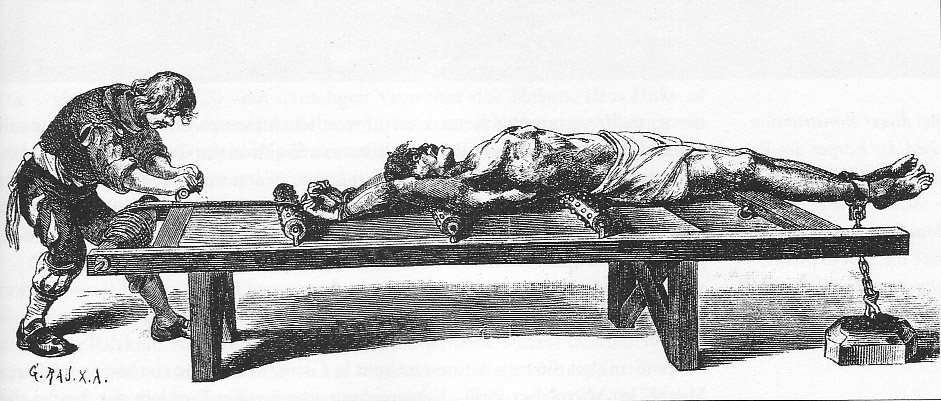
In tomorrow's page of Talmud we read of three incidents in which torture (or according to some, the threat of torture) was used to obtain a confession of a crime. In the first two, Abaye suspected that bills of sale had been forged. "כפתיה ואודי" - Abaye  bound the suspects to a post, and they confessed. In the third case it was Rava who suspected that his own signature and that of the elderly Rav Acha bar Adda had been forged. Rava too, bound the suspect to a post, after which not only did the suspect confess to forging both signatures, but he went on to explain how he had forged that of the elderly Rav Acha, whose hands had a tremor. 

 אנחי ידאי אמצרא ואמרי לה קם אזרנוקא וכתב

I placed my hands on the rope of a bridge while signing. Others say he stood on a skin bottle and signed.

Other cases of coerced Confessions

We first encountered coerced confessions when we studied Bava Metzia. There, we read that Mar Zutra The Pious had coerced a student to confess to his crime.

בבא מציא כד, א

מר זוטרא חסידא אגניב ליה כסא דכספא מאושפיזא חזיא לההוא בר בי רב דמשי ידיה ונגיב בגלימא דחבריה אמר היינו האי דלא איכפת ליה אממונא דחבריה כפתיה ואודי

Mar Zutra the Pious was involved in an incident in which a silver cup was stolen from his host. Later, Mar Zutra saw a certain student wash his hands and dry them on his friend's garment. Mar Zutra said: "this is the one who stole the cup, for he has no consideration for his friend's property. Mar Zutra bound the student to a post and coerced him, and he confessed to the crime (Bava Metzia 24a).

For completeness, we should note that there is a fourth passage in the Talmud (Niddah 25b) that also uses the language of כפתיה ואודי.  In that passage, a man was accused on having intercourse with his wife when she was ritually impure. He too was bound and confessed, though it is not clear who was ordering the binding.

He was bound and he confessed

Courtesy of Wikimedia.

Courtesy of Wikimedia.

The phrase that is used in all four cases is כפתיה ואודי "they bound him and he confessed." The root of the word to bind is כפת, which is used in rabbinic literature to mean to tie or to bind. Rabbi Asher ben Yechiel (Germany ~1250-1327), known as the Rosh, is certain that the suspect was tortured. In his commentary on the passage in Bava Metzia, he wrote וכפתיה בשוטי עד דאודי "he flogged him with rods until he confessed." (As in חושך שבטו שונא בנו ואהבו שחרו מוסר "spare the rod and spoil the child," from Proverbs 13:24.) Rabbi Betzalel ben Avraham Ashkenazi (Israel ~1520-1594) in his commentary to Bava Metzia called Shitah Mekubetzet agrees that coercion was used, although he is unsure if it was physical or psychological:

כפתוהו ואודי. יש מפרשים כפתוהו על העמוד והלקוהו בשוטים. ויש מפרשים כפתיה בדברים שנדוהו אם לא יודה האמת

Some explain that he was tied to post and flogged. Others explain that he was verbally coerced (and threatened with excommunication) until he confessed.

False Confessions

In a 2010 paper published in the Stanford Law Review, Brandon Garett notes that DNA testing has now exonerated over forty people who falsely confessed to rapes and murders. He wonders how an innocent person could convincingly confess to a crime he never committed. For example, in 1990  Jeffrey Deskovic a seventeen-year-old, was convicted of rape and murder. Deskovic was a classmate of the fifteen-year-old victim, had attended her wake, and was eager to help solve the crime. During one of several police interrogations he “supposedly drew an accurate diagram,” which depicted details concerning “three discrete crime scenes” which were not ever made public. "In his last statement, which ended with him in a fetal position and crying uncontrollably," wrote Garrett, "he reportedly told police that he had “hit her in the back of the head with a Gatoraid [sic] bottle that was lying on the path.” Police testified that, after hearing this, the next day they conducted a careful search and found a Gatorade bottle cap at the crime scene."

Scholars increasingly study the psychological techniques that can cause people to falsely confess and have documented how such techniques were used in instances of known false confessions.
— Garrett, B.L. The Substance of False Confessions. Stanford Law Review 2010. 62 (4): 1051-1119.

Deskovic was convicted of rape and murder and served more than fifteen years of a sentence of fifteen years to life. Then in 2006, new DNA testing not only excluded him, but also matched the profile of a murder convict who subsequently confessed and pleaded guilty. So how did Deskovic know all the details of the crime to which he confessed? Here is what the District Attorney noted in the post-exoneration inquiry:

...Given Deskovic’s innocence, two scenarios are possible: either the police (deliberately or inadvertently) communicated this information directly to Deskovic or their questioning at the high school and elsewhere caused this supposedly secret information to be widely known throughout the community.

Another paper, this time in the North Carolina Law Review, analyzed 125 cases of "proved interrogation-induced false confessions, which, the authors note with some pride, is "the largest cohort of interrogation-induces false confession cases ever identified and studied in the literature." It makes terrifying reading.  

It is of course really hard to study in the laboratory the psychological effects of torture and coercion and how they produce false confessions.  But scientists try anyway. For example, a very recent paper from a team from the New School for Sociological Research in New York and the University of California studied the effect of sleep deprivation on false confessions.  When compared to those who had rested, participants were over four times more likely to sign a false statement if they were deprived of one night's sleep.  In another recent peer-reviewed paper, (Constructing Rich False Memories of Committing Crime) psychologists used suggestive retrieval techniques on some rather nice Canadian undergraduates. They found that up to 70% of those interviewed 

were classified as having false memories of committing a crime (theft, assault, or assault with a weapon) that led to police contact in early adolescence and volunteered a detailed false account. These reported false memories of crime were similar to false memories of noncriminal events and to true memory accounts, having the same kinds of complex descriptive and multisensory components.

They continue: 

Our finding that young adults generated rich false memories of committing criminal acts during adolescence supports the notion that false confessions and gross confabulations can take place within interview settings. The Innocence Project has shown that about 25% of false convictions are attributable to faulty confession evidence...The kind of research presented here is essential in the quest to help prevent memory-related miscarriages of justice.

False Memories Become Real

In a recent article in The New Yorker, Rachel Aviv reported on the remarkable story of how DNA evidence exonerated six convicted killers. Despite this, two of them had detailed memories of the killing that they didn't commit. One was a woman named Ada Taylor who confessed to a woman’s murder in 1989 and for two decades believed that she was guilty.

She served more than nineteen years for the crime before she was pardoned. She was one of six people accused of the murder, five of whom took pleas; two had internalized their guilt so deeply that, even after being freed, they still had vivid memories of committing the crime. In no other case in the United States have false memories of guilt endured so long. The situation is a study in the malleability of memory: an implausible notion, doubted at first, grows into a firmly held belief that reshapes one’s autobiography and sense of identity.

Of course murder is not the same as forging a document, but the lesson for those in criminal justice is the same. People confess to all sorts of things - especially when they are coerced or tortured- and can even forge false memories of the crimes of which they were accused.  

Permitted Coercion in Jewish Law

In the Code of Jewish Law, the שולחן ערוך, the passage in Bava Basra is the basis for the legal right to extract a confession from a person suspected of forging business documents.

שולחן ערוך חושן משפט מב, ג

ואם צריך לכוף בעל השטר ולהכותו כדי שיודה יעשה כדי שיוציא הדין לאמיתו

If it is necessary, the owner of the document (who is suspected of forgery) may be beaten in order for him to confess and the truth to come out...

This certainly made me feel uncomfortable, but let's put this into some context. Torture has been a part of many judicial systems, and was a feature of  Roman law.  Perhaps most notoriously it was used by the Inquisition, after Pope Innocent IV issued a papal bill Ad extirpanda in 1252 which authorized its use by the Church.  Closer to home, the US has recently grappled with, and condemned cases in which the Central Intelligence Agency tortured prisoners, as the Senate Select Committee on Intelligence (partially) revealed in 2014. But among the thousands of legal decisions in the Babylonian Talmud, there are only four rabbis who are named as having tortured or coerced a suspect to confess. And that low number, though it is not zero, should provide us with some solace.  

Print Friendly and PDF