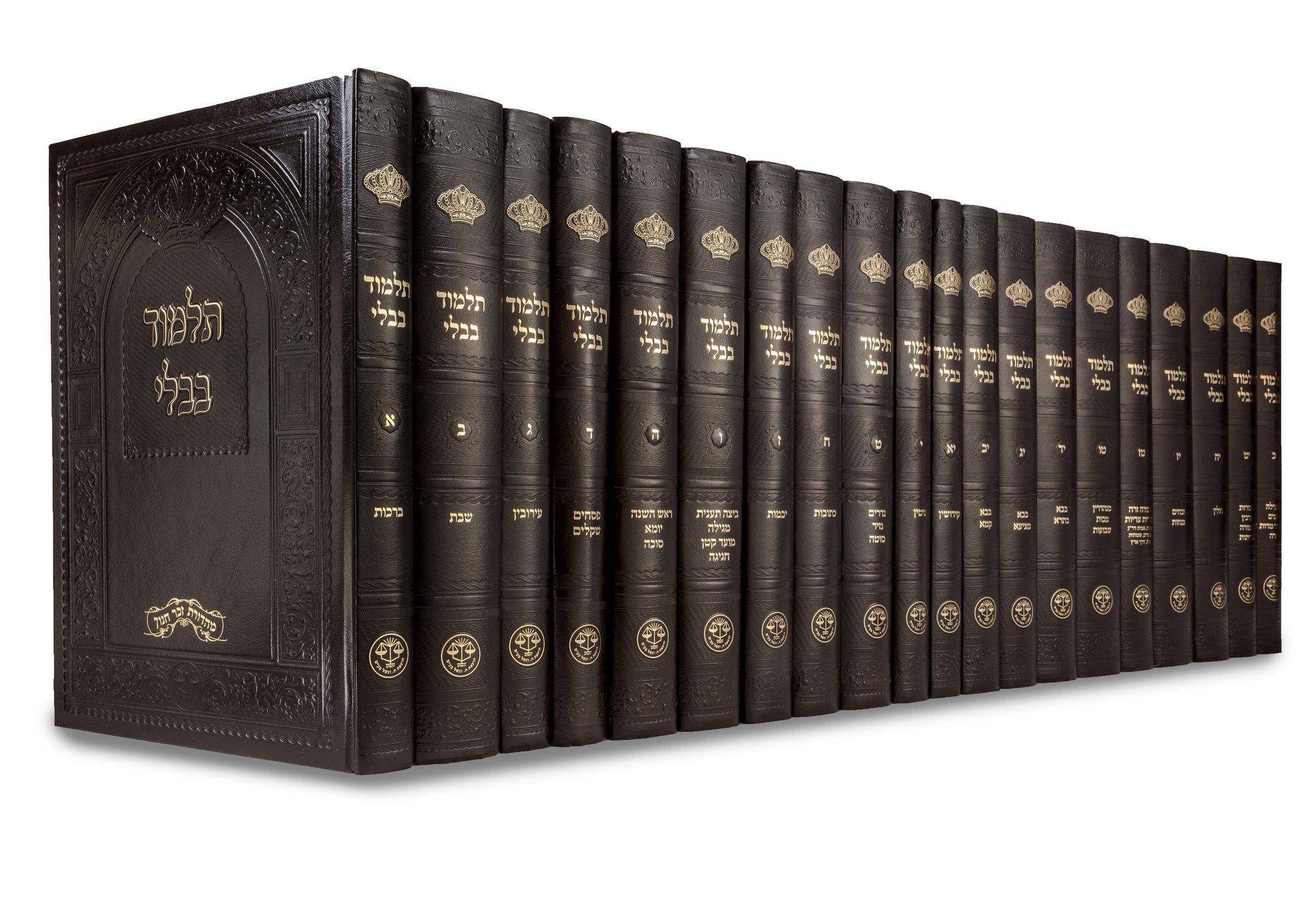
Berachot 3a ~ Which Text Are You Using?

As we start at the very beginning of Talmud, it is worth pausing to ask this very simple question: which version of the Talmud are you reading?

Censored Image.png

Over the centuries, those editions of the Talmud that escaped physical destruction faced another challenge: censorship. The text that survived and is found in nearly all editions today is based on the so-called "Vilna Shas" edition, first published by The Widow and Brothers Romm in 1886.  It is also the basis for the text used in the Schottenstien Talmud. But it is a text that was in some places heavily censored by Christian authorities, and using this censored text can lead to some silly outcomes. One example is found in today’s page of Talmud that describes God sitting through the night, mourning the loss of his Temple. The original uncensored text reads:

ברכות ג,ב

 אוי לי שהחרבתי את ביתי ושרפתי את היכלי והגליתים לבין אומות העולם

Woe is me, for I destroyed my Temple, and I burned my Sanctuary, and I exiled them among the nations of the world.

However, the text of the English Schottenstein (and the Soncino) edition reads as follows: 

אוי לבנים שבעונותיהם החרבתי את ביתי ושרפתי את היכלי והגליתים לבין אומות העולם

Woe to the children, because of whose sins I destroyed my Temple, and I burned my Sanctuary, and I exiled them among the nations of the world.

The additional words  לבנים שבעונותיהם were added by Christian censors to make a theological statement about the fallen state of the Jews.  The corrupted text was noted in Dikdukei Soferim, but none of this seems to have been evident to the editors of the English Schottenstein Talmud, who compounded the error by adding the following homiletic note to the corrupted text.

Detail from Schottenstein English Talmud Berachot 3a.

Detail from Schottenstein English Talmud Berachot 3a.

In its effort to comment on (nearly) everything, the Schottenstein edition added a homiletic explanation of a corrupt text written (almost certainly) by a Jewish apostate serving as Christian censor. Fortunately, the Hebrew and English editions of the Koren, together with the Hebrew edition of the Schottenstein (ArtScroll) Talmud returned the text to its original and uncensored form. No homiletic gymnastics needed.

So now, as we embark on a new cycle of study of the Babylonian Talmud which edition will you be using? And which edition should you be using?

[Partial repost from here.]

Print Friendly and PDF

Berachot 2 ~ How Many Words Are In the Babylonian Talmud?

Shas Picture.jpg

We love to count. Along with the ABCs, counting is a skill we teach children as soon as we can.  The rabbis loved to count too.  In fact, the Talmud itself notes that the rabbis were called soferim because the word means “one who counts.”  This counting was taken very seriously, and when a question arose as to which letter was the midpoint of the Torah, the Talmud records that the rabbis “did not move from there until they brought a Torah scroll and counted all its letters." Today marks the start of the one-page-a-day study of the Babylonian Talmud, a seven-and-a-half-year journey that will end in June 2027.  We will read 2,711 double-sided pages, one each day, every day. But how many words is that? 

Before the advent digital texts, the number of words in the Babylonian Talmud could only be guesstimated. In the 1990s the late great American scholar of Talmud Yaakov Elman tried to do just that, using a method borrowed from the publishing industry called “casting.” Before it was possible to just click “word count” on the computer, publishers would count the average number of words on a line, count the average number of lines on a page, and then multiply by the number of pages in the book. Elman applied this methodology to the oldest known complete manuscript of the Talmud, known as Munich Codex.  He counted an average of 26 words on a line, an average of 80 lines on a page and a manuscript that was 990 pages long, for a grand total of 2,059,200 words.  

But Elman wasn’t quite done. He deducted 25% since the text of the Mishnah within the manuscript was larger than that of the Talmud itself, and another 3-4% for paragraph and chapter indentations. That left 1,452,440 words in the Babylonian Talmud. 

How accurate was Professor Elman’s estimate? In 1999 he had written that “despite several projects that have put the text of the Bavli [the Babylonian Talmud] on CD, figures like this are unfortunately not available, at least according to the computer experts associated with these projects.” But that was over two decades ago, and it was time to try the computer experts again. I turned to Dr Sara Wolkenfeld, Director of Education and Community Engagement for the Sefaria project. Sefaria was founded in 2011 by best-selling author Joshua Foer and Google alum Brett Lockspeiser, and now contains over 183 million words of online Jewish texts, among which is the Babylonian Talmud.  Wolkenfeld herself was finishing her own study of the entire Talmud, and intrigued, got her computer programmers on it. It took them “eight minutes of work and fifteen lines of code” to come up with the answer: 1,860,131 words. That’s about 28% greater than Elman’s guesstimate, and over twice as many words as Shakespeare left us. (But not as many as Winston Churchill wrote. His Complete Speeches totals over 5 million words.) 

It took eight minutes of work and fifteen lines of code to come up with the answer: 1,860,131 words

But even this count is not exact. There are different editions of the Talmud and they vary slightly in whether they spell out abbreviations. Still, it’s as close as we will ever get to an official count. And today we begin with the first letter of the first page of the Talmud, and a brand-new cycle of study.


Print Friendly and PDF

The Final Page of Talmud: The Main Dish and the Appetizers

Tomorrow we will study the final page of the Babylonian Talmud. For those who have been following the Daf Yomi cycle, tomorrow represents the finish line of a marathon that began seven and a half years and 2, 711 pages ago. Congratulations to each of you who finished.

Since Talmudology is a project that connects modern science and medicine with the ancient teachings of the Talmud, it seems appropriate to reflect on the words of Rabbi Abraham ben Solomon of Hamburg. He wrote on this very subject when he made his own siyyum (celebratory party) on the completion of learning the Talmud in London some time before 1781 (although the precise date is not known). His essay appeared in a small book he published called Oleh Terufah (Leaf of Healing), in which he called for Jews to adopt the smallpox vaccine.

We have written about this book elsewhere. Its contents have become tragically germane in the anti-vaccination hysteria that gripped parts of the Jewish community. But for now, we can leave that part of the book, and focus on the words of Torah that Abraham delivered in London at his own Siyyum HaShas over two centuries ago. What follows is a free summary of some of his words.

משנה אבות ג, יח

רַבִּי אֱלִיעֶזֶר בֶּן חִסְמָא אוֹמֵר, קִנִּין וּפִתְחֵי נִדָּה, הֵן הֵן גּוּפֵי הֲלָכוֹת. תְּקוּפוֹת וְגִימַטְרִיאוֹת, פַּרְפְּרָאוֹת לַחָכְמָה

Rabbi Eliezer ben Hisma said: the laws of mixed bird offerings and the key to the calculations of menstruation days are the body of the halakhah. The calculation of the equinoxes and celestial geometry are the appetizers of wisdom.

There are many areas of Jewish law that depend on mastery of the sciences, especially mathematics and physics. These are needed to calculate the sun’s orbit and to keep the Jewish calendar synchronized with the solar year, so that Pesach always falls in the Spring, and Sukkot always falls during the Fall harvest.  The rules of “mixed birds nests” and the calculations of the days of ritual menstrual impurity follow certain mathematical principles, and these in turn rely - to a degree - on an understanding of mathematics. Without that understanding it is possible to err in the calculations, and this might lead to sin.

 משנה ברכות מב,א

בֵּרַךְ עַל הַפַּת פָּטַר אֶת הַפַּרְפֶּרֶת עַל הַפַּרְפֶּרֶת לֹא פָּטַר אֶת הַפַּת  

…One who recited a blessing over the bread exempted the appetizers, as they are considered secondary to the bread. However, one who recited a blessing over the appetizers did not exempt the bread.

In a few weeks we will study a Mishnah which teaches that a blessing made over bread includes the appetizers, in so far as these then do not need a blessing of their own before being eaten. But a blessing made before eating an appetizer does not exempt a blessing to be made over bread. It is the presence of bread that trumps the other foods.

Rabbi Abraham ben Solomon of Hamburg noted that the word “parperet” (פַּרְפֶּרֶת) is used to describe the sciences (‘The calculation of the equinoxes and celestial geometry are the appetizers of wisdom”) as well as the food we today call an appetizer. The Torah is the bread of a meal. Just as bread supersedes the presence of an appetizer, so too the Torah has pride of place over the sciences.  

This is the homiletic meaning of the Mishnah: “If you make a blessing over the bread you have exempted the appetizers.”  While the sciences are important, they are merely the appetizers. Pride of place must always be given to the bread - the Torah.

תם ונשלם מסכת נדה ותלמוד בבלי

וברוך נותן חכמה לבני אדם


Next time on Talmudology: How Many words are there in the Talmud?

Print Friendly and PDF

2019 End of the Year Talmudology Numbers

numbers.jpg

It’s been a bumper year for Talmudology. The website grew its readership by almost 30% and hosted almost 30,000 unique visitors. It had 55,000 page views, an increase of almost 50% from the previous calendar year.

The Most Popular Posts of 2019

Here are the ten most popular posts of the year:

  1. Bava Basra 126b ~ The Healing Power of Saliva. Saliva, wound healing, and the magic of a firstborn’s spit.

  2. Chullin 22b ~ Yellow Pigeons, Folk Medicine and Hepatitis. Why pigeons are still used to cure hepatitis.

  3. Avodah Zarah 28b ~ Ear Candling. On a silly way to clean your ears.

  4. Kiddushin 29a ~ Swimming and Drowning. The Jewish requirement to teach a child to swim.

  5. Avodah Zarah 39a ~ Do Swordfish have Scales? Actually they do. So they are kosher.

  6. Bava Basra 25b ~ The Sun's Orbit Around the Earth. The rabbis of the Talmud vs. Copernicus.

  7. Kiddushin 30a ~ How Many Letters are in a Sefer Torah? 304, 801. Or 304, 805. And why the rabbis miscounted.

  8. Kiddushin 82a ~ The Best Doctors Go to Hell. Doctors were at best useless, and at their worst, agents of death.  To hell with them.

  9. Bava Basra 27b ~ The Roots of a Palm Tree. How the United Nations supported Abayye’s botanical opinions.

  10. Ketuvot 36a ~ The Aylonit Syndrome and Turner's Syndrome. How genetics sheds light on a Talmudic category.

Where are the Talmudology readers FROM?

Here are the top five Talmudology reading countries:

  1. USA - 61% (24,200 visitors)

  2. Israel 12% (4,700 visitors)

  3. United Kingdom 5% (1,900 visitors)

  4. Canada 3% (1,200 visitors)

  5. Australia 2% (1,000 visitors)

But let’s not forget our loyal readers from other parts of the world. A special shout out to the 350 visitors from Pakistan, 73 visitors from Saudi Arabia, the 39 visitors from Iran, the 14 from Bahrain, and the 6 visitors from Zimbabwe. We value your readership, and don’t worry, we cannot identify you in any more detail, even if we wanted to.

We thank you for your readership and the encouraging emails you have kindly sent. Thanks as well to each of you who diligently alert us to any typos.

What’s Next for Talmudology?

We started this project in November 2104, which was about two years into the one-page-a-day Daf Yomi cycle of seven-and-a half years. That cycle will be completed in just four more days, (and Talmudology will be celebrating in Jerusalem here and here). We will then continue with new posts as we follow the brand new Daf Yomi cycle.

Sign up here for email alerts, or follow us on Twitter (@Talmudology) as we study the science in the Talmud.

Print Friendly and PDF