Shekalim 7~ Plagiarism, Citation, and the Lips of the Dead

This post is for the page of Talmud to be studied on Sunday March 28, the first day of Pesach.

Print it up now and enjoy it then.

The Talmud tells the story of the great sage Rabbi Yochanan who grew upset when Rabbi Eliezer ben Pedat, one of his students, repeated a teaching with properly attributing it to him. The Talmud then asks a simple question: what was Rabbi Yochanan getting so worked up about (וְרִבִּי יוֹחָנָן מַאי כוּלֵּי הַאי. דְּבָעֵי דְּיֵימְרוּן שְׁמַעְתָּא מִשְּׁמֵיהּ)? Here is part of the answer supplied by Shimon ben Nezira (in the name of Rabbi Yitzchak):

ירושלמי שקלים ז, א, 2:5

כְּלֽ־תַּלְמִיד חָכָם שֶׁאוֹמְרִים דְּבַר הֲלָכָה מִפִּיו בָעוֹלָם הַזֶּה שְׂפָתָיו רוֹחֲשׁוֹת עִמּוֹ בַקֶּבֶר. שֶׁנֶּאֱמַר דּוֹבֵב֭ שִׂפְתֵ֥י יְשֵׁנִֽים. מַה כֹמֶר שֶׁל עֲנָבִים זֶה כֵּיוָן שֶׁמַּנִּיחַ אָדָם אֶצְבָּעוֹ עָלָיו מִיַּד דוֹבֵב אַף שִׂפתּוֹתֵיהֶם שֶׁל צַדִּיקִים כֵּיוָן שֶׁאוֹמְרִין דְּבַר הֲלָכָה מִפִּיהֶם שֶׁל צַדִּיקִים שִׂפְתּוֹתֵיהֶן מְרַחֲשׁוֹת עִמָּהֶן בַקֶּבֶר

Every Torah scholar from whose mouth people quote a matter of halakha in this world, even after his death, his lips move along with it in the grave, as it is stated: “And your palate is like the best wine…moving gently the lips of those that sleep” (Song of Songs 7:10). Just as with regard to a mass of heated grapes, once a person places his finger on them, they immediately issue froth, as the wine bubbles up and moves around, so too, with regard to the lips of the righteous, when people quote matters of halakha from the mouths of the righteous, their lips move with them in the grave.

There is a certain immortality that is achieved when a teaching is said in the name of a deceased person. It is as if “their lips move in the grave.” Elsewhere the Talmud has this to say on the importance of proper attribution:

חולין קד,ב
כל האומר דבר בשם אומרו מביא גאולה לעולם, שנאמר (אסתר ב), ותאמר אסתר למלך בשם מרדכי

Whoever cites something in the name of the person who originally said it, brings redemption to the world. As the prooftext states - “And Esther told the King in the name of Mordechai...”

And so today we will discuss plagiarism and the importance of proper citation.

אמר רבי יוחנן משום רבי שמעון בן יוחי כל ת”ח שאומרים דבר שמועה מפיו בעולם הזה שפתותיו דובבות בקבר

Rabbi Yochanan said in the name of Rabbi Shimon bar Yochai: The lips of a [deceased] scholar move in the grave when his teachings are said in his name.
— Yevamot 97a
From here.

From here.

Plagiarism, it seems, has never been so popular.  Remember How Opal Mehta Got Kissed, Got Wild and Got a Life, the 2006 debut novel from Harvard undergraduate Kaavya Viswanathan? The author had plagiarized several passages from others (including Salman Rushdie) and the publisher Little Brown recalled and destroyed all its unsold copies.  It's not just authors; politicians plagiarize too.  In 2013 the German minister for education resigned amid allegations she had plagiarized her PhD. thesis, and last year Senator Jon Walsh of  Montana had his Master's Degree revoked by the US Army War College which determined that it had been plagiarized. (Walsh dropped out of the Senate race as a result of the scandal.)  

Plagiarism. It's not just for authors and politicians. Retraction Watch has reported at least 268 academic papers that were plagiarized.  Plagiarism has become so pervasive in academia (and the need to report it has become so important) that a recent paper paper in Ethics & Behavior outlines advice for academics considering becoming plagiarism whisleblowers. 

This  seems to be a very good era in which to remind ourselves - and our students - that the full and proper attribution of the work of others is a core Jewish value. 

Sadly, Jewish literature has a many examples of plagarism, improper attribution, and other infractions of publication etiquette.  We are going to look at four of these. They are all different, and their ethical breaches are not to be equated, but they are reminders of the responsibility of those who publish to check, double check, and attribute.   

1.  Partial or inaccurate citation

Inaccurate citation is a relatively lightweight probem, but it's a problem nevertheless. The  English language Schottenstein Talmud, published by ArtScroll, chose a censored text of the Talmud as the basis for its translation project. (Full disclosure: I enjoy the Schottenstein Talmud, and study from it each day, God, bless it).  As I've pointed out elsewhere, this was a sad choice, and a missed opportunity to return the text to its more pristine (and more challenging) state. 

One example of ArtScroll's decision is found very early on in Berachot (3a).  There, the original uncensored text records a statement said in the name of Rav: אוי לי שהחרבתי את ביתי ושרפתי את היכלי והגליתים לבין אומות העולם

Woe is me [God], for I destroyed my home [the Temple], burned my Sanctuary,  and sent [the Jewish People] into exile among the nations of the world. 

However, the editors of the English ArtScroll Talmud chose to use a censored text in which an additional phrase was slipped in by the censor:  אוי לבנים שבעונותיהם החרבתי את ביתי ושרפתי את היכלי והגליתים לבין אומות העולם

Woe to my children who sinned, [and hence made me, God] destroy my home [the Temple], burn my Sanctuary,  and send them into exile among the nations of the world. 

Here is a version of the uncensored text- the one that ArtScroll could have used.  As you can see, the censor's additional text is not there:

Then, to compound the error, the ArtScroll Talmud addes a footnote explaining the metaphorical meaning of this erroneous text!
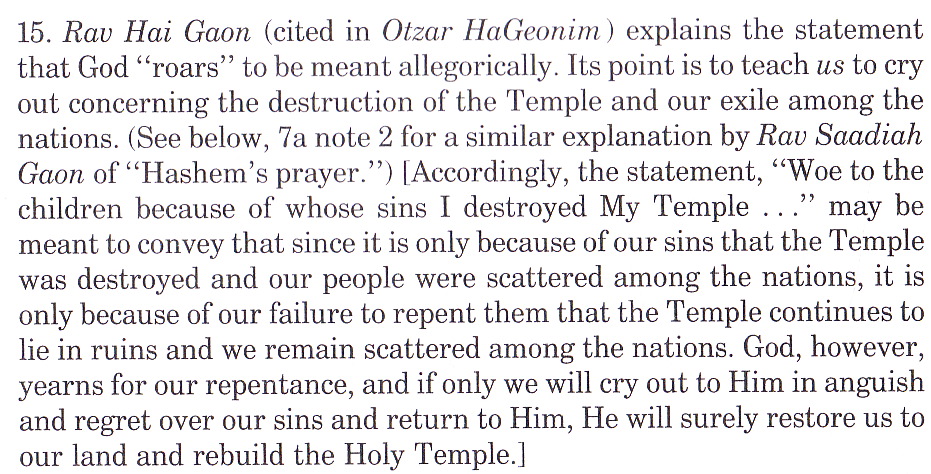
Schottenstein Talmud, Mesorah Publications, Berachot 3a

Schottenstein Talmud, Mesorah Publications, Berachot 3a

To be clear: ArtScroll did not plagarise anything, but they should have done a better job of quoting the text accurately. After all, isn't that what Rabbi Yochanan taught us to do? Had they done so, the lips of the great sage Rav, whose teachings were improperly amended by the censor, would again "move in his grave".

 Now on to more egregious  issues - hard core palgarism.

 2.  Plagiarism in part

Sometimes another author says it just right, and uses language in so perfect a way that others will want to claim it as their own.  One example of this is found in the 500 year long debate over whether Jews could believe in the Copernican model of the solar system in which the sun was stationary.  In the late nineteenth century Reuven Landau (c. 1800-1883) took a hard core conservative position against this model. He found it to be existentailly threatening, and argued that because humanity was the center of the spiritual universe, it must live in the very center of the physical one. But rather than outline his claims in his own words, he stole from the very  widely read Sefer Haberit, an encyclopedic work that had been published some one hundred years earler.  Here is an excerpt from Landau's text, in which he raises what he believes to be scientific objections to the Copernican model.  The bold text shows where the text is identical to Sefer Haberit, first published in 1798. 
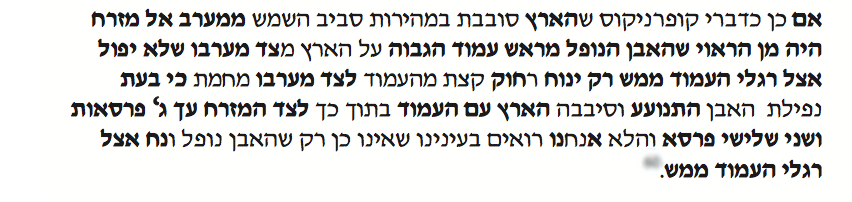
Screen Shot 2014-12-28 at 9.50.13 AM.png

If it is as Copernicus has written, and the earth circles the sun at great speed from west to east, it would be the case that a stone which falls to the ground from the top of a high tower on its western side should not land exactly at the foot of the tower but rather should come to rest slightly to the west of the tower. For while the stone is in free-fall, the earth together with the tower have moved in orbit to the east, by three and two-thirds parsa’ot. Yet we see with our own eyes that this does not occur. Rather the stone falls and comes to rest precisely at the foot of the tower.

Quite simply put, Landau stole from Sefer Haberit. A simple attribution was all that was needed. And it was not there. (You can read more about this plagarism here, and more about Sefer Haberit in my book, and in this recently published work from David Ruderman)

Well, you say, that's not quite right. but it's not too bad either. Well, here comes full, unadulterated plagiarism.

 3. Plagiarism in full: Stealing an entire chapter, word for (almost) word

In 1788 in Berlin, Barukh Linda (not to be confused with the plagiarist Reuven Landau) published a small encyclopedia for children called Reshit Limmudim. In it, Linda carefully explained the heliocentric model of Copernicus and how the planets moved around the sun. This book became, in the words of the  historian Shmuel Feiner the “most famous, up-to-date book on the Hebrew bookshelf at the end of the eighteenth century,” And then, a year after it was published a Rabbi Shimon Oppenhiemer, living in Prague, stole from it.

Oppenheimer (1753-1851) objected to the claim that the earth revolved around the sun, and in 1789 in Prague he published Amud Hashachar in which he detailed his opposition. But rather than use his own words, he stole, word for word, the descriptions of the solar system from the pro-Copernican Reshit Limmudim, carefully leaving out the bits that supported Copernicus.  In a move that pushes hutzpah to a new level, Oppenheimer even published a moving poem as if it had been written to him. However, the poem was a dedication to the real author Linda - from Naphtali Herz Wessely.  Oy.

Had enough of Rabbi Oppenheimer? There’s more.  When it came to plagarism, this Rabbi Oppenheimer was a repeat offender, (enough perhaps to earn a special mention in a Jewish Retraction Watch).  Because in 1831 he published Nezer Hakodesh, a book on religious ethics (I'll say that again in case you missed it - it's a book on religious ethics)...which he plagarized from the 1556 work Ma'alot Hamidot !  Here's a random example so you can see  the scale of the plagiarism.
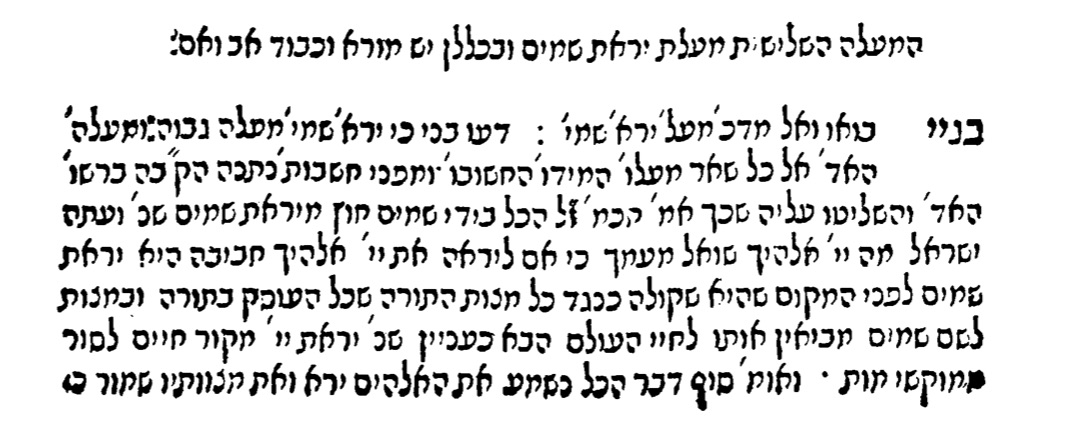
מעלת המדות, 1556

מעלת המדות, 1556

נזר הקודש 1831

נזר הקודש 1831

There is a fascinating end to the story.  The famous Rabbi Yechezkel Landau (that’s the third Landua/Linda in this little post –sorry), head of the Bet Din in Prague, banned Oppenheimer from printing further copies of Amud Hashachar, but not because it was plagarized.  Rather, Chief Rabbi Landau objected to the book’s frontispiece, in which Oppenheimer described himself as “The great Gaon, sharp and famous, the outstanding investigator Shimon”.  Read it for yourself:

First edition of עמוד השחר, Prague 1789. From the Jewish National and University Library, Jerusalem

First edition of עמוד השחר, Prague 1789. From the Jewish National and University Library, Jerusalem

In his rebuke, the head of the Bet Din made no mention of the fact that sections of the book were plagiarized, even though this information was widely known. Oppenheimer proceeded undeterred, and published a second edition of his plagiarized and anti-Copernican work – although he was “honest” enough to remove the stolen poem praising his book - a poem that had originally been written by Naphtali Herz Wessely in praise of Lindau’s Reshit Limmudim.

4.  Incomplete quotation of a passage

Our last example of plagiarism and citation misuse is again from the ArtScroll publishers, though this time it’s a little more serious than their using a censored manuscript. This time Arscroll is itself the censor.

In their new edition of the Mikra’ot Gedolot, (or, as they call it, Mikra'os Gedolos) the editors have censored an entire passage from the commentary of the great eleventh century French scholar Shmuel ben Meir, known as the Rashbam , without any indication that they have tampered with the text. In a famous passage, Rashbam claimed that – contrary to normative Jewish thought, the twenty-four hours of the Jewish day should begin at sunrise, and not after sunset, as is our practice.  This antinomian position seems to have been too much to share with its readers, so ArtScroll just expunged it.

Here is the Rashbam as it appears in the new ArtScroll edition:

חומש מקראות גדולות בראשית. ארטסקרול–מסורה 2014. The red arrow indicates censorship of the Rashbam.

חומש מקראות גדולות בראשית. ארטסקרול–מסורה 2014. The red arrow indicates censorship of the Rashbam.

And here is the original text of the Rashbam with the censored text in bold.

ד) וירא אלהים את האור - נסתכל במראהו כי יפה הוא. וכן ותרא אותו כי טוב הוא, נסתכלה במשה שנולד לששה חדשים כמו שמואל לתקופת הימים וראתהו כי טוב ויפה הוא שנגמרו סימניו וצפרניו ושערו, ותצפנהו שלשה ירחים, כלו' עד סוף ט' חדשים שהרי ראתהו וידעה  שהוא טוב ויפה בסימנים, שאינו נפל

ויבדל אלהים בין האור ובין החשך - שי"ב שעות היה היום ואח"כ הלילה י"ב. האור תחלה ואח"כ החשך. שהרי תחלת בריאת העולם היה במאמר יהי אור. וכל חשך שמקודם לכך דכת' וחשך על פני תהום לא זהו לילה

ה) ויקרא אלהים לאור יום - תמה על עצמך לפי הפשט למה הוצרך הקדוש ברוך הוא לקרוא לאור בשעת יצירתו יום? אלא כך כתב משה רבינו, כ"מ שאנו רואים בדברי המקום יום ולילה כגון יום ולילה לא ישבותו, הוא האור והחשך שנברא ביום ראשון, קורא אותו הקדוש ברוך הוא בכ"מ יום ולילה. וכן כל ויקרא אלהים הכתובים בפרשה זו. וכן ויקרא משה להושע בן נון יהושע, האמור למעלה למטה אפרים הושע בן נון, הוא אותו שקרא משה יהושע בן נון שמינהו קודם לכן משרתו בביתו, שכן דרך המלכים הממנים אנשים על ביתם לחדש להם שם כמו שנאמר ויקרא פרעה שם יוסף צפנת פענח, ויקרא לדניאל בלטשצר וגו'

ולחשך קרא לילה - לעולם אור תחלה ואח"כ חשך

ויהי ערב ויהי בקר - אין כתיב כאן ויהי לילה ויהי יום אלא ויהי ערב, שהעריב יום ראשון ושיקע האור, ויהי בוקר, בוקרו של לילה, שעלה עמוד השחר. הרי הושלם יום א' מן הו' ימים שאמר הק' בי' הדברות, ואח"כ התחיל יום שיני, ויאמר אלהים יהי רקיע. ולא בא הכתוב לומר שהערב והבקר יום אחד הם, כי לא הצרכנו לפרש אלא היאך היו ששה ימים, שהבקיר יום ונגמרה הלילה, הרי נגמר יום אחד והתחיל יום שיני

This censorship of the Rashbam is not unique to ArtScroll. It exists in other standard printings of Mikra'ot Gedolot, like this one from Machon Hama'or, (Jerusalem 1990), although not in the Torat  Chaim from Mossad Harav Kook.

Marc Shapiro,  who brought this to the attention of Jewish world, has called for ArtScroll to give a full refund to any one who purchased these censored copies. And he is absolutely correct. A recent academic editorial noted that improper quotation is a type of plagiarism; like complete plagiarism, this selective quotation strips ownership away from the original author, and leaves in its wake a text never intended.  

THE need for recognition

In his autobiography, the British comedian John Cleese (of Monty Python and Fawlty Towers fame) recalls how he reacted the very first time that he was recognized after a stage performance.  As he walked home, a family who had been in the audience pointed at him and waived. It was by all accounts a small gesture, but Cleese recalled its effects in detail even fifty years later:

I can still remember the sudden feeling of warmth around my heart that swelled and swelled and lifted my spirits. It is as though I had been accepted into a new family, and acknowledged as having brought them something special that they really appreciated. It was only a moment but it was wonderful, and they didn't even know my name...in today's celebrity culture it must be hard to imagine that a tiny moment of recognition like that could feel so uncomplicated and positive...

The need for recognition is not a vice or a character flaw, but a profound human need. To ignore it is not just an oversight but an act of neglect.  The rabbis of the Mishnah and the Talmud understood the corollary: that to attribute is to nourish.  To acknowledge the creative act of another person is a kind of blessing, like those required before eating, or on seeing a beautiful vista.  Blessings and citations acknowledge the creative impulse in others, and so make the world a little bit better. They are redemptive. As this Mishnah taught:

כל האומר דבר בשם אומרו מביא גאלה לעולם, שנאמר (אסתר ב), ותאמר אסתר למלך בשם מרדכי

Whoever cites something in the name of the person who originally said it, brings redemption to the world. As the prooftext states - “And Esther told the King in the name of Mordechai...”
— Pirkei Avot (Ethics of the Fathers) 6:6

 [A repost (so not self-plagiarism) from here.] 

Print Friendly and PDF

Pesachim 116a~ Roasting the Paschal Lamb and the Maillard Reaction

From here

From here

פסחים קטז, א

שֶׁבְּכָל הַלֵּילוֹת אָנוּ אוֹכְלִין בָּשָׂר צָלִי שָׁלוּק וּמְבוּשָּׁל, הַלַּיְלָה הַזֶּה — כּוּלּוֹ צָלִי…

On all other nights we may eat meat that has been roasted or stewed or cooked. But on this night, we may only eat the meat [of the Passover offering] that has been roasted

Spring is just around the corner (unless you are reading this in the southern hemisphere, in which case, please ignore) and barbecue grills are soon going to be fired up. The kobran Pesach, the Pashal lamb that was offered in the Spring festival of Passover needed a barbecue of its own. It had to be cooked over an open fire, as the Mishnah on this page of Talmud reminds us. Earlier in this tractate the Mishnah went into other meticulous details about the permitted cooking process:

פסחים עד, א

מַתְנִי׳ כֵּיצַד צוֹלִין אֶת הַפֶּסַח? מְבִיאִין שַׁפּוּד שֶׁל רִמּוֹן, וְתוֹחֲבוֹ לְתוֹךְ פִּיו עַד בֵּית נְקוּבָתוֹ, וְנוֹתֵן אֶת כְּרָעָיו וְאֶת בְּנֵי מֵעָיו לְתוֹכוֹ, דִּבְרֵי רַבִּי יוֹסֵי הַגְּלִילִי. רַבִּי עֲקִיבָא אוֹמֵר: כְּמִין בִּישּׁוּל הוּא זֶה, אֶלָּא תּוֹלִין חוּצָה לוֹ. אֵין צוֹלִין אֶת הַפֶּסַח לֹא עַל הַשַּׁפּוּד וְלֹא עַל הָאַסְכָּלָא. אָמַר רַבִּי צָדוֹק: מַעֲשֶׂה בְּרַבָּן גַּמְלִיאֵל שֶׁאָמַר לְטָבִי עַבְדּוֹ: צֵא וּצְלֵה לָנוּ אֶת הַפֶּסַח עַל הָאַסְכָּלָא 

MISHNA: How does one roast the Paschal lamb? One brings a spit [shappud] of pomegranate wood and thrusts it into the mouth of the lamb until it reaches its anus, and one then puts its legs and entrails inside it and roasts it all together; this is the statement of Rabbi Yosei HaGelili…

One may not roast the Paschal lamb on the metal spit nor on a metal grill [askela]…

The reason that a wooden spit had to be used is that a metal spit would conduct heat to the inside of the carcass and cook it, “and in the Torah it states that the Paschal lamb must be roasted in fire and not roasted through something else [like the heat conducted along a metal spit] (וְרַחֲמָנָא אָמַר ״צְלִי אֵשׁ״, וְלֹא צָלִי מֵחֲמַת דָּבָר אַחֵר). So today on Talmudology we ask: “what is so special about the roasting process?”

Roasting and the Maillard Reaction

In 1912 the French biochemist Louis Camille Maillard described a special reaction that occurs only when food has reached a temperature of 280-330F, (140-165C) and if your French is good enough you can read his original description here. What occurs in this special temperature range is that amino acids found in proteins (like meat and fish) react with reducing sugars giving the food its characteristic brown color and special flavor. Maillard uncovered a complex family of reactions, and as noted in Stuart Farrimond’s excellent book The Science of Cooking, these reactions “help us make sense of the many ways in which food browns and takes on flavor as it cooks.” He continues (p 16):

Seared steak, crispy fish skin, the aromatic crust of bread, and even the aroma of toasted nuts and spices are all thanks to this reaction…Understanding the Maillard reaction helps the cook in many ways: adding fructose-fish honey to a marinade fuels the reaction; pouring cream into simmering sugar provides milk proteins and sugars for the butterscotch and caramel flavors; and brushing pastry with egg provides extra protein for the crust to brown.

Food-Chemistry-Maillard-Reaction.png

As Farrimond the food scientist explains, the temperature needs to reach at least 284F (140C) to give the amino acids and sugars enough energy to react together. At this temperature the proteins and sugars fuse, releasing “hundreds of new flavors and aromatic substances” and the food starts to turn brown. At around 320F (160C) “molecular changes continue and more enticing new flavors and aromas are created…there are now cascades of malty, nutty, meaty and caramel-like flavors.” Now is the time to be careful and pay attention to the temperature, for above about 356F ( 180C) the food begins to char. This destroys the aromas and leaves acrid, bitter flavors. So “watch the food closely and remove it from the heat before it begins to blacken.”

None of this happens when you boil food, because the boiling point of water (at sea level) is 212F (100C) so the all these glorious mouth watering reactions cannot occur.

Let’s pause to think about how some of the other biblical sacrifices were offered, and whether they too underwent the Maillard reaction.

The Burnt Offering (קרבן עולה)

During the Temple period there were other animal sacrifices that were roasted over a flame. One of these was called the Korban Oleh (lit. the sacrifice that goes up), but things didn’t stop with the Maillard process. This sacrifice had to be entirely burned on the altar, (although the skin was saved and given to the Priestly family on rotation that day). Nothing was left of it but charcoal and ashes, which were then shoveled out and disposed of in a ritual of its own. This was a popular sacrifice, which was offered for all sorts of reasons: like recovery from a skin disease, the new appointment of a priest, the completion of a Nazirite's vow, after recovery from skin disease, by a woman after childbirth, after recovery from a state of abnormal bodily discharges, conversion into Judaism or as a voluntary sacrifice, when the sacrificial animal could be a young bull, ram, year-old goat, turtle doves, or pigeons.

The Sin offering (קרבן חטאת) and the Guilt offering (קרבן אשם)

Much of the sin offering (the kidneys, their fat, the entrails and part of the liver) was burned on the altar. Sometimes the entire carcass was burned to a crisp, and sometimes it was left for the priests - the Cohanim - who could eat it under certain conditions (Lev. 6:25-30). Most of these rules also applied to the guilt offering.

The Tamid Offering (קרבן תמיד)

This was offered twice a day, every day including Shabbat. It was also brought on the New Moon (Rosh Chodesh) and on Pesach and Sukkot. Most of it was burned on the altar.

The “Peace’ Offering (קרבן שלם)

This was a large category of offerings, some for festivals, some by the Nazarite completing his or her term, and some for just saying thanks. Many had to be brought with bread, and much of the animal was burned, though male Cohanim were entitled to eat some parts that remained.

רמבם הל׳ מעשה קרבנות 9:6

וְכֵיצַד מַעֲשֵׂה שְׁלָשְׁתָּן. שׁוֹחֵט וְזוֹרֵק הַדָּם כְּמוֹ שֶׁבֵּאַרְנוּ. וּמַפְשִׁיט וּמוֹצִיא הָאֵימוּרִין. וְאַחַר כָּךְ מְנַתֵּחַ אֶת הַבָּשָׂר וּמַפְרִישׁ הֶחָזֶה וְשׁוֹק הַיָּמִין וְנוֹתֵן הָאֵימוּרִין עִם הֶחָזֶה וְהַשּׁוֹק עַל יְדֵי הַבְּעָלִים וְכֹהֵן מַנִּיחַ יָדוֹ תַּחַת יְדֵי הַבְּעָלִים וּמֵנִיף הַכּל לִפְנֵי ה' בַּמִּזְרָח. וְכֵן כָּל הַטָּעוּן תְּנוּפָה בַּמִּזְרָח מְנִיפִין אוֹתוֹ

What is procedure for bringing these three [types of peace offerings]? [The sacrificial animals] should be slaughtered and their blood should be sprinkled on the altar, as we explained.They are skinned and the portions offered on the altar are removed. Afterwards, the meat is cut up and the breast and the right thigh are set aside. The portions to be offered together with the breast and the thigh are placed on the hands of the owners…

How the Korban Pesach differed

Compared with nearly every other animal scarified in the Temple in Jerusalem, the Passover offering was the only one to be eaten in full by the participants (though the usual bits were offered up on the altar). In fact one of it requirements was that it be eaten entirely. Noting was left over. It was eaten in small family units and everyone had to have at least a little bit. These small groups ensured that everyone would smell and taste the barbecued lamb. Its aroma and taste were very special, for they were the result of the Maillard reaction. No doubt the memory of it all lingered for a long time afterwards, and just as the memory began to fade, it was time to do it all over again.

Print Friendly and PDF

Pesachim 113a ~ The Problem of Polypharmacy

On today’s page of Talmud there is lots of advice. Lots and lots. Live in a city which has horses that neigh and dogs that bark, because they will provide security. Don’t live in a city where the mayor is a doctor, for he will be too busy with his job to govern properly. Then comes this

פסחים קיג, א

אֲמַר לֵיהּ רַב לְחִיָּיא בְּרֵיהּ: לָא תִּשְׁתֵּי סַמָּא, וְלָא תְּשַׁוַּור נִיגְרָא, וְלָא תִּעְקַר כַּכָּא, וְלָא תְּקַנֵּא בְּחִיוְיָא

Rav said to Chiyya, his son: Do not get into the habit of drinking medications, lest you develop an addiction. And do not leap over a ditch, as you might hurt yourself in the process. And do not pull out a tooth, but try to heal it if possible. And do not provoke a snake in your house to try to kill it or chase it away…

Today we will focus on the first bit of advice on this list - the problem of taking too many medications.

polypharmacy.jpg

The problem of polypharmacy

There is a medical word that describes taking too many medications - it is called polypharmacy. And it is a real problem, especially in the elderly, who are often prescribed one drug after another as they see different specialists and sub-specialists. There is some debate about how many drugs are considered to be polypharmacy, but most physicians have a cut off at five or more in one person.

The Rashbam and the NIH on addiction

The Rashbam (1085-1158), grandson of the famous French commentator Rashi, gave this explanation on today’s passage of Talmud:

לא תשתי סמא - אל תשתה סמים מפני שנקבע להם ווסת ויהא לבך שואלך ותפסיד מעות ואפילו לרפואה לא תישתי אם אפשר לרפואה אחרת

Do not take drugs - Don’t take drugs because you will become addicted to them, and you will constantly be looking for them and spend lots of money. Even when they are needed to cure you, do not take them if there is an alternative.

The Rashbam’s words here could not be of more relevance to us moderns. The problem of drug addiction and the abuse of some prescribed medications is one of the leading health challenges facing the US and other industrialized nations. In fact, before the COVID pandemic, it occupied much of the attention of the US National Institutes of Health, which set up a multi-million dollar investment program to address the crisis called HEAL - Helping to End Addiction Long-Term. I played a small but I hope useful role in the effort, helping to establish a program to develop effective, non-addictive treatments to reduce the burden of illness due to pain and to reduce risk of addiction. Only a few drugs we use today have the potential to become addictive, and the Rashbam’s words do not feature in the current advice we give our patients. But when we do use these useful but potentially addictive and dangerous drugs, we must do so with the utmost care.

The Dangers of Polypharmacy

The Artscroll English translation of the passage above reads “do not ingest any unnecessary drugs.” Of course what makes a drug unnecessary is often a matter of legitimate medical dispute, but there is no doubt that taking a lot of medications - polypharmacy - can lead to some serious complications. In a recent expert review of the dangers of taking too many drugs researchers noted that “in general, polypharmacy has been linked to a range of negative outcomes, including falls, frailty, and mortality.” It is hard to tease out any causation (as opposed to any association) though, and the research is complicated. Is a person taking lots of drugs more likely to be weak and fall and get infections because of the several drugs she is taken, or has she been prescribed several drugs precisely because she is frail and at risk of these and other problems?

The outcomes associated with polypharmacy can be broadly put into four categories as you can see in the figure below. “In the inner circle, closest to polypharmacy, are drug-related outcomes, such as drug-drug interactions. As we move to the outer circles, the outcomes could potentially be related to the more proximal outcomes (e.g. drug-drug interactions can contribute to hospital admissions) and are also more likely to be affected by other health-related factors.” Here are some of the problems of polypharmacy.

A framework for polypharmacy and conceptual classification of outcomes. From Jonas W. Wastesson, Lucas Morina, Edwin C.K. Tan, Kristina Johnell. An update on the clinical consequences of polypharmacy in older adults: a narrative review. Expert Opini…

A framework for polypharmacy and conceptual classification of outcomes. From Jonas W. Wastesson, Lucas Morina, Edwin C.K. Tan, Kristina Johnell. An update on the clinical consequences of polypharmacy in older adults: a narrative review. Expert Opinion of Drug Safety 2018: 17 (12); 1185-1196.

  1. Adverse drug reactions. All drugs have side effects, and the more drugs you take, the more likely you are to experience some of those effects. In addition, drugs interact with each other, often in bad ways. In fact up to 10% of hospitalizations in the elderly are due to adverse drug reactions.

  2. A Swedish study based on nationwide registers found that the risk of falls increased with the number of drugs used in a dose-response fashion, meaning the more drugs you take, the more likely you are to fall.

  3. Physical function like getting out of a chair or gripping something is reduced in those with polypharmacy, though it is difficult to establish a causal relationship.

  4. Polypharmacy has been shown to cause frailty and sarcopenia, which is a loss of muscle mass.

  5. Polypharmacy has been linked to lowered cognitive functions and dementia. In a study of community-living Japanese older adults, polypharmacy was associated with lower cognitive status, and a longitudinal register-based (nested case-control) study matching incident dementia cases with dementia-free cases found that polypharmacy was associated with receiving a dementia diagnosis. 

  6. Polypharmacy has been linked with hospital admission in studies including general older adults, nursing home residents, and in people diagnosed with dementia. One researcher found that the risk of unplanned hospital admissions increased with the number of medications used, though this effect was less evident for people with a high number of chronic conditions.

  7. Finally, polypharmacy has been linked with increased mortality. A 2017 systematic review (with meta-analysis) estimated that the risk of death goes up by around 8% for each additional drug taken. So not good.

The authors of this review leave us with these sobering conclusions:

The prevalence of polypharmacy in older adults is increasing in most countries. This is a cause for concern given the observed association between polypharmacy and a wide spectra of negative health outcomes, including drug-related problems, adverse drug events, physical and cognitive function, hospitalization, and mortality… scalable interventions to reduce polypharmacy (by deprescribing or other interventions) is needed to revert the trend of increasing levels of polypharmacy in the older population.

Prevention is better than cure

Commenting on today’s passage of Talmud, Rabbi Yosef Chaim of Baghdad, known as the Ben Ish Chai (1860-1930), gave this advice:

לָא תִּשְׁתֵּי סַמָּא. פירוש אם ראית בעצמך התחלת מיחוש באיזה חולי לא תמהר לשתות סם דהסם עושה מלחמה עם החולי וראוי תחלת הכל וְקָרָאתָ אֵלֶיהָ לְשָׁלוֹם (דברים כ, י) שתעשה הכנות טבעיות לשמירת עצמך מן החולי הן מצד האכילה שקורין בערבי פהרי"ז הן מצד הישיבה והמנוחה והמקום וכיוצא בזה ואולי יהיה לך זה עזר לרפואה טבעית ולא תצטרך לשתות סם לגמרי

If you begin to feel unwell from some disease, do not rush to make a drug, because the drug will wage war against the illness. But it is best…if you use a natural preparation to keep yourself healthy and prevent illness, with a proper diet, and also by sitting comfortably, getting enough rest, and paying attention to where you live, and so on. In doing so, perhaps this will provide natural healing and you will not need any drugs at all.

Just like the advice of the Rashbam, the Ben Ish Chai is also spot on. Preventing disease with exercise, a proper diet, getting enough rest and living in a healthy environment are far better for you than trying to treat a disease once it has begun. This does not mean that diseases that we can and should treat with medications are best tackled with “natural interventions.” Cinnamon does not help control your blood sugar if you have diabetes. But insulin does. Still, the advice of the Rashbam and Ben Ish Chai should be played on a loop in the waiting room of doctor’s offices and clinics. And we should listen.

Print Friendly and PDF

Pesachim 112b ~ The Causes of Epilepsy

Today’s page of Talmud discusses the etiology of epilepsy.

פסחים קיב,ב

שְׁלֹשָׁה דְּבָרִים צִוָּה רַבִּי יוֹסֵי בְּרַבִּי יְהוּדָה אֶת רַבִּי: אַל תֵּצֵא יְחִידִי בַּלַּיְלָה, וְאַל תַּעֲמוֹד בִּפְנֵי הַנֵּר עָרוֹם, וְאַל תִּכָּנֵס לְמֶרְחָץ חָדָשׁ, שֶׁמָּא תִּפָּחֵת. עַד כַּמָּה? אָמַר רַבִּי יְהוֹשֻׁעַ בֶּן לֵוִי: עַד שְׁנֵים עָשָׂר חֹדֶשׁ. וְאַל תַּעֲמוֹד בִּפְנֵי הַנֵּר עָרוֹם, דְּתַנְיָא: הָעוֹמֵד בִּפְנֵי הַנֵּר עָרוֹם — הָוֵי נִכְפֶּה. וְהַמְשַׁמֵּשׁ מִטָּתוֹ לְאוֹר הַנֵּר — הָוַיִין לוֹ בָּנִים נִכְפִּין 

Rabbi Yosei, son of Rabbi Yehuda, commanded Rabbi Yehuda HaNasi with regard to three matters: Do not go out alone at night; do not stand naked before a candle; and do not enter a new bathhouse, lest it collapse when they light the fire beneath it…

With regard to not standing naked before a candle, the Talmud comments that this is as it was taught in a baraita: One who stands naked before a candle will become epileptic, and one who engages in intimacy by candlelight will have epileptic children.

Having established one cause of epilepsy, the Talmud then add to it, and includes some nuanced qualifications.

תָּנוּ רַבָּנַן: הַמְשַׁמֵּשׁ מִטָּתוֹ עַל מִטָּה שֶׁתִּינוֹק יָשֵׁן עָלֶיהָ — אוֹתוֹ תִּינוֹק נִכְפֶּה. וְלָא אֲמַרַן אֶלָּא דְּלָא הָוֵי בַּר שַׁתָּא, אֲבָל הָוֵי בַּר שַׁתָּא — לֵית לַן בַּהּ. וְלָא אֲמַרַן אֶלָּא דְּגָנֵי לַהֲדֵי כַּרְעֵיהּ, אֲבָל גָּנֵי לַהֲדֵי רֵישֵׁיהּ — לֵית לַן בַּהּ. וְלָא אֲמַרַן אֶלָּא דְּלָא מַנַּח יְדֵיהּ עִילָּוֵיהּ, אֲבָל מַנַּח יְדֵיהּ עִילָּוֵיהּ — לֵית לַן בַּהּ. 

Likewise, the Sages taught: One who engages in intimacy in a bed upon which a baby is sleeping, that child becomes epileptic. And we said that this will occur only if the child is not yet one year old; however, if he is one year old we have no problem with it, as he is old enough not to be affected. And furthermore, we said this only concerning a baby that is sleeping near the father’s feet; but if the baby is sleeping near his head he is sufficiently far away so that we have no problem with it. And we said this only if he does not place his hand on the baby at the time, but if he places his hands on the baby to serve as a barrier between them, we have no problem with it.

What is Epilepsy?

brain-electricity-smaller-870x574.jpg

Epilepsy is caused by inappropriate and disorderly firing of neurons in the brain. The word comes from the French épilepsie, or from the earlier Greek epilambanein ‘seize, attack’, (from epi ‘upon’ and lambanein ‘take hold of’). It describes a condition which can manifest in a number of different ways. The person can look out blankly into the distance and not respond. These are called absence seizures. Sometimes it begins with an odd sensation of smell or sounds. This is called an aura, and it may herald a more generalized seizure. Generalized seizures may begin with a shaking in one limb, and then the person falls to the ground with a generalized seizure. These are very scary to watch, but usually resolve by themselves within a couple of minutes. Following this, during the postictal period, the person typically falls into a deep sleep for some time, perhaps half an hour or so, and often has no recollection of the events. Sometimes the generalized seizures do not end; this is called status epileptics, and it is a life-threatening condition.

The Causes of Seizures

The two most commonly identified causes of seizures are a neurologic birth injury (8%) and cerebrovascular disease (11%). But lots of other things can cause seizures, like head trauma (6%), brain tumor (4%), and infections of the central nervous system (3%). In the elderly, the cause of a new seizure is more likely to be vascular (from say a stroke), or a tumor.

In addition, some toxins can cause seizures. Of these alcohol is the one most commonly associated with seizures. And some stressors like fatigue or sleep deprivation may exacerbate an underlying seizure disorder.

Scientific vs Talmudic Causes of Seizures and Epilepsy

From Harwood-Nuss’ Clinical Practice of Emergency Medicine. Kluwer 2021. Chap 159.

From Harwood-Nuss’ Clinical Practice of Emergency Medicine. Kluwer 2021. Chap 159.

  • Standing naked in front of a candle (Pesachim 110)

  • Engaging in intimacy in a bed upon which a baby is sleeping (that child becomes epileptic) (Pesachim 110)

  • Copulating in a mill (will lead to epileptic children) (Ketuvot 60b)

  • After going to the bathroom, not waiting the time to walk half a mil before having sexual intercourse (Gittin 70a). This is because the demon of the bathroom accompanies the person and then attacks.


Epilepsy in the Jewish Bible

In the Bible (Numbers 24:4) the prophet Bilaam introduces himself with the following enigmatic words:

במדבר 24:3

נְאֻ֕ם שֹׁמֵ֖עַ אִמְרֵי־אֵ֑ל אֲשֶׁ֨ר מַחֲזֵ֤ה שַׁדַּי֙ יֶֽחֱזֶ֔ה נֹפֵ֖ל וּגְל֥וּי עֵינָֽיִם׃ 

The speech of he who hears God’s speech, Who beholds visions from the Almighty, who falls, but with eyes open.

In his classic work Biblical and Talmudic Medicine, Julius Preuss wrote that the expression “with open eyes” refers “to a clairvoyant soothsayer.”

I am equally certain that the term “fallen down,” is the designation for epileptics; for in Hebrew and Arabic, the verb naphal, whose present participle is nophel, always means fallen down…Who first offered this explanation (of the term nophel meaning “fallen down”)? I can certainly not be the first, for this explanation seems to be very obvious. However I have looked in vain in numerous translations and commentaries of ancient and modern times and in exegetic handbooks and dictionaries…

Preuss noted that the same word is found in the story of Saul (I Sam 19:24). “Scripture uses the expression (vayipol) in relation to Saul after he became “manitic:” and he fell down the entire day and the entire night, that is, he had frequent epileptic seizures.”

שמואל א, 19:24

וַיִּפְשַׁ֨ט גַּם־ה֜וּא בְּגָדָ֗יו וַיִּתְנַבֵּ֤א גַם־הוּא֙ לִפְנֵ֣י שְׁמוּאֵ֔ל וַיִּפֹּ֣ל עָרֹ֔ם כָּל־הַיּ֥וֹם הַה֖וּא וְכָל־הַלָּ֑יְלָה עַל־כֵּן֙ יֹֽאמְר֔וּ הֲגַ֥ם שָׁא֖וּל בַּנְּבִיאִֽם׃

Then he too stripped off his clothes and he too spoke in ecstasy before Samuel; and he fell down naked all that day and all night. That is why people say, “Is Saul too among the prophets?”

The Egyptians and Babylonians recognized seizures as being associated with physical ills, particularly head trauma, but, like the Greeks and Romans, sometimes ascribed their occurrence to causes that seem rather more occult than physical. Epileptics were thus often considered unclean or evil, and Pliny advised persons to spit upon seeing an epileptic, “to throw back the contagion.” Such magical thinking about seizures persists, in altered forms, and is part of the stigma of epilepsy. The treatment of epilepsy may thus have great social importance for the patient, who may still have to contend with this view of epilepsy.
— Robert Gross. A brief history of epilepsy and its therapy in the western hemisphere. Epilepsy Research 1992: 12; 65-74.

And epilepsy in the Christian Bible

In Matthew (14:15) we read the story of a boy brought to Jesus because he was having seizures:

…a man came to him, knelt before him, and said, “Lord, have mercy on my son, because he has seizures and suffers terribly, for he often falls into the fire and into the water. I brought him to your disciples, but they were not able to heal him.” Jesus answered, “You unbelieving and perverse generation! How much longer must I be with you? How much longer must I endure you? Bring him here to me.” Then Jesus rebuked the demon and it came out of him, and the boy was healed from that moment.

In the original Greek the text reads “he is moonstruck,” a phrase related to our modern term “lunatic.” However, as the New English Translation notes, “now the term is generally regarded as referring to some sort of seizure disorder such as epilepsy.”

A Sacred Disease then and now

The earliest treatise to discuss epilepsy is called On the Sacred Disease. It was written around 400BCE. and attributed to Hippocrates. Here is how the book opens:

It is thus with regard to the disease called Sacred: it appears to me to be nowise more divine nor more sacred than other diseases, but has a natural cause from the originates like other affections. Men regard its nature and cause as divine from ignorance and wonder, because it is not at all like to other diseases. And this notion of its divinity is kept up by their inability to comprehend it, and the simplicity of the mode by which it is cured, for men are freed from it by purifications and incantations. But if it is reckoned divine because it is wonderful, instead of one there are many diseases which would be sacred; for, as I will show, there are others no less wonderful and prodigious, which nobody imagines to be sacred.

So the Greek author rejects the notion that the gods cause the disease. But despite the passage of time, some cultures retain a special respect for those who are epileptic. In her 1997 award winning book When the Sprit Catches You and You Fall Down, the reporter Ann Fadiman described the clash of cultures between Hmong immigrants from southeast Asia and western medicine. It is told through the story of a young Hmong girl Lia Lee who had a severe form of epilepsy.

Dan [a medical resident] had no way of knowing that Foua and Nao Kao had already diagnosed their daughter's problem as the illness where the spirit catches you and you fall down. Foua and Nao Kao had no way of knowing that Dan had diagnosed it as epilepsy, the most common of all neurological disorders. Each had accurately noted the same symptoms, but Dan would have been surprised to hear that they were caused by soul loss, and Lia's parents would have been surprised to hear that they were caused by an electrochemical storm inside their daughter's head that had been stirred up by the misfiring of aberrant brain cells. (p28)

The book painfully records what happens when an ancient system of belief is confronted with modern medicine. It is a reminder that different cultures interpret diseases and their origins in very different ways. The rabbis of the Talmud had no idea what caused the frightening condition we call epilepsy, but assumed that it was a punishment of some kind, and associated it with the sin of immodest behavior. We now know that it is nothing of the sort, and have medications that can usually bring the symptoms under control. Modern medicine, even with all its shortcomings, has given us that, for which we must be grateful.

Print Friendly and PDF