Today's page of Talmud explains that this happy custom changed during a period of persecution. Rabbah, a fourth century Babylonian sage, explained what this is all about:
כתובות ג,ב
אָמַר רַבָּה, דְּאָמְרִי: בְּתוּלָה הַנִּשֵּׂאת בְּיוֹם הָרְבִיעִי תִּיבָּעֵל לַהֶגְמוֹן תְּחִלָּה
"[The authorities] said, "a virgin who gets married on Wednesday will first have intercourse with the governor" (הגמון). In order to avoid this awful legal rape, the wedding was moved a day early, to fly, so to speak, under the radar of the local governor. The Talmud also explains that this edict only applied for those who married on a Wednesday, rather than any other day of the week, which is an odd detail that is difficult to explain.
A longer version of the legend is found in the Jerusalem Talmud (Ketuvot1:5). Here it is.
בָּרִלאשׁוֹנָה גָֽזְרוּ שְׁמָד בִּיהוּדָה. שֶׁכֵּן מְסוֹרֶת לָהֶם מֵאֲבוֹתָם שֶׁיְּהוּדָה הָרַג אֶת עֵשָׂיו. דִּכְתִיב יָֽדְךָ בְּעוֹרֶף אוֹיְבֶיךָ. וְהָיוּ הוֹלְכִין וּמְשַׁעְבְּדִין בָּהֶן וְאוֹנְסִין אֶת בְּנוֹתֵיהֶן וְגָֽזְרוּ שֶׁיְּהֵא אִיסְטְרָטֵיוֹס בּוֹעֵל תְּחִילָּה. הִתְקִינוּ שֶׁיְּהֵא בַּעֲלָהּ בָּא עָלֶיהָ עוֹדָהּ בְּבֵית אָבִיהָ. שֶׁמִּתּוֹךְ שֶׁהִיא יוֹדַעַת שֶׁאֵימַת בַּעֲלָהּ עָלֶיהָ עוֹד הִיא נִגְרֶרֶת
In earlier times they [the Romans] decided on a persecution in Judea because they had a tradition from their forefathers that Jehudah had killed Esav, as it is written Gen. 49:8: “Your hand is on your enemies’ neck.” They went and enslaved the Jews and raped their daughters; and they decided that a soldier would cohabit with a bride first. The Sages decreed therefore that her husband should cohabit with her while she was still in her father’s house, for when she knows that her husband’s fear is on her she is drawn after him…
This episode likely describes the period after the Bar Kochba rebellion, and as the Guggenheimer translation notes, the Bavli is a “toned down” version of the this story. In this version, any soldier could take the bride, and not just the hegemon, and he could claim the bride on any day, not just on a Wednesday.
Jus Primae Noctis in the Talmud & Midrash
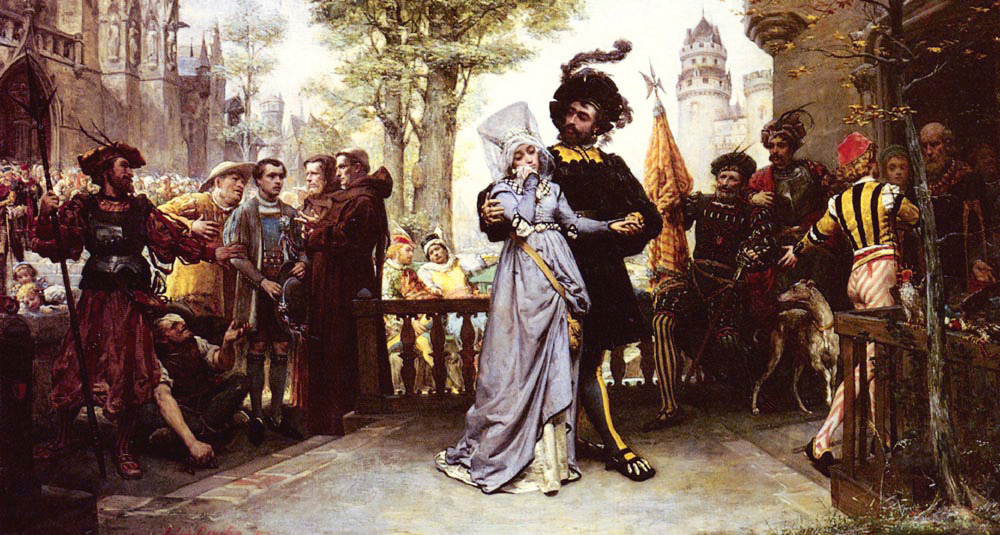
The law that Rabbah referenced is known variously as Jus Primae Noctis, the Law of the First Night and, much more graphically, as The Right to the Thigh - Droit du Cuissage. Its origins are further explained in the Talmud Yerushalmi, which dates it to the time of the Bar Kochba revolution:
תלמוד ירושלמי כתובות פרק א הלכה ה
בראשונה גזרו שמד ביהודה שכן מסורת להם מאבותם שיהודה הרג את עשו... והיו הולכין ומשעבדין בהן ואונסין את בנותיהן וגזרו שיהא איסטרטיוס בועל תחילה התקינו שיהא בעלה בא עליה עודה בבית אביה
In the beginning, they [the Romans] decreed destruction in Judea (for they had a tradition that Yehuda killed Esau) ... and they enslaved them and raped their daughters, and decreed that a soldier would have intercourse [with a bride] first. It was then enacted that her husband would cohabit with her while she was still in her father's house.
A reference to Primae Noctis also appears in the Midrash Rabbah, a collection of rabbinic homilies edited sometime in the forth or fifth century. As told in Genesis 6, “the sons of God saw that the daughters of man were beautiful (tovot), and they took wives from whoever they chose.” The Midrash focuses on that word beautiful, and explains:
בראשית רבה (וילנא) פרשת בראשית פרשה כו
אמר רבי יודן טבת כתיב, משהיו מטיבין אשה לבעלה היה גדול נכנס ובועלה תחלה, הדא הוא דכתיב כי טבת הנה, אלו הבתולות ויקחו להם נשים מכל אשר בחרו, אלו נשי אנשים,
“Rabbi Judan said the word tovot (טבת) – beautiful – is written in the singular, [but read as a plural]. Meaning that the bride was made beautiful for her husband, but the lord of the nobles had intercourse with her first...”
This midrash is cited by Rashi (d. 1105), the great French exegete, in his commentary to the Torah. And this isn't the only time Rashi uses Primae Noctis to explain a historical event. According to Rashi, it was this law that precipitated the rebellion of the Maccabees against their Greek oppressors, an uprising that culminated in the miracle of Chanukah:
תלמוד בבלי שבת דף כג עמוד א
דאמר רבי יהושע בן לוי: נשים חייבות בנר חנוכה, שאף הן היו באותו הנס
רש"י שם: שגזרו יוונים על כל בתולות הנשואות להיבעל לטפסר תחלה
Rabbi Yehoshua ben Levi said: Women are obligated to take part in the lighting, for they were included in that miracle...
Rashi: For the Greeks made an edict that all virgins who were about to marry must first have intercourse with the Prefect...
JUS PRIMAE NOCTIS...IN THE Movies
There are numerous references to Primae Noctis in ancient and modern literature, from the Epic of Gilgamesh to The Marriage of Figaro. One more recent example can be seen in the 1995 movie Braveheart, when the evil King Edward gallops into a village, to interrupt a wedding celebration. “I’ve come to claim the right of Primae Noctis. As lord of these lands, I will bless this marriage by taking the bride into my bed on the first night of her union.” And as the groom is restrained by Edward's henchmen, Edward reminds the peasants “it is my noble right.”
Jus Primae Noctis. Is there a more fearsome example of feudal barbarism? Of what one scholar called “a male power display…coercive sexual dominance…and male desire for sexual variety”? But the legend, despite its appearance in many guises, is, fortunately, likely to be nothing more than just that: a legend.
Jus Primae Noctis...is a Legend
Perhaps the most comprehensive investigation of the legend of Primae Noctis is The Lord's First Night: the Myth of the Droit de Cuissage, by the French social scientist Alain Boureau. (I bought my copy for less than $10, and no, you can't borrow it.) His careful analysis is particularly important since, as we have seen, Rashi, our favorite French commentator, cites this legend twice. After a meticulous two-hundred page review of every alleged appearance of the legend, Boureau is clear: