
Today we start a new tractate of Talmud, named Arachin - ערכין. We will read 33 pages answering a question few of us have had to ask: what is a life worth?
Let’s start with the source:
ויקרא 27:2-8
אִישׁ כִּי יַפְלִא נֶדֶר בְּעֶרְכְּךָ נְפָשֹׁת לַיהֹוָה׃
וְהָיָה עֶרְכְּךָ הַזָּכָר מִבֶּן עֶשְׂרִים שָׁנָה וְעַד בֶּן־שִׁשִּׁים שָׁנָה וְהָיָה עֶרְכְּךָ חֲמִשִּׁים שֶׁקֶל כֶּסֶף בְּשֶׁקֶל הַקֹּדֶשׁ׃
וְאִם־נְקֵבָה הִוא וְהָיָה עֶרְכְּךָ שְׁלֹשִׁים שָׁקֶל׃
וְאִם מִבֶּן־חָמֵשׁ שָׁנִים וְעַד בֶּן־עֶשְׂרִים שָׁנָה וְהָיָה עֶרְכְּךָ הַזָּכָר עֶשְׂרִים שְׁקָלִים וְלַנְּקֵבָה עֲשֶׂרֶת שְׁקָלִים׃
וְאִם מִבֶּן־חֹדֶשׁ וְעַד בֶּן־חָמֵשׁ שָׁנִים וְהָיָה עֶרְכְּךָ הַזָּכָר חֲמִשָּׁה שְׁקָלִים כָּסֶף וְלַנְּקֵבָה עֶרְכְּךָ שְׁלֹשֶׁת שְׁקָלִים כָּסֶף׃
וְאִם מִבֶּן־שִׁשִּׁים שָׁנָה וָמַעְלָה אִם־זָכָר וְהָיָה עֶרְכְּךָ חֲמִשָּׁה עָשָׂר שָׁקֶל וְלַנְּקֵבָה עֲשָׂרָה שְׁקָלִים׃
וְאִם־מָךְ הוּא מֵעֶרְכֶּךָ וְהֶעֱמִידוֹ לִפְנֵי הַכֹּהֵן וְהֶעֱרִיךְ אֹתוֹ הַכֹּהֵן עַל־פִּי אֲשֶׁר תַּשִּׂיג יַד הַנֹּדֵר יַעֲרִיכֶנּוּ הַכֹּהֵן׃
When anyone explicitly vows to God the equivalent for a human being, the following scale shall apply:
If it is a male from twenty to sixty years of age, the equivalent is fifty shekels of silver by the sanctuary weight; if it is a female, the equivalent is thirty shekels.
If the age is from five years to twenty years, the equivalent is twenty shekels for a male and ten shekels for a female.
If the age is from one month to five years, the equivalent for a male is five shekels of silver, and the equivalent for a female is three shekels of silver.
If the age is sixty years or over, the equivalent is fifteen shekels in the case of a male and ten shekels for a female.
But if someone cannot afford the equivalent, they shall be presented before the priest, and the priest shall make an assessment; the priest shall make the assessment according to what the vower can afford.
Here is a summary:
| Age | Male | Female |
|---|---|---|
| 1 month to 5 years | 5 | 3 |
| 5 to 20 years | 20 | 10 |
| 20 to 60 years | 50 | 30 |
| 60 years and over | 15 | 10 |
If the vower cannot afford the amount, the priest assesses what he can pay.
These amounts are an estimation of the “value” (whatever that means) of each of these people. About this there is no question. Here is Rashi on verse 2, citing the Sifra:
בערכך נפשת. לִתֵּן עֵרֶךְ נְפָשׁוֹת — לוֹמַר עֵרֶךְ דָּבָר שֶׁנַּפְשׁוֹ תְלוּיָה בוֹ עָלַי
בערכך נפשות — he expressly states that he will give to the Sanctuary the valuation attached to a life by saying, “the payment of the valuation of such and such a thing — that, however, being something upon which its life depends — is incumbent upon me”
And here is Ibn Ezra:
בערכך נפשות. הטעם שידור נדר לאמר אם השם יעשה לי כך אפדה נפשי כדי ערכי או ערך בני או ערך בהמה
Its meaning is, he will take a vow saying: If God will do the following for me then I will redeem my life in accordance with its value, or the value of my son’s life, or the value of the life of a beast.
Note the following:
Age and sex belong to the person valued, not the vower. A youth who vows the value of an elder pays the elder’s rate. A woman who vows a man’s valuer pays the man’s rate.
Age is fixed at the moment of the vow. If the subject crosses a threshold before payment, the rate at the time of the vow still applies.
Everyone (priests, Levites, Israelites, women and men) can vow an ערך and be the subject of one.
Ability to pay belongs to the vower. A poor person who vows the erkh of a rich person pays the poor rate.
An ערך payment is never less than one sela or more than fifty sela.
Remember these points; we will return to them below.
How does the talmud’s economic (not moral) value of a life compare to our modern conception? To answer this, we need to take a short dive into…
The 9/11 Compensation Fund

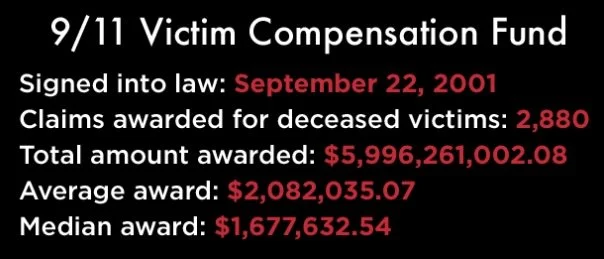
Shortly after the 9/11 terrorist attacks, Congress set up a fund to compensate the families of those murdered. It was called the September 11th Victim Compensation Fund, and was allocated $7.375 billion (including operational and administrative costs). Feinberg initially set the compensation for noneconomic loss at $250,000 for the death of the victim, and $50,000 for each surviving spouse and dependent. He also decided that he needed a “swift, certain and uncomplicated formula” which clearly explained the regulations to estimate individual awards.
As he made clear on multiple occasions, Feinberg didn’t assign a moral or intrinsic worth to anyone. Rather, he valued each victim’s life by what that person would have earned over a normal working life, then added a flat amount for non-economic loss.
How the calculation worked
Economic loss: Feinberg said the award was based on what the victim would have earned over a work-life but for 9/11, so a banker, a soldier, a firefighter and a secretary each received a different amount. For example, he calculated Salman Hamdani’s future earnings from the $35,000 a year he made as an entry-level lab assistant.
Non-economic loss: Early on, Feinberg decided to give each family, regardless of income, a flat $250,000 for pain and suffering. The final regulations also added $100,000 for each surviving spouse and each surviving child.
Offsets: The statute required him to subtract collateral sources of income, such as life insurance, from the economic plus non-economic total. Feinberg described this as a social-welfare safety net, not tort law.
From here.
This impossibly difficult work consumed every waking moment of Feinberg and his team. Family members wanted to be heard, and Feinberg was present as many hearings as possible. By the end of the process he had attended more than 900 of the 1,600 family hearings in person, even flying to London to listen to the families of the British victims of that terrible day. By the time it closed in June 2004, the fund had processed 7,300 claims for death and physical injury arising out of the 9/11 attacks.
We are now ready to compare Arachin to the 9/11 Fund. There are a surprising number of similarities (in green) and important differences (in red).
| Point | Arakhin | 9/11 Fund | Comparison |
|---|---|---|---|
| Whose characteristics set the rate | Age and sex of the person valued; the vower's own are irrelevant | Age at death and dependents of the deceased victim; the filer's own are irrelevant | Similar |
| Sex as a variable | Explicit: male and female rates differ | Women's work-life set by the all-active-men figure in the military explanation, raising their presumed losses | Different |
| Survivors | The vower's family plays no role | Spouse and each dependent add $100,000 in noneconomic loss | Different |
| When age is measured | Frozen at a legal moment (the vow); later aging is ignored | Frozen at a legal moment (date of death); later filing or payment dates are ignored | Similar |
| How age is structured | Four fixed brackets with boundary rules | Age-specific growth rates (military explanation), moving away from age bands | Different |
| Who may take part | Broad: priests, Levites, Israelites, women, slaves | Broad: representatives of those killed at three sites, defined by the event, not by class | Similar |
| Limits on participation | Carve-outs by capacity and status (tumtum, minors, under one month) | Event requirement, plus waiver of the right to sue | Different |
| Whose means count | The vower's: a poor vower pays the poor rate | The victim's earnings raised the award; the family's insurance and pensions lowered it | Different |
| Does the subject's wealth matter | No | Yes: presumed tables considered income up to $231,000 (2000), though Feinberg said there was no cap | Different |
| Floor | A floor under the lowest case: no payment below one sela | A floor under the lowest case: $250,000 noneconomic presumption, with less described as very rare | Similar |
| Ceiling | Fifty sela | None in law; awards over $8 million | Different |
| Direction of payment | The vower pays the Temple | The government pays the family | Different |
Green entries mark similarities; red marks differences. The work-life, age-growth, and income points come from the Special Master's explanation for military victims and may not describe every claim category.
Sources: Mishnah Arakhin 1, 2, 4; 28 CFR 104.43; DOJ explanation for military victims; DOJ Fund FAQ; DOJ final rule announcement; JURIST; Congressional Research Service.
In the talmudic system, nobody asked what the woman or man did for a living, what they earned, or whether they were any good at it. You were sorted by broad identities: gender and age, In the Feinberg system the question was also economic, but it was very much focussed on what the person did for a living, and how much they stood to earn over their life.
Neither system answers what a life is worth. Each answers a narrower question. The Talmud asks what we owe, and it treats a person as a member of a category: age, then sex. The 9/11 Fund asked what a family has lost, and it treated a person as a career. Feinberg later wondered whether paying every eligible family the same would have been better. That is the Talmud’s instinct, arrived at by a very different road.
“Placing a value on life and distributing over $7 billion in public money to 5,562 people - all under the watchful eye of the public, Congress, and the Bush administration - affected my health. It also triggered a reording of my priorities, both personal and professional. If the fund played some role in influencing the future course of the 9/11 families, it also changed my life, I believe for the better. ”
“It was a job that called for the wisdom of Solomon, the technical skill of H&R Block, and the insight of a mystic with a crystal ball.”