
This post is for the page of Talmud to be studied tomorrow, Shabbat. Print it up now and enjoy.
On this page of Talmud, the Mishnah discusses the kind of things which, if eaten by an otherwise kosher animal, could render it treif. For example, “if it drank foul water” even though the animal is in danger, it remains kosher, and therefore may be eaten. Then comes this:
חולין נה,ב
אָכְלָה סַם הַמָּוֶת, אוֹ שֶׁהִכִּישָׁהּ נָחָשׁ – מוּתֶּרֶת מִשּׁוּם טְרֵפָה, וַאֲסוּרָה מִשּׁוּם סַכָּנַת נְפָשׁוֹת
…if an animal ate deadly poison, or if a snake bit the animal, with regard to the prohibition of tereifa, consumption of the animal would be permitted, but it is prohibited to eat it becuase of the threat to one’s life if he eats it.
Shmuel adds to chiltit to this list. Remember this fact. It will be recalled later.
חולין נה,ב
אָמַר שְׁמוּאֵל: הִלְעִיטָהּ חִלְתִּית – טְרֵפָה, מַאי טַעְמָא? דִּמְינַקְּבָה לְהוּ לְמַעְיָינַהּ
Shmuel says: If one fed an animal chiltit, it is a tereifa. What is the reason? Since it perforates its intestines.
The Koren translates chilitit as asafoetida. For those as unfamiliar as I was apparently, this is a herb derived from the root of several different types of fennel, and is produced in Iran, Afghanistan, India, Central Asia and north-western China. Good to know.
Interpretations of this ruling became very contentious during the sixteenth century. In fact, Prof Abraham Ofir Shemesh who published a paper on the topic, called it the subject of “a virulent halakhic polemic.” So today on Talmudology we will tell that story.
What were the sheep eating?
Our story begins in Safed in1522, when the stomachs of several shechted sheep and goats were found to contain several unusual hemorrhages. The cause was thought to be their eating a local plant known as kelech. In modern Hebrew, the name of the plant is also kelech; in Arabic it’s kalch. We call it Giant Fennel, and it looks like this:
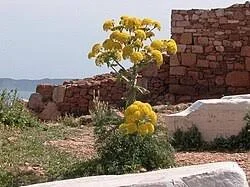
From here.
Before we go any further, please note that Giant Fennel is poisonous. Do not eat it or use it in your cooking.
Anyway, in Safed at the time, there were two great halachik personalities. And I mean really great. One was Rabbi Moses ben Yosef di Trani, known by his acronym Mabit, and the other was Rabbi Yosef Caro (or Karo) who complied the Shulchan Aruch and is often called Maran, especially in Sephardi circles. R. Caro ruled the animals with the hemorrhagic stomachs treif, but eight days later, the Mabit ruled that the animals were kosher and could be eaten. R. Caro outlined his reasoning in his responsa which were later published as אבקת רחל – Avkat Rachel. Here it is:
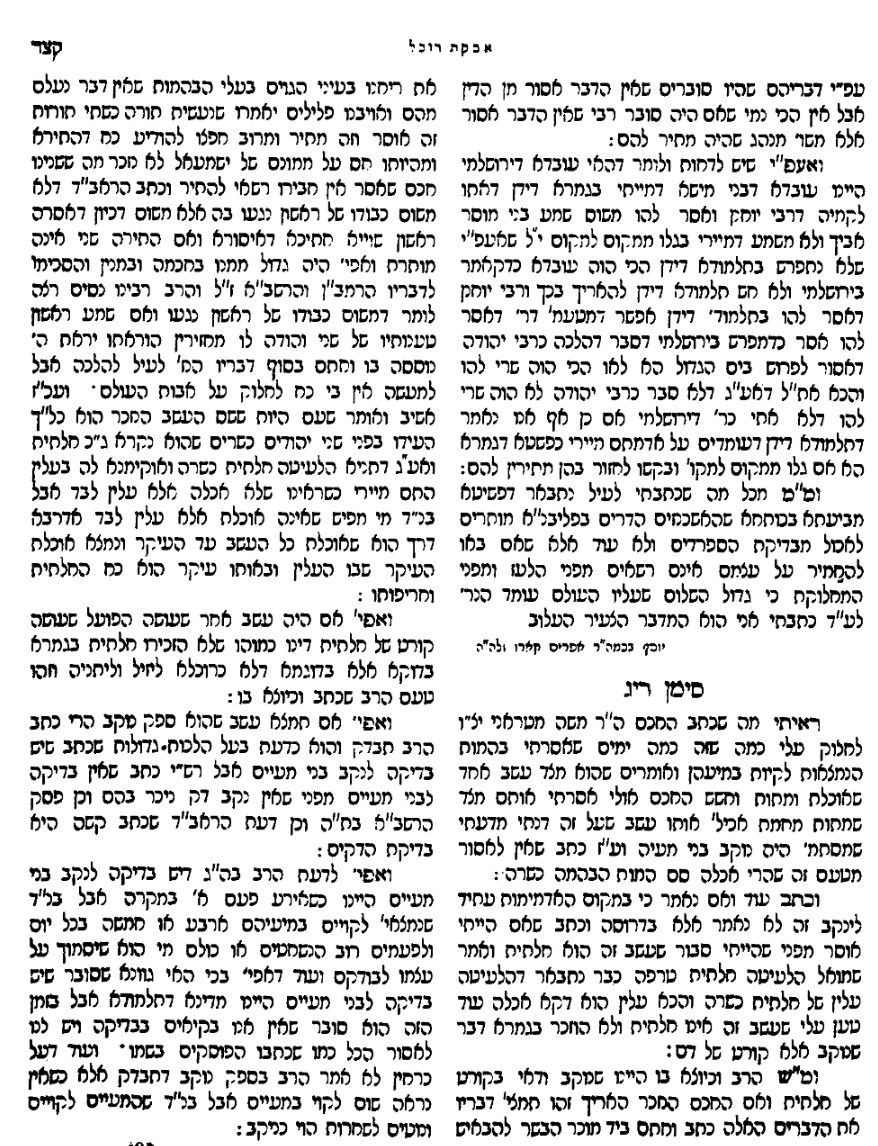
Avkat Rachel #213. Leipzig 1858. Available here.
The Mabit then published his own reasoning, which we provide for your reading pleasure:

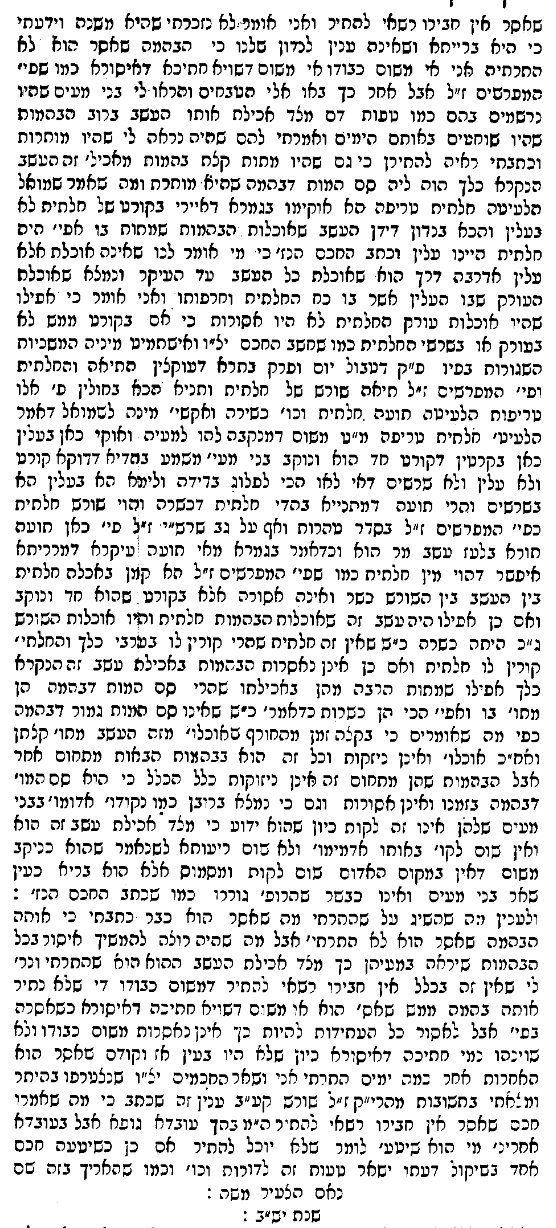
From Teshuvot Mabit, New York 1861. Available here.
By the way, this dispute was not the only one between these two giants. Others included the treatment of R. Caro’s students, whom the Mabit thought had not reached the level of halakhic teachers (!!); the authority of the court; and questions about agunah, as well as disagreements concerning religious precepts contingent on the Land of Israel.
“The dispute regarding common giant fennel indicates the crucial impact
of identifying a plant known from ancient times on practical Jewish law in
later periods. ”
Here is the Mabit’s description of the plant:
In Arabic it is called kalch […]. It is said that in a certain part of the winter when they eat this herb some of them die, and later they eat it and are not affected, and all this concerns animals that come from other regions; but the animals from this region are not affected at all […] [rather] most of them show something resembling red spots in their bowels. […] They eat an herb called ḥiltit […] when they eat this herb they consume the stem as well. (From here).
According to Dr Shemesh, the potency of the plant depends on a number of factors, including the season, the rainfall, the type of animal consuming it (goats are more sensitive than sheep) and its age (lambs and nursing kids being more susceptible).
The Mabit made the following arguments:
1. While eating common giant fennel is the equivalent of eating a סם (poison), this does not always render the animal unfit.
2. The common giant fennel that grows in the region of Safed should not be identified with the chiltit listed by Shmuel that renders animals treif.
3. Even if common giant fennel were indeed chiltit, it is the resin produced from this plant that damages the stomach. Eating the roots alone do not cause the same trauma, presumably because the concentration of the poison is lower there than in the leaves.
R. Yosef Caro disagreed and identified the giant fennel with chiltit. And he was fed up with the Mabit. Their disagreement would be detrimental to the image of the Jews among Muslims, who would be shocked to note that Jewish leadership did not have one ruling on the plant’s safety, with some allowing the animals that had eaten it, while others forbade them.
It will give us a bad name among the gentiles, who own livestock and nothing escapes them and our enemies will hold it against us and say that the Torah is split in two—this one forbids and that one permits, and in a wish to declare that it is permitted and to spare the property of Ishmael.
The Mabit Strikes Back
The Mabit kept silent for several years, in an effort to have a single communal ruling on the case. But there was a limit, and eventually he wrote another responsum (Shut Mabit vol 2 # 194), prompted, of all things, by… the timing of Ramadan:
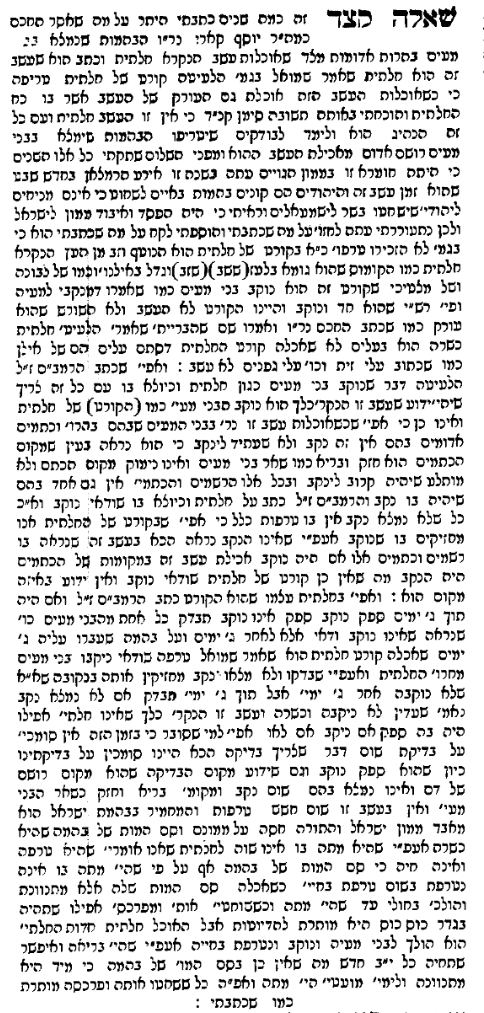
Shut Mabit vol 2, #194.
Several years ago I wrote a permissive ruling concerning the sage Yosef Caro’s prohibition of animals whose bowels show red blotches as a result of eating an herb called chiltit and he wrote that this herb is chiltit […] and I proved in that responsum, siman 154, that this herb is not chiltit, and he nonetheless ruled and taught the inspectors to declare animals with a redness in their bowels due to eating the herb unfit, and in order to maintain the peace I remained silent all these years because this stringent ruling affected the property of the gentiles.
This year, Ramadan falls in the month of Shevat, which is the season of this herb, and the Jews buy animals and bring them to be slaughtered because they do not let the Jews slaughter meat for the Ishmaelites, and I saw that this is causing Jews losses, and for this reason I have now decided to reinstate my previous opinion, adding further justifications.
Let’s give the last word to Dr. Shemesh, from whose paper much of this post is drawn:
Judging from the conflicting descriptions of Maran and the Mabit concerning the extent of harm inflicted and the pathological symptoms, the impression is that they had witnessed different levels of severity. The Mabit describes the death of some of the animals and the appearance of red blotches in the stomach. In contrast, Maran witnessed a graver phenomenon, manifested by dark-black blotches and the death of a large number of animals.
The dispute between Maran and the Mabit concerning the ritual fitness of the animals had various consequences for the Jewish community - economic, health-related, and social. From an economic point of view, deeming the animals unfit caused financial loss to their owners, while recognizing them as fit saved them large sums. According to the testimony of Maran, several people in the Jewish community died as a result of eating infected animals; however the Mabit described no similar state of affairs. Maran was also concerned about the grave social effects within the Jewish community and externally. In his opinion, presenting two conflicting halakhic opinions would cause disputes and segregation within the Jewish community and even affect the instructional authority of halakhic authorities. Maran was concerned to a similar degree about the deterioration of relations between Jews and non-Jews, as Muslim society utilized the slaughter and meat supply of Jewish slaughterers. In practice, he reports no unusual events with regard to the relationship between Jews and their neighbors.
The dispute regarding common giant fennel indicates the crucial impact of identifying a plant known from ancient times on practical Jewish law in later periods…
The debate between Maran and the Mabit illuminates the use (which is not new to Jewish sources) of expert knowledge in order to confirm halakhic contentions and rulings. In the philological domain this involves use of local Arabic to prove the difference between common giant fennel and ḥiltit. In the pathological domain it involves receiving the testimonies and opinions of slaughterers, who are knowledgeable about animal anatomy, in order to reach a decision on the nature of the damage inflicted and its severity.
So study botany very well. It may save your sheep.
Extra Credit - How Giant Fennel Poisons you, or your sheep
You may recall that we read the Mabit’s description of how the animals are affected: “most of them show something resembling red spots in their bowels.” These red spots are hemorrhages, caused by Fennel. To learn more, I consulted the handy, definitive work on the topic, the 2005 edition of A Guide to Medicinal Plants of North Africa, p.122:
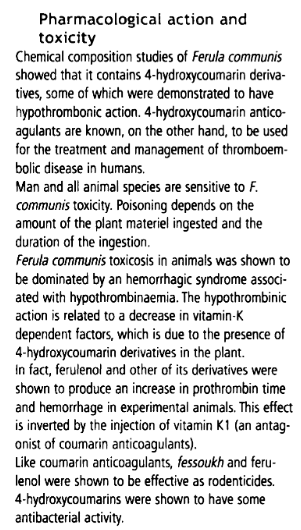
So the next time you eat a salad which contains fennel, be careful!
