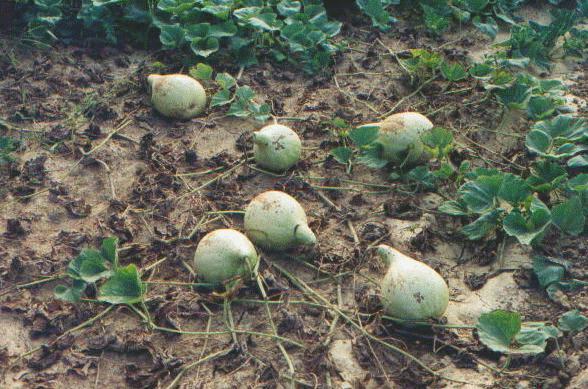
Ketuvot 103 ~ The Death of the Editor

כתובות קג, א

ת"ר בשעת פטירתו של רבי אמר לבני אני צריך נכנסו בניו אצלו אמר להם הזהרו בכבוד אמכם נר יהא דלוק במקומו שולחן יהא ערוך במקומו מטה תהא מוצעת במקומה

The rabbis taught in a Baraisa: At the time of Rebbi's death he said "I need my sons." They came to him and he said to them: "[After I die] be careful of you mother's honor. Leave a lamp to burn [for me] in its usual place. Let [my usual place at] the table be set, let [my] bed be ready in its usual place...

The Talmud has been discussing the obligations of a man’s heir’s to their father’s widow. As an example, it records the instructions that Rabbi Yehudah HaNassi – known to all simply as Rebbi – gave to his sons to honor his widow. This is how he began:"הזהרו בכבוד אמכם -be careful of your mother's honor." 

As the story spills onto daf 104, the Talmud hints at the cause of Rebbi’s demise. He seems to have been suffering from an intestinal disorder, since Rebbi’s maid noted that he needed to use the latrine very often. This was causing him great distress –although apparently the distress was not because he needed to move his bowels so often, but rather that as a result of his condition, he could not wear tefillin. 

Rabbi Yehudah HaNassi, Editor Extraordinaire

According to the great scholar of the Talmud David Halivni, the Mishnah came into being 

...as a result of the exigencies of the post-Temple era...towards the second half the of century with the termination of the oppressive Roman regimens, the Mishnah continued to flourish through the activities of the enormously prestigious R. Judah Hanassi...only to collapse of its own weight soon after R. Judah Hanassi's death.  

As a result, relatively few additions entered the Mishnah; it basically remained much the same as it was when compiled by the editor-anthologist.  This is why the Mishnah is the only classical rabbinic book about whose editor we are relatively certain.  We have no idea who the editors were of any of the other classic rabbinic texts (including the Talmud) but the evidence clearly indicates that R. Judah Hanassi was the editor-anthologist of the Mishnah.  This evidence is based on two sources: the occasional cross reference by R. Yochanan to R. Judah as editor-anthologizer and, above all, the fact that no one who lived after R. Judah Hanassi is mentioned in the Mishnah. 

The Medical History of Rabbi Yehudah HaNassi

Recent scholars have been tempted to diagnose the many illnesses from which Rebbi suffered. In her Hebrew paper The Illnesses of Rabbi Yehudah HaNassi in Light of Modern Medicine, the historian Esther Divorshki  from the University of Haifa noted that more is known about the ailments of Rebbi than about any other talmudic sage. Some think that Rebbi suffered from painful hemorrhoids, to such a degree that his cries could be heard when he used the latrine ( and as described in Bava Metziah 85a). Rebbi was so distressed by this illness that he ascribed to it a religious meaning, and proclaimed: “The righteous die though intestinal diseases.” But as Divorshki correctly notes, hemorrhoids are not painful to the degree described in the Talmud (– unless complicated by anal fissures). She therefore suggests that Rebbi’s illness - the one from which he died - was an inflammatory bowel disease.

Rebbi suffered from a number of other diseases throughout his life. In Nedarim  we learn that he had episodes of temporary memory loss. He was also afflicted with צמירתא and צפרנא (Bava Metziah 85a). Divorshki the historian notes that some have suggested that צמירתא is kidney stones, perhaps complicated with urinary tract infections. As for צפרנא, (or, in variant forms, צפדנא) Avraham Steinberg from Sha'arei Tzedek Hospital suggests that since this disease was characterized by bleeding from the gums, “it seems reasonable to identify this illness with scurvy.” Julius Preuss had a similar suggestion, one he offered with great certainty: “There can be no doubt that tzafdina refers to stomatitis, perhaps scorbutic stomatitis which also occurs sporadically.” And if these were not enough, Rebbi also had an eye ailment, which his personal physician Shmuel was able to cure, as well as inflammation of his joints, (Yerushalmi Shabbat 16:1) that suggests the illness we call gout. 

A Unifying Diagnosis?

Can a wise clinician put all this together and come up with a single unifying diagnosis that can explain all of Rebbi’s terrible symptoms? In 1978, Ari Shoshan suggested in Korot, The Israel Journal of the History of Medicine and Science, that Rebbi suffered from a psychosomatic disease.  However, Divorshki suggests that the rapidly advancing field of genetics can provide a more satisfying solution. She posits that Rebbi had a seronegative spondyloarthritis associated with a specific tissue type called HLA (Human Leukocyte Antigen) B-27. (Don't be afraid. Seronegative means that the condition is not associated with rheumatoid factor, and spondyloarthritis is a group of conditions that causes inflammation of the joints - and other tissues.)  This tissue disorder –a kind of autoimmune disease - is associated with gout (Rebbi had that) and inflammation of the mouth (check) and uveitis – a painful inflammatory eye condition (also that). Perhaps, Divorshki notes, צמירתא was not in fact kidney stones or a urinary infection, but an inflammation of the bladder wall or referred pain from an inflammation of the intestines, caused by the same nasty tissue disorder. For reasons that are still not known, this autoimmune disease can flare up and then, just as mysteriously, become dormant for months or years, which could explain how Rebbi appeared to have been cured.
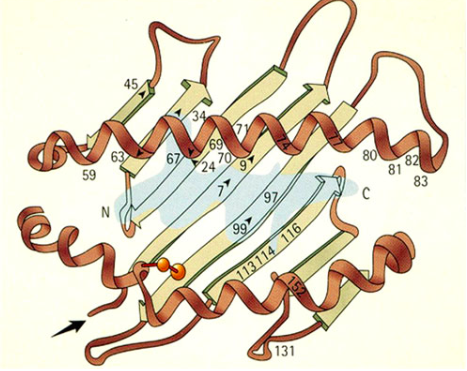
Schematic ribbon diagram of the HLA-B27 molecule’s peptide-binding cleft with a bound peptide (light blue); the letters N and C indicate, respectively, the amino and carboxy termini of the bound peptide. HLA-B*27:06, one of the two subtypes that see…

Schematic ribbon diagram of the HLA-B27 molecule’s peptide-binding cleft with a bound peptide (light blue); the letters N and C indicate, respectively, the amino and carboxy termini of the bound peptide. HLA-B*27:06, one of the two subtypes that seem to have no association with ankylosing spondylitis, and the disease-associated subtype HLA-B*27:04 (from which Rebbi may have been suffering) differ from each other by two residues at positions 114 and 116. From Khan, MA.  Polymorphism of HLA-B27: 105 Subtypes Currently Known.  Current Rheumatology Reports. (2013) 15:362 

We now have identified at least 105 subtypes of HLA-B27, and the list continues to grow.  Today, seronegative spondyloarthitis, of the sort that may have afflicted Rebbi, can often be managed with medications that suppress the immune response. But without these, damage to the host tissues slowly builds until the organ systems start to fail, offering no respite from the painful symptoms of this disease. Perhaps now we are in a position to better understand Rebbi’s dying words, which appear on daf  104a.

“May it be Your will that there will be peace when I rest in eternity.”

Rebbi wanted nothing more than respite from his pain, and his wish was granted: ‘A voice from heaven emerged and said: “He will come with peace, they will rest on their resting places.”

Print Friendly and PDF

Ketuvot 86b ~ Who Wants to Marry More?

 תלמוד בבלי כתובות פו ב

יותר ממה שהאיש רוצה לישא אשה רוצה להנשא

More than a man desires to wed, a woman desires to be wed.

What happens if a man owes money to both a debtor and to his ex-wife to pay for her כתובה?

In today's daf, the Talmud teaches that if this unlucky person can only repay one of the debts, he should repay the creditor and not his ex-wife. Although this ruling might discourage women from getting married in the first place, we should not be concerned, because "more than a man desires to wed, a woman desires to be wed."  

We've had other occasions to look at sweeping statements made by the rabbis of the Talmud about ways women view marriage. Resh Lakish famously stated (יבמות 118) that "it was better for a women to live with a husband than to live alone" (though you may recall that there were at least four ways to understand this statement of Resh Lakish). We also noted that the late Rabbi J.B. ("the Rav") Soloveitchik believed that this statement reflected "an existential fact." (It also turned out that he was wrong.) While the Rav didn't declare our new psychological insight to be an "existential fact," does it have any validity to it in today's society? Do women really want to be married more than men?

Societal norms change very fast

Yesterday the US Supreme Court heard oral arguments about whether the Constitution guarantees same-sex couples the right to marry. On the one hand, Justice Kennedy pointed out that the traditional  definition of marriage "has been with us for millennia.  And it ­­— it’s very difficult for the Court to say, oh, well, we ­­— we know better."  On the other hand, gay marriage is now legal in 36 states in the US. The lesson here is that societal norms of about all aspects of marriage are changing very quickly. It may indeed have been true in talmudic times that women wanted to marry more than did men, but our society is vastly different. And with that note of caution, we may proceed.

Who Wants to be Married?

In 2011 the anthropologist Helen Fisher and two colleagues released the "largest and most comprehensive nationally-representative study of single men and women ever done." They surveyed 5,200 single people in the US aged 21 to over 65, and found "a new picture of single Americans emerges that is radically different than it was 50 years ago..." And what of the talmudic claim that women are more eager to marry?

This national survey clearly shows that men are just as eager to marry as women are; 33% of both sexes want to say “I do.
— Helen Fisher 2011. The Forgotten Sex: Men.

So today, in the US it is not correct to say that women want to be married more than men.  Some of Fisher's other findings about the attitudes of single men might surprise you too:

Men in every age group are more eager than women to have children.  Even young men. Among those between ages 21 and 34, 51% of men want kids, while 46% of women yearn for young.  Men are less picky too.  Fewer men say it is important to find a partner of their own ethnic background (20% of men vs 29%  of women said this is a “must have” or “very important”); and fewer say they want someone of their own religion (17% of men vs 28% of women said this is a “must have” or “very important”).   Men are also more likely to have experienced love at first sight...

Let's give the last word to Dr Fisher, (who serves as an advisor to Match.com), and remember the danger of assuming that human nature does not change.  

My colleagues and I have put over 60 men and women ages 18-57 into a brain scanner to study the brain circuitry of romantic passion.  We found no gender differences.  This..study supports what I have long suspected: that men are just as eager to find a partner, fall in love, commit long term and raise a family.   It’s an illuminating, indeed myth-shattering, new set of scientific data.  And the sooner we embrace these findings, and fling off our outmoded and unproductive beliefs about both sexes, the faster we will find—and keep–the love we want.

Print Friendly and PDF

Ketuvot 86 ~ 1,000 pages, and Counting

Tomorrow we will study the 1,000th page of Talmud in the current Daf Yomi cycle.  That's right, Ketuvot 86 is the 1,000th page. Here's how:

 64=ברכות 

 157=שבת

105=עירובין

121=פסחים

22=שקלים

88=יומא

56=סוכה

40=ביצה

35=ראש השנה

31=תענית

32=מגילה

29=מועד קטן

27=חגיגה

122=יבמות

86=כתובות

Add that all up and you get...1,015. Whoops? Not really. As you may recall, each new מסכת (tractate) of the Talmud has a title page, but the text always starts on page 2 (ב). So we need to subtract one page for each of the 15 tractates we've covered so far. And 1,015-15=1,000.

Pagination in the Talmud

It wasn't always the case that Ketuvot 86 meant the same thing to all readers. Before the printed Talmud, everything was written by hand, and your particular manuscript (if you were lucky enough to have one) might well differ from that in another town.  Here, for example, is the opening of the ninth chapter of Ketuvot, (the one we are currently studying in this Daf Yomi cycle,) in the 1342 manuscript held in the Munich State Library (Babylonischer Talmud – BSB Cod. heb. 95. 1342.) You'll notice how completely different it looks from anything we have today:

Normal
0


false
false
false

EN-US
JA
X-NONE


 <w:LatentStyles DefLockedState="false" DefUnhideWhenUsed="true"
DefSemiHidden="true" DefQFormat="false" DefPriority="99"
LatentStyleCount="276">…

Opening of Ketuvot Chapter 9 (=83a), Babylonischer Talmud – BSB Cod. heb. 95. 1342

According to Marvin Heller (who knows everything about early Hebrew printing and the printing of the Talmud) it was Daniel Bomberg, a Christian printer who lived in Venice, who established the form of the Talmud that we have today.

The first complete edition of the Babylonian Talmud, the edito princeps, was printed from 1519/20-23. The Bomberg Talmud became a standard for the editions that followed, almost all subsequent editions adhered to his layout and foliation.
— Marvin Heller. Earliest Printings of the Talmud. In Mintz and Goldstein. Printing the Talmud 2002. p 73.

Bomberg printed the tractate Ketuvot in 1521, and so that is the earliest date we would recognize where we are now- Ketuvot 86, the 1,000th page of the Talmud. 

Some Light Summer Reading Suggestions

There are many novels with 1,000 pages of more. Perhaps you've read JRR Tolkien's Lord of the Rings Trilogy,  or Tolstoy's War and Peace?  What about Ayn Rand's Atlas Shrugged, or Victor Hugo's Les Miserables, (only 1,504 pages, in paperback!) None of them appeal to you? Want something a bit more biblical? Then try Thomas Mann's Joseph and His Brothers, a retelling of a few chapters of Genesis...in 1,400 plus pages. (It must be good - he won a Nobel Prize.) Too high-brow? Then consider Stephen Kings's It (only 1,104 pages) Too scary? Then go for Charles Dicken's classic Bleak House; it's a story about the injustices of the British legal system, and the Penguin Classic edition is 1,096 pages long. Perfect beach reading.  

I looked up War and Peace and it’s about this guy Pierre who fights in France, and all this terrible stuff happens to him, but in the end because of his charm he gets to be with this girl he really loves, and who really loves him even though she cheated on him.
— Gary Shtenygart, Super Sad True Love Story

Visualizing Numbers

1


Back on August 3, 2012 we opened the new cycle of Daf Yomi with Berachot 2. That day just happened to be ט׳ו באב.

10


Ten. It's no big deal really, other than we count using base 10 because that's how many fingers we have. We learned the tenth page of  the Talmud (Berachot 11) on August 12, 2012.

Ten is actually of great importance in Judiasm. Here are some of the significant ones:

  • There were Ten Plagues in Egypt

  • There were Ten Commandments. 

  • The Torah (Deut. 26:12) commands that the poor be given one-tenth of our produce: כי תכלה לעשר את כל מעשר תבואתך בשנה השלישת שנת המעשר 

  • We observe the annual Ten Days of Repentance from ראש השנה to יום כפור.

  • There were Ten Martyrs that are rememberer in Jewish prayers on יום כפור.

  • There are said to be Ten Lost Tribes of Israel.

  • There are Ten Sephirot in the Kabbalah.

  • Ten men are needed to make a minyan.

100

We studied the 100th page on Nov 10, 2012. That was Shabbat 38.  100 is of a special number, it being the square of 10. 

We make a big deal out of 100. It's the basis of our percentage calculations, and we count centuries based on their 100 year cycles. 100 is also the sum of the cubes of the first four integers: 100=[1x1x1]+[2x2x2]+[3x3x3]+[4x4x4].

Rabbi Meir taught that  a person should make 100 ברכות every day ( מנחות דף מג, ב). A person should hear 100 notes blown on the שופר on ראש השנה.

1,000

1,000 is also a huge deal in our world and has a bunch of nicknames, like a grand, a G, a kilo, and k. It’s also part of the elite chain of numbers in the “order-of-magnitude” chain, which we know as million, billion, trillion, etc. Million is actually the third number in that chain, with the dud 1 as the first number and 1,000 as the second number. And 1,000 is the key multiplier that defines the whole chain.
That said, 1,000’s dirty secret is that it’s a fraud like 10 and can’t be made into a square. The square root of 1,000 is an embarrassing 31.62277660168 etcetera without even a vinculum
— Tim Urban. From 1 to 1,000. Waitbutwhy.com

So we’ve covered 1,000 pages of the Babylonian Talmud. There are 2,711 pages in all, so we’re not even half-way done. But we’re closer than we were yesterday, and we will be even closer tomorrow. Congratulations to all who've reached this milestone.

Bomberg Talmud Ketuvot, title page 1521. From Marvin Heller, Printing the Talmud; A History of the Earliest Printed Editions of the Talmud 1992, p.147.

Bomberg Talmud Ketuvot, title page 1521. From Marvin Heller, Printing the Talmud; A History of the Earliest Printed Editions of the Talmud 1992, p.147.


Print Friendly and PDF

Ketuvot 83b ~ Cucumbers, Gourds and the Marshmallow Test

In the middle of a long discussion about the substitution of animals that have been designated to be sacrificed, we find this gem:

בוצינא טב מקרא

A small gourd now is better than a large gourd later (Temurah 9a).

Let’s review what we wrote when we first encountered this phrase back in April 2015. Here's how Rashi explained the concept in the tractate Ketuvot (83b):

 בוצינא דלעת קטנה קרא דלעת גדולה והאומר לחבירו קח לך דלעת קטנה בגינתי או המתן עד שיגדילו וקח גדולה טוב לו ליקח הקטנה מיד כי לא ידע מה יולד יום

...When a person says to his friend "you may take this small gourd in my garden now or you can wait until it grows larger and then take it" it is better to take the small gourd immediately, because you cannot know what the future may bring.

This is a fairly unremarkable observation, and it finds a similar expression in the adage "a bird in the hand is worth two in the bush." The meaning is clear: it's better to have a small but certain gain rather than risk a larger one that is less certain (though see here for an interesting alternative origin of the expression). This is Rashi's explanation. But there is another way to explain the phrase (and this is followed by the Koren-Steinsaltz Talmud).  According to Tosafot, cited in the name of Rabbenu Tam (d.1171), the saying means the following:

ומשל הדיוט כך הוא שאדם אוהב הקישות יותר שיהנה בה מהרה ממה שהוא אוהב דלעת ולהמתינה אע"פ שהיא טובה יותר

This common saying means that a person would prefer [fast growing] cucumbers because he can enjoy them sooner, rather than gourds [which grow slowly and] which require waiting, even though they [taste] better. (Tosafot, בוצינא טב מקרא, Ketuvot 83b).

So according to the great Rabbenu Tam, the aphorism does not address any element of risk. Instead it is addressing the ability to have self-control and to plan for the future.  The larger reward is certain, but is only available if you can wait. In fact, Rabbenu Tam is describing the famous Marshmallow Test.

The Marshmallow Test

The man behind the Marshmallow Test is the psychologist Walter Mischel, the emeritus chair of the Department of Psychology at Columbia University. He was born in Vienna and fled to the US in 1938, and sadly he died last September at the age of 88. His obituary in The New York Times noted that his studies on “delayed gratification in young children clarified the importance of self-control in human development, and…led to a broad reconsideration of how personality is understood.”

The test is simple: give kindergarten children an option -one reward now (in the original experiments the children could choose any reward, not just a marshmallow) or two if you can sit and not touch the reward for fifteen minutes. The studies were performed at Stanford between 1968 and 1974 and involved some 550 children.  If you haven't already seen what the test looks like, grab a coffee and watch the video. It's quite wonderful.

There have been dozens and dozens of academic papers written on the Marshmallow test, since Mischel first published his findings in 1969.  But perhaps most surprisingly, the findings of the Marshmallow experiment on pre-schoolers seems to predict the future behaviors of the test subjects when they are adults. Here is Mischel summarizing his findings in his new book called (predictably enough,) The Marshmallow Test: Mastering Self-Control.

What the preschoolers did as they tried to keep waiting, and how they did or didn’t manage to delay gratification, unexpectedly turned out to predict much about their future lives. The more seconds they waited at age four or five, the higher their SAT sores and the better their rated social and cognitive functioning in adolescence. At age 27-32, those who had waited longer during the Marshmallow Test in preschool had a lower body mass index and better sense of self-worth, pursued their goals more effectively, and coped more adaptively with frustration and stress. At midlife, those who could consistently wait (“high delay”), versus those who couldn’t consistently wait (“low delay”), were characterized by distinctively different brain scans in areas linked to addictions and obesity.
— Walter Mischel, The Marshmallow Test 2014, p5.

Wow. That's some test. But before you run out and test your preschool aged children (or grandchildren), remember that according to Tosafot, most people prefer a smaller instant reward to a larger but delayed reward. The classic Marshmallow Test measured how long young children could control their desires for an instant reward, but gives a new insight into  this daf. If you can hold out for slow growing gourds rather than go for the faster growing cucumbers, you might just do very well in later life.

[Repost from here.]

Print Friendly and PDF