
From The Talmudology COVID-19 Dept: Social Distancing in the Rabbinic Tradition


Shabbat 9b ~ Haircuts
Among the things we must not start on Friday afternoons, the eve of Shabbat, are haircuts. The Mishnah makes this clear:
שבת ט, ב
לֹא יֵשֵׁב אָדָם לִפְנֵי הַסַּפָּר סָמוּךְ לַמִּנְחָה עַד שֶׁיִּתְפַּלֵּל
A person may not sit before the barber adjacent to the time of mincha until he recites the afternoon prayer.
As Rashi points out, this ruling also applies to the other days of the week, when we may also not start complex acts that may cause us to forget our afternoon prayers. But this ruling is much more important with regard to Friday afternoons, because we might become so involved in the process that we could forget that Shabbat had begun.
The Talmud explains that this ruling applies even when the hairdresser begins early in the afternoon, if it involves a lengthy and complex hairstyling called “a haircut of Ben Elasah”:
לְעוֹלָם סָמוּךְ לְמִנְחָה גְּדוֹלָה — וּבְתִסְפּוֹרֶת בֶּן אֶלְעָשָׂה
According to Rashi, Ben Elasah was the son-in-law of the editor of the Mishnah, Rabbi Yehudah HaNasi. Elsewhere, the Talmud notes that these kind of hairstyles meant a great deal to Ben Elasah:
נדרים נא, ב
מאי בן אלעשה דתניא לא לחנם פיזר בן אלעשה את מעותיו אלא להראות בהן תספורת של כ"ג
דכתיב (יחזקאל מד, כ) כסום יכסמו את ראשיהם תנא כעין לולינית מאי לולינית א"ר יהודה תספרתא יחידתא היכי דמי אמר רבא ראשו של זה בצד עיקרו של זה והיינו תספורת של כהן גדול
It is taught in a braita: Ben Elaah did not spend his money on his special haircut for nothing. Rather, he spent it to show others what the haircut of a High Priest looked like.
As it is written with regard to the priests: “They shall poll their heads” (Ezekiel 44:20), and it is taught in a baraita: This haircut is like a luleyanit. The Gemara asks: What is a luleyanit? Rav Yehuda said: It is a unique haircut. The Gemara asks: What is this haircut like? Rava said: The edge of this shaft of hair is by the roots of that shaft of hair. The hair is cut so that it does not overlap. And this is the haircut of a High Priest, for which ben Elasah paid a large sum.
The hairstyle called luleyanit has been translated as “Julian” or in the style of a roman official by the name of Julianus. As the independent scholar Eli Gurevich explains:
It is important to note that in the Hebrew/Aramaic text of the Talmud the word Julian is spelled Lulian (לולינית). It has been already pointed out by many scholars, including Marcus Jastrow in his dictionary, and by Alexander Kohut in Aruch Hashalem that Jews modified the Roman name Julianus and pronounced it Lulianus in a later time. This can be proven from the fact that the Jerusalem Talmud (Nedarim 3:2, Vilan Edition Daf 9a) in its vague description of the invasion of Persia and the Battle of Ctesiphon by the Roman Emperor Julian the Apostate, in 363 CE, calls him King Lulianus, and so from there we know that Lulianus is defintiely Julianus, as well as Lulian is definitely Julian.
All of which leaves the reader to wonder, just what did that haircut actually look like?
“Alexander the Great, whose famous anastole, i.e., ascending locks from a central parting, became the model for the Hellenistic kings.”
Greek and Roman Hairstyles Revealed
To help figure this out let’s turn to a helpful 2005 paper published in the Journal of Investigative Dermatology titled Hairstyles in the Arts of Greek and Roman Antiquity. It turns out that thanks to lots of pottery shards and terracotta head that survived from this period, we can reconstruct the hairstyles of the day. For example, “Nero’s curls were corrugated with crimping tongs and carefully piled on each other in several rows.” The central greek god Zeus “typically has his hair aligned in an upward, followed by a downward sweep, which then radiates outward, forming a corona of individual strands. Asclepius, the healing god, is the only god to wear his hair similar to Zeus! He also appears as a mature bearded man, but with a milder expression…. Hera, Zeus’ wife and of royal stature, had shiny, perfumed locks covered by a veil. Athena, the city protectress, wore a helmet, with fine curls protruding from underneath.”
Eli Gurevich notes that from today’s page of Talmud and the source from Nedarim, we can deduce four points about the Ben Elasah hairstyle:
It was called Julian Style.
It was very expensive.
It took a few hours (at least two) to cut.
The hairstyle was shaped in such a way that the tip of one lock of hair touched the root of the next.
This may have been the very haircut of the Emperor Nero, whose hair we have already noted, appears to have been cut and layered vertically, with the tip of one curl touching the root of the curl below it.

A bust of Bust of Nero from the Musei Capitolini, in Rome. Notice how the bottom row of his hair on the forehead comes out directly from the tips of row above it. Just like the cut of Ben Elasha.
Another example of this hairstyle is from a fresco of the Roman Emperor Domitian (c51-96 CE). His hair is clearly shown as being layered, again with the tips of the top layer touching the roots of the layer below it. Like this:

Domitian’s hairstyle on the Palazzo Della Cancelleria.
Gurevich concludes that
this hairstyle lasted for about a decade from about 64-73 CE, during the reigns of Nero and Vespasian, coinciding with the last years of the Second Temple in Jerusalem, where it was most probably was worn by the High Priest, who tried to copy the Roman Emperor, who in turn copied a street performer. How ironic life can be.
So the High Priest of the Temple in Jerusalem had his hair cut to mimic the trendy style of his day. It’s disappointing, given how much effort we put into protecting our children from the influence of the surrounding culture of the celebrity. Just make sure they don’t read this.
Happy Pi Day 2020, and Happy Birthday Albert Einstein
In the midst of the never-ending news cycle about a certain virus, it is easy to forget the important things in life. Like Pi day, which is also the birthday of Albert Einstein, and which falls tomorrow, on Shabbat.
So let’s put aside the coronavirus for a few moments (can you do that?) and think about…
Pi Day

From here.
Tomorrow, March 14, is celebrated as Pi Day by some of the mathematically inclined in the US. Why? Well, in most of the world, the date is written as day/month/year. So in Israel, all of Europe, Australia, South America and China, today's date, March 14th, would be written as 14/3.
But not here in the US. Here, we write the date as month/day/year; it's a uniquely American way of doing things. (Like apple pie. And guns.) So today's date is 3/14. Which just happen to be the first few digits of pi, the ratio of the circumference of a circle to its diameter.
And that's why each year, some (particularly geeky) Americans celebrate Pi Day on March 14 (3/14). The year 2015 was Pi'ish than all others, since the entire date (when written the way we do in the US, 3/14/15) reflects five digits of pi, and not just the first three: 31415. Actually we got even more geeky: This day in 2015 at 9:26 and 53 seconds in the morning, the date and time, when written out, represented the first ten digits of Pi: 3141592653.
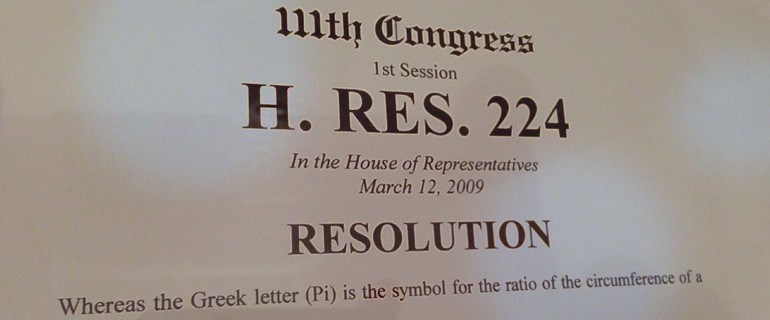
So that's why Pi Day is celebrated here in the US - and probably not anywhere else. (It has even be recognized as such by a US Congressional Resolution. Really. I'm not making this up. And who says Congress doesn't get anything done?)
PI IN THE BIBLE
In the ּBook of Kings (מלאכים א׳ 7:23) we read the following description of a circular pool that was built by King Solomon. Read it carefully, then answer this question: What is the value of pi that the verse describes?
מלכים א פרק ז פסוק כג
ויעש את הים מוצק עשר באמה משפתו עד שפתו עגל סביב וחמש באמה קומתו וקוה שלשים באמה יסב אתו סביב
And he made a molten sea, ten amot from one brim to the other: it was round, and its height was five amot, and a circumference of thirty amot circled it.
Answer: The circumference was 30 amot and the diameter was 10 amot. Since pi is the ratio of the circumference of a circle to its diameter, pi in the Book of Kings is 30/10=3. Three - no more and no less.
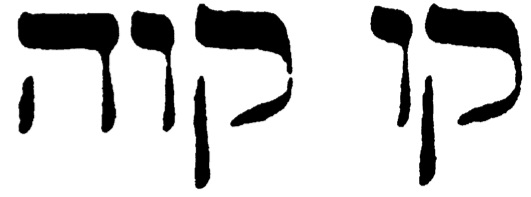
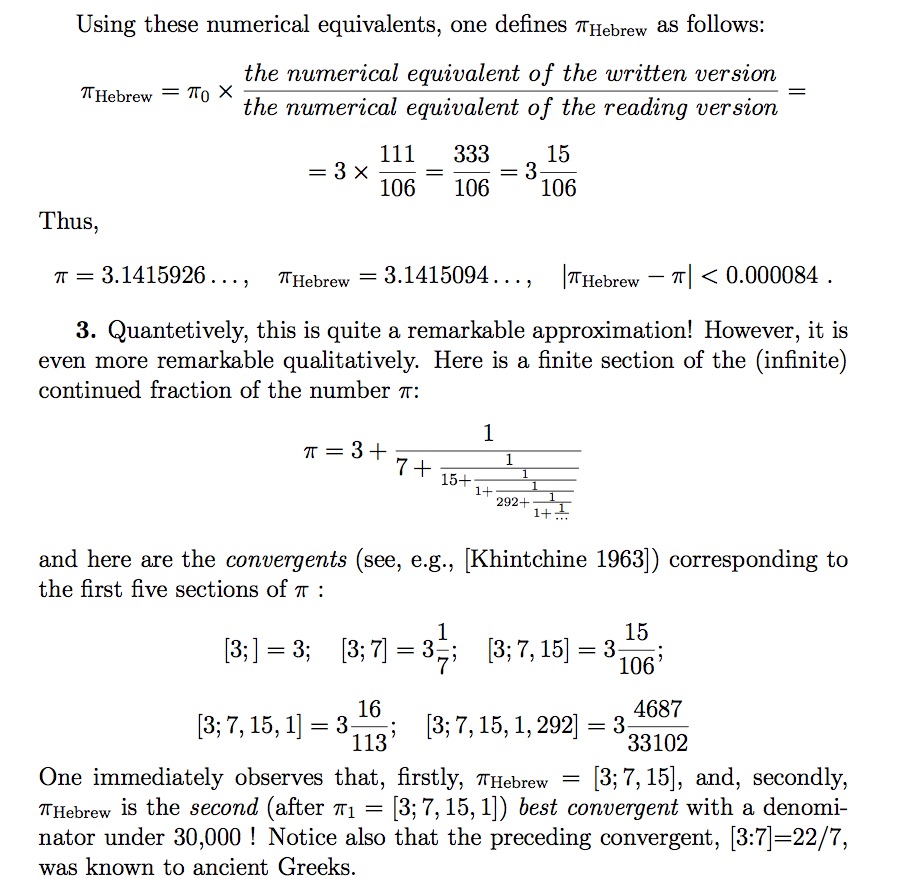
There are lots of papers on the value of pi in the the Bible. Many of them mention an observation that seems to have been incorrectly attributed to the Vilna Gaon. The verse we cited from מלאכים א׳ spells the word for line as קוה, but it is pronounced as though it were written קו. (In דברי הימים ב׳ (II Chronicles 4:2) the identical verse spells the word for line as קו.) The ratio of the numerical value (gematria) of the written word (כתיב) to the pronounced word (קרי) is 111/106. Let's have the French mathematician Shlomo Belga pick up the story - in his paper (first published in the 1991 Proceedings of the 17th Canadian Congress of History and Philosophy of Mathematics, and recently updated), he gets rather excited about the whole gematria thing:
A mathematician called Andrew Simoson also addresses this large tub that is described in מלאכים א׳ and is often called Solomon's Sea. He doesn't buy the gematria, and wrote about it in The College Mathematics Journal.
A natural question with respect to this method is, why add, divide, and multiply the letters of the words? Perhaps an even more basic question is, why all the mystery in the first place? Furthermore, H. W. Guggenheimer, in his Mathematical Reviews...seriously doubts that the use of letters as numerals predates Alexandrian times; or if such is the case, the chronicler did not know the key. Moreover, even if this remarkable approximation to pi is more than coincidence, this explanation does not resolve the obvious measurement discrepancy - the 30-cubit circumference and the 10-cubit diameter. Finally, Deakin points out that if the deity truly is at work in this phenomenon of scripture revealing an accurate approximation ofpi... God would most surely have selected 355/113...as representative of pi...
Still, what stuck Simoson was that "...the chroniclers somehow decided that the diameter and girth measurements of Solomon's Sea were sufficiently striking to include in their narrative." (If you'd like another paper to read on this subject, try this one, published in B'Or Ha'Torah - the journal of "Science, Art & Modern Life in the Light of the Torah." You're welcome.)
PI IN THE TALMUD
The Talmud echoes the biblical value of pi in many places. For example:
תלמוד בבלי מסכת עירובין דף יד עמוד א
כל שיש בהיקפו שלשה טפחים יש בו רחב טפח. מנא הני מילי? - אמר רבי יוחנן, אמר קרא : ויעש את הים מוצק עשר באמה משפתו עד שפתו עגל סביב וחמש באמה קומתו וקו שלשים באמה יסב אתו סביב
"Whatever circle has a circumference of three tefachim must have a diameter of one tefach." The problem is that as we've already noted, this value of pi=3 is not accurate. It deviates from the true value of pi (3.1415...) by about 5%. Tosafot is bothered by this too.
תוספות, עירובין יד א
והאיכא משהו. משמע שהחשבון מצומצם וכן בפ"ק דב"ב (ד' יד:) גבי שני טפחים שנשתיירו בארון ששם ספר תורה מונח שהיא בהיקפה ששה טפחים ופריך כיון דלאמצעיתו נגלל נפיש ליה משני טפחים וכן בתר הכי דמשני בספר דעזרה לתחלתו נגלל ופריך אכתי תרי בתרי היכי יתיב משמע דמצומצם לגמרי וקשיא דאין החשבון מדוקדק לפי חכמי המדות
Tosafos can't find a good answer, and concludes "this is difficult, because the result [that pi=3] is not precise, as demonstrated by those who understand geometry."
PI IN THE RAMBAM
In his commentary on the Mishnah (Eruvin 1:5) Maimonides makes the following observation:
פירוש המשנה לרמב"ם מסכת עירובין פרק א משנה ה
צריך אתה לדעת שיחס קוטר העיגול להקפו בלתי ידוע, ואי אפשר לדבר עליו לעולם בדיוק, ואין זה חסרון ידיעה מצדנו כמו שחושבים הסכלים, אלא שדבר זה מצד טבעו בלתי נודע ואין במציאותו שיודע. אבל אפשר לשערו בקירוב, וכבר עשו מומחי המהנדסים בזה חבורים, כלומר לידיעת יחס הקוטר להקיפו בקירוב ואופני ההוכחה עליו. והקירוב שמשתמשים בו אנשי המדע הוא יחס אחד לשלשה ושביעית, שכל עיגול שקוטרו אמה אחת הרי יש בהקיפו שלש אמות ושביעית אמה בקירוב. וכיון שזה לא יושג לגמרי אלא בקירוב תפשו הם בחשבון גדול ואמרו כל שיש בהקיפו שלשה טפחים יש בו רוחב טפח, והסתפקו בזה בכל המדידות שהוצרכו להן בכל התורה
...The ratio of the diameter to the circumference of a circle is not known and will never be known precisely. This is not due to a lack on our part (as some fools think), but this number [pi] cannot be known because of its nature, and it is not in our ability to ever know it precisely. But it may be approximated ...to three and one-seventh. So any circle with a diameter of one has a circumference of approximately three and one-seventh. But because this ratio is not precise and is only an approximation, they [the rabbis of the Mishnah and Talmud] used a more general value and said that any circle with a circumference of three has a diameter of one, and they used this value in all their Torah calculations.
So what are we to make of all this? Did the rabbis of the Talmud get pi wrong, or were they just approximating pi for ease of use? After considering evidence from elsewhere in the Mishnah (Ohalot 12:6 - I'll spare you the details), Judah Landa, in his book Torah and Science, has this to say:
We can only conclude that the rabbis of the Mishnah and Talmud, who lived about 2,000 years ago, believed that the value of pi was truly three. They did not use three merely for simplicity’s sake, nor did they think of three as an approximation for pi. On the other hand, rabbis who lived much later, such as the Rambam and Tosafot (who lived about 900 years ago), seem to be acutely aware of the gross innacuracies that results from using three for pi. Mathematicians have known that pi is greater than three for thousands of years. Archimedes, who lived about 2,200 years ago, narrowed the value of pi down to between 3 10/70 and 3 10/71 ! (Judah Landa. Torah and Science. Ktav Publishing House 1991. p.23.)
HAPPY BIRTHDAY, EINSTEIN
Tomorrow, March 14, is not only Pi Day. It is also the anniversary of the birthday of Albert Einstein, who was born on March 14, 1879. As I've noted elsewhere, Einstein was a prolific writer; one recent book (almost 600 pages long) claims to contain “roughly 1,600” Einstein quotes. So it's hard to chose one pithy quote of his on which to close. So here are two. Happy Pi Day, and happy birthday, Albert Einstein.
“As a human being, one has been endowed with just enough intelligence to be able to see clearly how utterly inadequate that intelligence is when confronted with what exists.”
“One thing I have learned in a long life: That all our science, measured against reality, is primitive and childlike — and yet it is the most precious thing we have.”
[A repost, of course, from last year’s Pi day. Some things just don’t change…]
From the Talmudology Purim Archives ~ Gender Fluidity, Male Lactation and Mordechai. And Salt.

Editor’s note: Today is the Jewish Festival of Purim,(unless you live in Australia, or New Zealand, or Jerusalem) on which there is a tradition to create and recite Purim Torah. (These spoofs are usually very clever and witty, and may require a deep knowledge of rabbinic texts.) But this post is not Purim Torah, although it may read as such if you have drunk a little too much alcohol. And drinking too much alcohol is definitely a Purim tradition. So drink up and read on…and I swear I am not making this stuff up.
Milk Producing Male Goats of The Talmud (MPMGOTT)
In the Talmud in tractate Chullin there is a discussion of about the prohibition of cooking meat and milk together. There are several teachings that are derived from the three places in the Torah where we read “You shall not cook a kid in its mother’s milk” (לא תְבַשֵּׁל גְּדִיח בַּחֲלֵב אִמּוֹ) Here is one of them, attributed to Shmuel:
חולין קיג, ב
בחלב אמו” ולא בחלב זכר”
“…In its mother’s milk” indicates that one is not liable for cooking meat in the milk of a male goat
A male goat that grows udders and produces milk? Here is how the great exegete Rashi (1040-1105) explains the Talmud:
ולא בחלב זכר - שהיה לו חלב מועט מן הדדים כגון אם נשתנה והיו לו דדים
“And not in the milk of a male goat”: This means that there was a small amount of milk from the udder. For example if the male goat changed and grew udders.
To understand what on earth is going on here, we need to take a detour into the strange world of biologic gender fluidity. So strap in and here we go.

Fish
In their helpful 2003 paper Group Sex, Sex Change, and Parasitic Males: Sexual Strategies Among the Fishes and Their Neurobiological Correlates (published, obviously, in the Annual Review of Sex Research) the authors note that there is “tremendous sexual diversity exhibited by fishes” Consider for example the clownfish, also known as the anemonefish. They are sequential hermaphrodites, and first develop into males. These colorful fish thrive unharmed in the poisonous tentacles of the sea anemone, and while several fish may live within the same anemone, there is only one pair that mate. Should the dominant egg-laying female die, one of the largest males steps up and does what needs to be done. He changes into a female. This male-to-female change is called protandry. Other fish, like the sea wrasse, are all born female, and as the need arises change into a male. This trick is carried out in at least 500 species of fish, and is called protogyny.
Birds
The male Northern Cardinal (Cardinalis cardinalis) is a bright red color with a black mask over its beak and eyes. The female is a drab olive color, with a grey mask. In 2008 the ornithological world was rocked when a bird was sighted that was half-red and half-olive. Meaning it was half-male and half-female. The bird, sighted in the Black Hawk Forest Nature Preserve in northwestern Illinois, “was perched in a cockspur hawthorn tree.” Its right side was male, and its left, female. The cardinal evaded capture so it was not possible to analyze its genetic makeup. To be clear, this was not a bird that changed sex; it was one that appeared to be both sexes.


Humans
We all should have been taught in school that our gender is determined by which sex chromosomes we receive. If we get two female chromosomes -XX- (one from mom and one from dad) we are female, and if we get one X from mom and a Y from dad -XY- we are male. But like all things, it’s a little more complicated than that. In the 1980s, British researchers discovered the sex-determining gene on a tiny bit of the male Y chromosome and named it the sry gene. That gene tells the body to develop into a male or female appearing body. Sometimes the sry gene sneaks off of the Y gene and makes its way into the DNA of an XX female. As a result, she will develop male anatomy while genetically remaining an XX female. (Please read that sentence again, just to be sure you have understood it.) And sometimes the sry gene on an XY genetic male can mutate and not work. In that case, the genetic male appears to have the organs of a female, which is what occurs in Swyer syndrome. (You can hear more about the amazing sex-changing effects of sry in this fascinating podcast.)
Ready for more? In a small community in the Dominican Republic there have been a number of cases in which little girls grow a penis and turn into little boys. (Again, please re-read that sentence.) These observations were first reported to the scientific community in 1974, and are caused by a deficiency of the steroid 5a-Reductase. Here is how the BBC explained what is going on when they reported about it in 2015.
When you are conceived you normally have a pair of X chromosomes if you are to become a girl and a set of XY chromosomes if you are destined to be male. For the first weeks of life in womb you are neither…Then, around eight weeks after conception, the sex hormones kick in. If you're genetically male the Y chromosome instructs your gonads to become testicles and sends testosterone to a structure called the tubercle, where it is converted into a more potent hormone called dihydro-testosterone. This in turn transforms the tubercle into a penis. If you're female and you don't make dihydro-testosterone then your tubercle becomes a clitoris…the reason [some genetic males] don't have male genitalia when they are born is because they are deficient in an enzyme called 5-alpha-reductase, which normally converts testosterone into dihydro-testosterone.
So the boys, despite having an XY chromosome, appear female when they are born. At puberty, like other boys, they get a second surge of testosterone. This time the body does respond and they sprout muscles, testes and a penis.
So there you have it. Little girls, brought up as little girls, turn into boys, who develop male genitalia, and live as men. You see, they were never really girls in the XX sense. They were XY boys whose lack of sex hormones caused them to look like girls. Which brings us back to that page in the Talmud and the strange case of…
That male goat that produced milk
We have seen that there is great deal of natural gender fluidity in the animal world (and if for no other reason, this should make us more sensitive and understanding of those people who want to change their birth gender). But what about that milk-producing male goat? Well according to the website dedicated to “Goat Milk Stuff,” as bizarre as it seems, “there have even been bucks that have been known to give milk (yes, all bucks have teats, and no, a milking buck is not normal).” This was not a case of a male-to-female transformation. It was a case of male lactation.
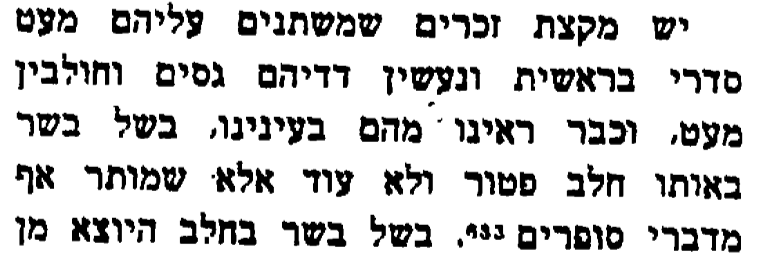
Writing in the 13th century in his classic commentary on the Talmud called Bet Habechirah, Menachem ben Solomon Meiri, known as the Meiri(1249–1306) wrote that he had seen examples of male milk-producing goats:
בית הבחירה. מכון התלמוד הישראלי השלם.ירושלים, תשל׳ד 432
“There are a few male [goats] in whom the works of creation are slightly changed and whose nipples become larger such that they produce a little milk. And we have seen them with our own eyes...”
So too, did Khalifa al Nuaimi, a shepherd in the United Arab Emirates: Here is the 2009 report from The National, a newspaper in the United Arab Emirates.
As one of his prized male goats trotted up for some feed, he noticed the animal had seemingly developed a large udder. While he could not quite believe his eyes, the luckless creature proceeded to produce milk on demand, much like his female companions in the pen.
The local farmer made the discovery four days ago at his goat pen in Masakin, a suburb of Al Ain, the government news agency, WAM, reported yesterday. The animal's male organs are said to have been pushed back by the udder, described as "big and bulky". Mr al Nuaimi got a half-litre of good-quality milk from the goat. Dr Martin Wyness, of the British Veterinary Centre in Abu Dhabi, said it was unusual but not unheard of for male mammals to produce milk. "It's absolutely possible," he said.
what may be happening
The structure of the cells involved in producing milk in the male goat has been studied using immunofluorescence and electron microscopy techniques. It turns out they are smaller but higher in number than those found in normal males, which suggests that the anterior pituitary gland, which controls their function is probably acting in a weird way.
Another explanation of the milk-producing male goats of the Talmud (MPMGOTT) is that it is linked to estrogen-like compounds in the plants upon which they were feeding.
“It is now known that more than 50 plant species contain estrogen mimics known as phytoestrogens. Although the mechanisms are not completely understood, several plant secondary metabolites…can mimic the effects of steroidal estrogens. These non-steroidal compounds have similar overall structures or active sites as natural steroidal estrogen and can compete for binding sites on estrogen receptor proteins. Thus, plant compounds can have effects similar to endogenous estrogens”
This comes from an intriguing 2008 paper, Male lactation: why, why not and is it care? published in Trends in Ecology and Evolution. It points out that there are other mammalian species in which the male has been known to lactate, including sheep, rats, free-ranging Dayak fruit bats in Malaysia and the masked flying fox bats of Papua New Guinea. Male lactation was also recorded “in World War II prisoner of war camps when malnourished detainees were later liberated and provided with adequate nutrition. During the period of limited food supply, the prisoners suffered liver, testicular and pituitary atrophy” which messed things up. Once fully nourished, the lactation quickly ended.
But whatever the cause, Shmuel was neither drunk nor hallucinating when he claimed that male goats can produce milk. Because sometimes they do.
mordechai lactating on demand
Male lactation. It’s not just for goats and bats. Human males might do it too. Here is a story told in the Talmud (Shabbat 53b) and knowing what we now do, perhaps it not as fanciful as it might seem.
שבת נג,ב
מעשה באחד שמתה אשתו והניחה בן לינק ולא היה לו שכר מניקה ליתן ונעשה לו נס ונפתחו לו דדין כשני דדי אשה והניק את בנו
There was an incident where a man’s wife died, and she left him a son to nurse, and he did not have money to pay for a wet-nurse. And a miracle was performed on his behalf, and he developed breasts like the two breasts of a woman, and he nursed his son.
That’s a pretty impressive miracle, although it may seem a little less miraculous now that we understand so much about the role of the anterior pituitary gland. This father is not identified in the Talmud, but another lactating male is. And his name was Mordechai, the hero of the Purim story we read today. In the Book of Esther (2:7) we read וַיְהִ֨י אֹמֵ֜ן אֶת־הֲדַסָּ֗ה - that Mordechai “raised” or “sustained” Esther. Let’s pickup the story in Beresheet Rabbah (30:8), compiled between 300 and 500 CE.
מָרְדְּכַי זָן וּפִרְנֵס, אָמַר רַבִּי יוּדָן פַּעַם אַחַת חִזֵּר עַל כָּל הַמֵּנִיקוֹת וְלֹא מָצָא לְאֶסְתֵּר לְאַלְתָּר מֵינִיקָה, וְהָיָה מֵינִיקָהּ הוּא, רַבִּי בֶּרֶכְיָה וְרַבִּי אַבָּהוּ בְּשֵׁם רַבִּי אֱלִיעֶזֶר בָּא לוֹ חָלָב וְהָיָה מֵינִיקָהּ. כַּד דָּרַשׁ רַבִּי אַבָּהוּ בְּצִבּוּרָא גָּחוֹךְ צִבּוּרָא לְקָלֵיהּ,
But did Mordecai really feed and sustain Esther? R. Yudan said: On one occasion he went round to all the wet nurses but could not find one for Esther, so he himself suckled her. R. Berekiah and R. Abbahu said in the name of R. Eleazar: Milk came to him and he suckled her [and he never even tried to find a wet nurse]. When R. Abbahu taught this publicly, the congregation laughed…
They laughed. Of course they did. It sounded like Purim Torah. But it can happen. Just ask those lactating goats. Now that’s some real Purim Torah.
And now for some more Purim Torah about today’s page of Talmud (Shabbat 4). In today’s daf, we encounter the following recommendation of R. Nachman to his colleagues:
“Go eat a kor of salt and think it over..”
לְכִי תֵּיכוּל עֲלַהּ כּוֹרָא דְּמִילְחָא

R. Nachman obviously believed that consuming salt could actually help sages debate more effectively and recommended its nutritional benefits before entering an argument. R. Nachman understood centuries ago that lack of salt increased the number of amei ha’aretz, ignoramuses, in Mehoza and Nehardea. More salt consumption would, they believe, bolster acuity, especially if consumed in large doses. Do we have any evidence that the sages may have been on to something?
We do. While it is unclear how much salt one should eat in order to become more intelligent, recent clinical trials at the National Institutes of Health suggest consuming one teaspoon before every class for students aged 6-14 may result in better standardized tests. From the ages of 15-22, two teaspoons is the recommended dose. The CDC also advises adults concerned about memory loss to put one tablespoon in their morning coffee to help them remember basic details like newspaper headlines, children’s birthdays and the names of all the democratic candidates for this election year.
Salt, as everyone knows, is a compound consisting primarily of sodium chloride (NaCl), a crystalline mineral often known as halite and is the main mineral found in seawater. Salt is mentioned in the Talmud to relieve toothaches (Shabbat 5) and discussed there as a remedy for halitosis. The rabbis warned against contact with the “Salt of Sodom” because it was so strong that it could blind people upon contact with the cornea (Ker. 6a). It was also spread out on the ramp to prevent priests from slipping (Er. 10:14). For more on Judaism and salt structures, see “Chemistry Compounds and Tractate Uktzin,” written in 1868 found in the National Archives of Azerbaijan.
We actually have evidence that salt can indeed have an “intelligence effect” from a little known ascetic group living between the Black Sea and the Caucasus Mountain range in Georgia that ingests seawater as a daily part of their monastic diet. While they experienced stunted growth and limb aberrations, they were known for a high level of literacy in the 1400s.
But How Much is a Kor?
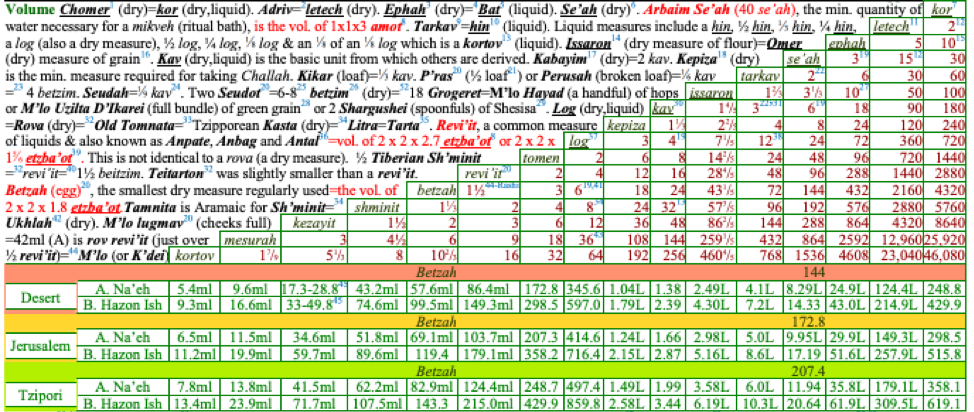
In order to understand R. Nachman’s suggestion, we must first establish the size of a kor, a Talmudic measurement. In “Talmudic Weights and Measures of the Second Commonwealth,” (Fall, 1973) Tarkav Ephah, a professor of liquid measurements in the Sassanian period at Bristol University argues that a kor is a dry and liquid equal to 720 log. It takes four log to make a kab. In other words, you have to eat a lot of salt to get smarter, which may very well be a problem given today’s health conscience low-sodium diets. This may explain our own rampant stupidity.
happy purim from Talmudology