Shekalim 14 ~ Love of The Other, The Drowned Duke, and Two People named Pinchas

On this page of Talmud we read about the miraculous recovery of a young lady who had drowned. It all begins with “a certain pious man who would dig pits, wells, and caves to collect water for passersby. Once his daughter was passing over a river for the purpose of marriage, and the river washed her away. And all the people came to console him, but he refused to accept their condolences.” The story continues:

שקלים יד, א

עָאַל רִבִּי פִינְחָס בֶּן יָאִיר לְגַבֵּיהּ בָּעֵי מְנַחַמְתֵּיהּ וְלָא קִבֵּל עֲלוֹי מִתְנַחֲמָה. אֲמַר לוֹן. דֵּין הִינּוֹ חָסִידֵיכוֹן. אָֽמְרִין לֵיהּ. רִבִּי. כָּךְ וְכָךְ הָיָה עוֹשֶׂה וְכָךְ וְכָךְ אִירַע

אָמַר. אֵיפְשַׁר שֶׁהָיָה מְכַבֵּד אֶת בּוֹרְאוֹ בַמַּיִם וְהוּא מְקַפְּחוֹ בַמַּיִם. מִיַּד נָֽפְלָה הֲבָרָה בָעִיר. בָּאָת בִּתּוֹ שֶׁלְאוֹתוֹ הָאִישׁ. אִית דְּאָֽמְרִין. בְּשׁוּכְתָּא אִיתְעֲרִײַת. וְאִית דְּאָֽמְרִין. מַלְאַךְ יָרַד כִּדְמוּת רִבִּי פִינְחָס בֶּן יָאִיר וְהִצִּילָהּ

Death of Leoplold of Brunswick.jpg

Rabbi Pinchas ben Yair came to visit him to console him, but he refused to accept condolences even from Rabbi Pinchas. Rabbi Pinchas said to the people of that community: Is this your righteous man, who will not be consoled and accept God’s judgment? They said to him: Rabbi, he would perform such and such acts of righteousness, by supplying water, and yet such and such tragedy, the drowning of his daughter, occurred to him.

Rabbi Pinchas said: Is it possible that he honors his Creator with water, and yet his Creator strikes him with water? Immediately thereafter, a report spread throughout the city: The daughter of that righteous man has arrived, as she did not actually drown. Some say she grasped a branch and pulled herself out of the river, and some say an angel in the form of Rabbi Pinchas ben Yair descended from heaven and rescued her.

It is a sad story with a happy ending. God could never let the daughter of a righteous person die. That was inconceivable. And certainly not by drowning, since her father was charitable with water. Let’s put aside for now the questions this passage raises about theodicy. Instead, let’s turn to another drowning event that occurred fifteen-hundred years later. It too involves the drowning death of innocent person, and by a remarkable coincidence, also involved a person named Pinchas.

Pinchas Hurewitz and his Sefer HaBerit

In 1797 a new Hebrew encyclopedia was published anonymously in Brno, which is now in the Czech Republic. It was called Sefer Haberit (The Book of the Covenant). It has a simple structure and is divided in two parts.  The first part, consisting of some two hundred and fifty pages, is a scientific encyclopedia, addressing what the author calls human wisdom (chochmat adam) and focuses on the material world. It deals with topics like geography, astronomy, biology and medicine. The second part, shorter than the first at only one hundred and thirty pages, is an analysis of divine wisdom (hochmat elohim), and focuses on the spiritual.  This part was written to explain a kabbalistic work called שערי קדושה (The Gates of Holiness) a mystical book written by the famous kabbalist Chaim Vital, who was himself a student of the even more famous Isaac Luria, known as the Ari.  

As we mentioned, the book was published anonymously, but in later editions the author revealed his name, though not much else. It was Pinchas Hurwitz, about whom few details are known. He appears to have been born in Vilna, Poland in 1765, and received a traditional Jewish education, but was forced to leave his studies at an early age as a result of both the dire economic situation and the physical threats then facing Polish Jewry.  He probably arrived in Frankfurt before his twentieth birthday and while there he met a number of maskilim and picked up a working knowledge of German. He then moved to Holland, where he must have endeared himself to many rabbinic leaders, before crossing to England, where again he met the leading Jewish religious intellectuals of the day. The most prominent of these was Eliakim Gottchalk Hart, an important Jewish intellectual and a wealthy jeweler, who provided financial support for Hurwitz during his time in England. Despite what appears to have been a comfortable time both physically and intellectually in London, for reasons that are not known Hurwitz returned to Poland, all the time working on his magnum opus.  In 1797 he finally published Sefer Haberit anonymously, and spent many years peddling his work from town to town.  It had taken a decade of travel and research, but Hurwitz understood the need of the hour and produced a work that was, and would remain, in great demand.

The Popularity of Sefer Haberit

In 1934, while studying at the famous yeshiva of the  Chofetz Chaim in Radon, Poland, a yeshiva bochur whose name is only known to us as Henech entered a competition in which he wrote an essay about his life. Here is part of what this twenty one year old student had to say:

I obtained a copy of the Book of the Covenant [Sefer Haberit]…and virtually committed it to memory, reading it in the bathroom for fear of being caught and confronted with a whole new series of accusations.  The Book of the Covenant gave me a sound foundation in anatomy, physics, geography and the like.  I had a weakness, however, for showing off my scientific learning to my friends (without telling them about its source). This led to my becoming known as a person of wide-ranging knowledge, and I was sought after by those who were drawn to the Haskalah.

Here then is testimony about the popularity Sefer Haberit as a work of science in pre-war Poland, over one hundred and thirty years after it was first published.  This book is still readily available modern Jerusalem. I bought my own modern edition of Sefer Haberit in a small bookshop in Meah Shearim in Jerusalem.  I had asked the owner if he might perhaps have a copy of the work.  Without moving from his position behind the counter he reached behind his shoulder and handed me a copy that had been published in Jerusalem in 1990. I not only appreciated the clear type and crisp pages of this modern edition, but was struck by the ease with which it had been obtained. 

In fact since it first appeared in 1797 Sefer Haberit has been published in over thirty editions. It was published in 1797, 1801 (twice, as bootlegged printings), 1807, and thirteen more times before the end of that century. It was published in 1900, 1904, 1911, 1913 (by three different publishers), 1920, 1960 and 1990. In addition it was published in Yiddish in 1898, 1929 and 1969, and in Ladino in 1847. This remarkable print run would be the envy of any modern author.

Isaac Bashevis Singer recalled that not only did he read Sefer Haberit as a child, but that his mother also was an avid reader of the work.

There were a number of holy books in my father’s bookcase in which I soulght answers to my questions.  One was The Book of the Covenant [Sefer Haberis] which I believe was already at that time a hundred years old and full of scientific facts.  It described the theories of Copernicus and Newton, and, it seems, the experiments of Benjamin Franklin as well.  There were accounts of savage tribes, strange animals, and explanations of what made a train run and a balloon fly.  In the special section dealing with religion were mentioned a number of philosophers. I recall that Kant already figured in there too.  The author, Reb Elijah of Vilna, a pious Jew, proved how inadequate the philosophers were in explaining the mystery of the world.  No research or inquiry, he wrote, could reveal the truth.  The author of The Book of the Covenant  spoke of nature too, but with the constant reminder that nature was something God had created, not a thing that existed of its own power.  I never tired of reading this book.

Sefer Haberit and LOve of the Other

Perhaps the most important section of this entire book is a long chapter – some 50 pages in all - called אהבת רעים – Ahavat Reim - The Love of Others.   In this section, Horowitz set out to re-teach a command that is, in his words עיקר דרך הקדוש ושורש כל התורה הקדושה - the entire point of attaining holiness and the foundation of the entire holy Torah.  In fact this section follows another called דרך הקדוש- The Way of Holiness, and was seen as the key to attaining religious heights that Horowitz had previously described. In this chapter he described a number of ways in which love of the other impacts our daily lives: in loving our families and in respecting the government, in being a model citizen and not cheating on our taxes, in treating our workers with the appreciation they deserve and by condemning domestic abuse, whether physical or verbal. 

Intro.jpg

The nature of loving others is for a person to love every kind of person, irrespective of their nationality or  language, but simply because the person is a human, formed in the image of God, and is someone involved in the development of humanity.  This involvement can be as a builder or farmer or businessman or merchant or or other kinds of job, like one who is an intellectual and investigate the world…for through these paths the world exists as it should, and is completed as God created it to be done, and as he made the Earth as “he saw that it was very good” for all of humanity…

 The Drowning Death of Prince Leopold

As any good teacher knows, stories have a far greater teaching impact than bland statements or impersonal statistics. So Horowtiz now gave an example of the importance of brotherly love. It was in fact the outstanding story of love of the other of his time, and it concerned the drowning death of Prince Leopold that had occurred in 1785. Here it is. Read it slowly. There is a lot to appreciate.

Death of Leopold 1.jpg

The question is whether we are naturally inclined to help others.  In answer to this, if we consider the nature of a person we will find that it is naturally inclined and desires to do good in the eyes of others, and tries to influence others to do so too; to have compassion on the poor, to rescue the oppressed, to release those who are imprisoned, to bandage the wounded , to heal the sick, to save those who are dying, share his knowledge with others, to teach students and instruct people in the correct way to behave and so on…

Experience has already demonstrated that on many occasions, even royalty and nobility have put themselves into mortal danger, battling fire and water in order to save others…as happened in Frankfurt on the Eder on the 17th of Iyyar 5545 (1785).

At that time the river bust its banks and swept away a number of villages and the houses in them.  In one village there were a number of wooden branches and window frames that were floating here and there, and a number of bodies of those who had drowned. Floating there was a tree trunk and on it was a person shouting to those on the shore to save him, but it was not possible to do so because of the strong current. 

When the nobleman Duke Leopold, Commandant of the city, noted this he immediately commanded any one who could do so to sail over to save the person. No one was able to reach the person, and they told the Duke it was not possible to reach him because of the strength of the current and the size of the waves.

And when the Duke heard this, he took it upon himself “I will sail over.” He put his life in his hands, and went over to save the life of that person. He had not reached half way across the river when his boat capsized and was swept away by the huge waves.  The righteous Duke was lost and could not be saved.  So we see that there is a natural inclination to help others.

The death of Prince Leopold gripped the imagination of Horowitz. It was the sine qua non of the love that one human being could and indeed should have for another.  Its importance was not only noticed by this Jewish author from Vilna. The great German poet Goethe wrote a poem about the incident:

Thou wert forcibly seized by the hoary lord of the river

Holding thee, even he shares with thee his streaming domain

Calmly sleepest thou near his urn as it silently trickles

Till thou to action art aroused, waked by the swift-rolling flood

Kindly to be to the people, as when thou still were a mortal

Perfecting that as a god, which thou didst fail in, as a man

And in the British Museum is this wonderful print called La Mort du Prince Leopold de Brunswick.

Death of Leoplold of Brunswick.jpg

Remember we are talking about eighteenth century Europe, which was not exactly a paradise for the peasants.  The constitutional monarchy that had ruled France for three centuries had not yet just been challenged by the French Revolution, and the American War of Independence had ended barely two years earlier.   And yet here was a nobleman who, without hesitation, gave his life to save an unknown commoners. It was this example that led Horowitz to conclude that not only was Love of the Other a commandment from the Torah; it was also a חוב מצד הטבע, a natural law.

Horowitz not only learned from the action of this righteous Gentile.  He extended Love of the Other to include non-Jews in a radical re-interpretation of the word רעיך -the other.   Normally translated as your fellow, Horowitz took it to mean that all contemporary Gentiles were included in this description.  He ruled that Gentiles were not idol worshippers, and also reinterpreted the verse that we read from the book of Jeremiah towards the end of the Passover Seder: :  שפוך חמתך על הגוים אשר לא ידעוך -“Pour out your wrath on the nations who do not know you.”  On whom should God pour out his anger? Only on those “אשר לא ידעוך” - who do not know Him. 

Yes, all are created equal. or not

Having established this inclusivity, Horowitz wrote about the way in which we should behave:

     על כן איש מחוייב להתנהג עם כל אדם וכל משפחות האדמה בטוב וביושר ובאחוה 

And so every person is obligated to act towards every person and every group on earth with goodness, with honesty, and with friendship

Note this language-we are required – מחוייב – to extend our love to all of humanity, irrespective of their race or ethnicity. To see how different this approach is, let’s compare it to a Jewish text that was recently published in the USA, where the Declaration of Independence states as a self evident truth that “all men are created equal, that they are endowed by their Creator with certain unalienable Rights, that among these are Life, Liberty and the pursuit of Happiness.”  The contemporary Jewish book I am referring to is volume two of the Rennert edition of The Encyclopedia of Taryag Mitzvoth. This Encyclopedia has excluded anyone who is not Jewish from love of the other.

 
Explanation.jpg
 

In doing so, the Rennert Encyclopedia was following one school of halakhic thought in which the phrase “your fellow” is interpreted as “your fellow - in observing the commandments.” But there are lots of Jewish texts available to explain the details of the biblical command to love the other. Why not choose one with a maximalist reading? Surely we would want that from other religious traditions? If so, we must demand it from our own.

 
Only applies to Jews.jpg
 

We began with a story from the Talmud in which Rabbi Pinchas believed it was inconceivable that God could act in a way that was cruel or unjust. Today we know that cruelty and injustice are part and parcel of our fractured society. Racial and ethnic bias and discrimination are still all too common in a country in which all are supposed to have been created equal. We need more thinkers like the other Pinchas, Pinchas Hurwitz who read the command to love the other in a maximalist way. What better way to memorialize the death of Prince Leopold is there than follow this dictum:

     על כן איש מחוייב להתנהג עם כל אדם וכל משפחות האדמה בטוב וביושר ובאחוה 

And so every person is obligated to act towards every person and every group on earth with goodness, with honesty, and with friendship

Print Friendly and PDF

Shekalim 13a-b ~ The Cohen and his Stomach Problems

On page 13 of Shekalim we read about the fifteen Temple officers and the administrators who held them:

שקלים טו, א

…אֵילּוּ הֵן הַמְמוּנִּין שֶׁהָיוּ בַּמִּקְדָּשׁ. יוֹחָנָן בֶּן פִּינְחָס עַל הַחוֹתָמוֹת. אֲחִייָה עַל הַנְּסָכִים. מַתְיָה בֶּן שְׁמוּאֵל עַל הַפְּייָסוֹת…בֶּן אֲחִייָה עַל חוֹלֵי מֵעַיִם

These are the officials who served in specific positions in the Temple: Yochanan ben Pinchas was responsible for the seals. Achiyya was responsible for the libations, while Ben Achiyya was responsible for the treatment of those Cohanim who had an intestinal disorder…

The Talmud then explains the nature of these intestinal disorders:

שקלים טו, ב

בֶּן אֲחִייָה עַל חוֹלֵי מֵעַיִם. עַל יְדֵי שֶׁהָיוּ הַכֹּהֲנִים מְהַלְּכִין יְחֵיפִים עַל הָרִצְפָּה וְהָיוּ אוֹכְלִין בָּשָׂר וְשׁוֹתִין מַיִם הָיוּ בָאִין לִידֵי חוֹלֵי מֵיעַיִם. וַהֲוָה יְדַע אֲהֵײ דֵין חֲמַר טַב לִמְעַייָא. וְהֵיי דֵין חֲמַר סְמַס לִמְעַייָא

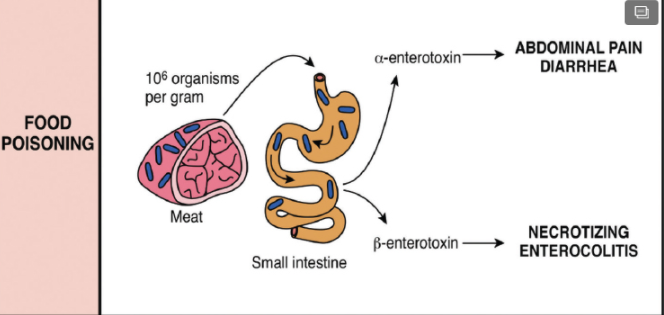
Clostridial diarrheal infections. Meat dishes left to cool at room temperature grow large numbers of clostridia. When contaminated meat is ingested, C. perfringens types A and C produce alpha-enterotoxin in the small intestine during sporulation, ca…

Clostridial diarrheal infections. Meat dishes left to cool at room temperature grow large numbers of clostridia. When contaminated meat is ingested, C. perfringens types A and C produce alpha-enterotoxin in the small intestine during sporulation, causing abdominal pain and diarrhea. Type C also produces beta-enterotoxin botulism. From Harwood-Nuss’ Clinical Practice of Emergency Medicine. Kluwer 2021. Chap 115.

Ben Achiyya was appointed to treat those priests who suffered from intestinal disease: Since the priests would walk barefoot on the floor [even when it was cold, as their feet had to be in contact with the stones of the Temple floor,] and since they would eat a lot of meat from the offerings and drink a lot of water, they would contract intestinal disease. And Ben Achiyya knew that which particular type of wine was good for healing the intestines, and which type of wine was would be bad for the bowels.

Pity the Poor Cohen

It would seem then, that an upset stomach was one of the perils of the job for a Cohen called to service in the Temple. Elsewhere we have noted that the tribe of the Cohanim (pl. of Cohen) were likely to suffer from a number of different ailments including vertical diplopia (most commonly caused by damage to the fourth cranial nerve, called the trochlear nerve), nystagmus, liver disease (with gynecomastia, ascites and testicular atrophy) and depression. Some also had syndactyly, a condition in which some of the fingers or toes are fused together. That condition is genetic, but some of the other Cohen associated ailments can be explained by chronic alcohol misuse.

The causes of Gastroenteritis

It would seem that when they came to Jerusalem to serve, the Cohanim would often contract gastroenteritis, an inflammation of the gastrointestinal tract. It is a common set of conditions, and I must have treated many hundreds of people with the condition over my decades as an emergency physician (though even when working in Jerusalem, I never once made the association with the Temple service, nor asked if the patient has the risk factor of being a Cohen. Woops). The patient feels weak, and there is vomiting and loose or watery diarrhea. If the patient does not (or cannot) drink enough fluids, she can become dehydrated, and feel dizzy. In most cases the condition is self-limiting, and lasts only a day or so.

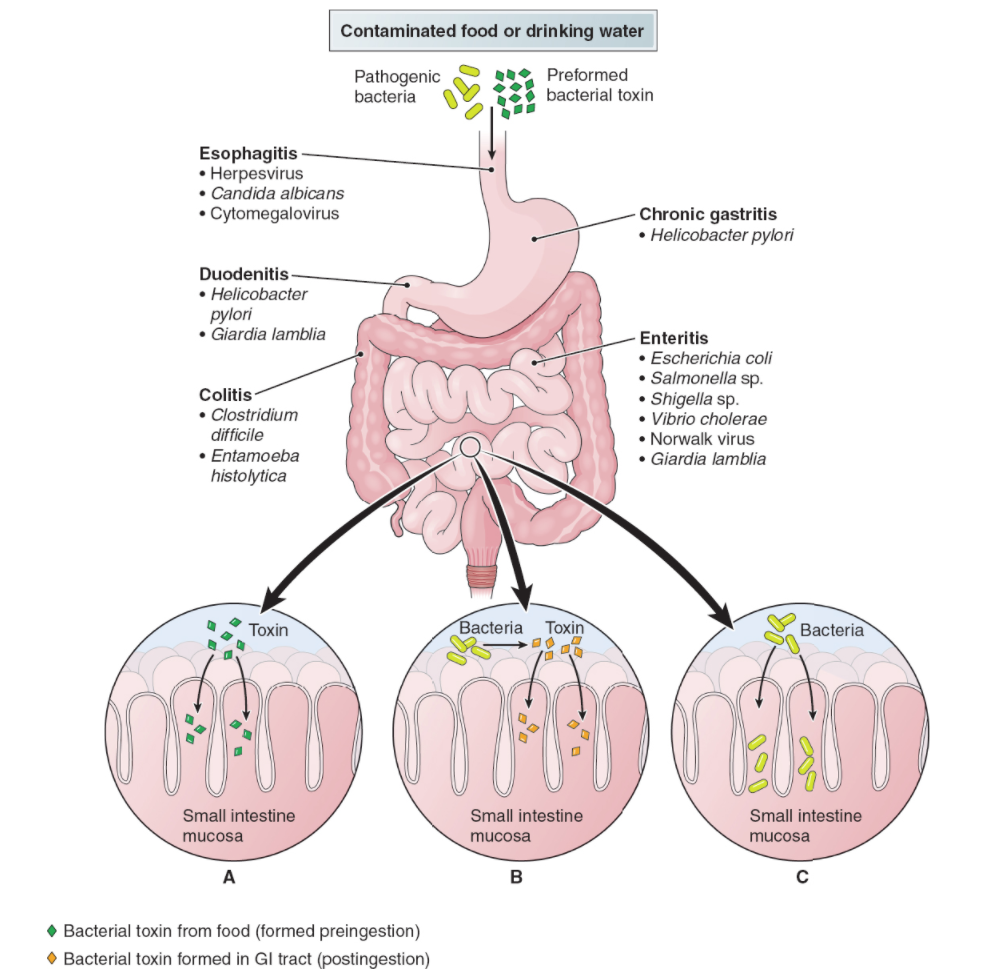
There are dozens and dozens of causes of gastroenteritis, most of which are viral. Sometimes the infectious agent produces a toxin on foods which is then ingested. In other cases the toxin is produced once the virus or bacteria have been ingested, though it doesn’t make much difference to the patient in the ER. Or the Cohen in the Temple.

Mechanisms of infectious diarrhea illness. Note that pathogens can produce an enterotoxin in food prior to ingestion. That is what gives you food poisoning. They can also produce a toxin in the intestines after ingestion, which can cause a non-blood…

Mechanisms of infectious diarrhea illness. Note that pathogens can produce an enterotoxin in food prior to ingestion. That is what gives you food poisoning. They can also produce a toxin in the intestines after ingestion, which can cause a non-bloody diarrhea (e.g., V. cholerae) or bloody diarrhea (e.g., C. difficile). From From Harwood-Nuss’ Clinical Practice of Emergency Medicine. Kluwer 2021. Chap 115.

And here, for your delight is a list of some of the agents that cause gastroenteritis, and which Ben Achiyya would have had to treat. With wine.

F=Fever, AP= Abdominal Pain, NV=Nausea and vomiting, BD= Blood diarhhea. From From Harwood-Nuss’ Clinical Practice of Emergency Medicine. Kluwer 2021. Chap 159.

F=Fever, AP= Abdominal Pain, NV=Nausea and vomiting, BD= Blood diarhhea. From From Harwood-Nuss’ Clinical Practice of Emergency Medicine. Kluwer 2021. Chap 159.

Walking Barefoot, Eating meat and Gastroenteritis

In today’s page of Talmud, the upset stomachs suffered by the Cohanim is blamed on three things: walking barefoot, eating meat and drinking water. Let’s take a look and figure out if what, culpability if any, each of these had.

  1. Walking Barefoot - מְהַלְּכִין יְחֵיפִים עַל הָרִצְפָּה

    Can walking barefoot lead to gastroenteritis? No. So that is easy.

  2. Eating Meat - אוֹכְלִין בָּשָׂר

    Is there a relationship between eating meat and gastroenteritis? Why yes, certainly there is. In the table above you can see that a bacteria called Yersinia is a common etiological agent. Among its favorite hiding places are raw and undercooked meat, especially if that meat was contaminated with urine or feces. According to the CDC, “Y. enterocolitica causes almost 117,000 illnesses, 640 hospitalizations, and 35 deaths in the United States every year. Children are infected more often than adults, and the infection is more common in the winter.” Another bacteria that can cause a meat related enteritis is salmonella (though it is more commonly associated with eggs and poultry). As the World Health Organization likes to remind us:

    Salmonella bacteria are widely distributed in domestic and wild animals. They are prevalent in food animals such as poultry, pigs, and cattle; and in pets, including cats, dogs, birds, and reptiles such as turtles. Salmonella can pass through the entire food chain from animal feed, primary production, and all the way to households or food-service establishments and institutions.

  3. Drinking Water - וְשׁוֹתִין מַיִם

    Contaminated drinking water is a well-established and still very prevalent cause of acute gastroenteritis. In a review of the problem published in Water and Health, the authors note that “transmission by food or water has been documented for astroviruses, caliciviruses, rotaviruses, and norovirus…Conservative estimates put diarrhea in the top five causes of deaths worldwide with 3.5 to 5 million deaths every year and most occurring in young children in non-industrialized countries. According to the World Health Organization (WHO), diarrheal diseases account for 4.1 % of the total DALY global burden of disease of which 88% is attributable to unsafe water supply, sanitation, and hygiene.”

    In tractate Yoma (19a) we learn that all of the water in the Temple came from but a single well, known as the בור הגולה – “The Well of the Diaspora.” That was a dangerous practice since should it become contaminated, everyone who drank from it could become sick. It would have been better (from a public health perspective) for some of those who served in the Temple to have used a second water source.

    Here are just some of the the nasty pathogens that can contaminate the water supply.

From Griffiths, J. Waterborne Diseases. In The International Encyclopedia of Public Health, 2nd edition, Volume 7, 395.

From Griffiths, J. Waterborne Diseases. In The International Encyclopedia of Public Health, 2nd edition, Volume 7, 395.

The Prohibition against eating Sacrificial Meat left out for too long

It is interesting to note that there is a biblical prohibition called Nossar (נותר) against eating sacrificial meat outside of its proscribed time. The Torah outlines the prohibitions in several places. Here are some of them:

The Paschal Lamb (Ex. 12.10):

וְלֹא־תוֹתִ֥ירוּ מִמֶּ֖נּוּ עַד־בֹּ֑קֶר וְהַנֹּתָ֥ר מִמֶּ֛נּוּ עַד־בֹּ֖קֶר בָּאֵ֥שׁ תִּשְׂרֹֽפוּ׃

You shall not leave any of it over until morning; if any of it is left until morning, you shall burn it.

The Festival Offering (Deut. 16:4)

וְלֹא־יָלִ֣ין מִן־הַבָּשָׂ֗ר אֲשֶׁ֨ר תִּזְבַּ֥ח בָּעֶ֛רֶב בַּיּ֥וֹם הָרִאשׁ֖וֹן לַבֹּֽקֶר׃

For seven days no leaven shall be found with you in all your territory, and none of the flesh of what you slaughter on the evening of the first day shall be left until morning.

The Thanksgiving Offering (Lev. 22:30)

בַּיּ֤וֹם הַהוּא֙ יֵאָכֵ֔ל לֹֽא־תוֹתִ֥ירוּ מִמֶּ֖נּוּ עַד־בֹּ֑קֶר אֲנִ֖י ה׳׃

It shall be eaten on the same day; you shall not leave any of it until morning: I am the LORD.

The Shelamim Offering (Lev. 7:15)

וּבְשַׂ֗ר זֶ֚בַח תּוֹדַ֣ת שְׁלָמָ֔יו בְּי֥וֹם קָרְבָּנ֖וֹ יֵאָכֵ֑ל לֹֽא־יַנִּ֥יחַ מִמֶּ֖נּוּ עַד־בֹּֽקֶר׃

And the flesh of his thanksgiving sacrifice of well-being shall be eaten on the day that it is offered; none of it shall be set aside until morning.

Meat that is properly roasted is less likely to contain pathogens or toxins that cause gastroenteritis. But in a Middle-Eastern climate and without refrigeration, that meat would very quickly spoil and become contaminated with all sorts of pathogens. From the perspective of good food hygiene, disposing of it within a few hours of cooking was an extremely important measure to prevent the kinds of illnesses the Cohanim seemed to catch all too often. And the while the wine that Ben Achiyya could not cure any gastroenteritis, at least its alcohol content meant that it was itself not likely to contain the pathogens found in natural water supplies.

From the very
beginning there has been something unhealthy about these priestly aristocracies and in the customs dominant there, which are turned away from action and are partly brooding and partly emotionally explosive, resulting in the almost inevitable bowel complaints and neurasthenia which have plagued the clergy down the ages
— Friedrich Neitzsche. On the Genealogy of Morality. Cambridge University Press 2007. p16.

Today, we take proper food hygiene for granted, and are fastidious about washing both our hands and our food. We expect meat and vegetables to be free of bacteria, and when there are outbreaks of food-born illnesses they often make the national news, like one did just two days ago. We take such luxuries for granted, but as today’s page of Talmud reminds us, we should not do so. For much of the world’s population, clean drinking water and plentiful safe food are still not guaranteed. Be grateful for your plenty, and be grateful that you did not need to serve as a Cohen in the Temple.

Print Friendly and PDF

Shekalim 10b ~ Correcting a Sefer Torah

In today’s page of Talmud we learn that a number of important communal and religious tasks were paid for by Temple funds. These included wages for teachers and kashrut inspectors, and those who were tasked with keeping all the Torah scrolls intact.

שקלים י, ב (4:2)

רִבִּי אָחָא רִבִּי תַנְחוּם בַּר חִייָה בְשֵׁם רִבִּי שִׂמְלַאי. מַגִּיהֵי סֵפֶר הֶעֲזָרָה נוֹטְלִין שְׂכָרָן מִתְּרוּמַת הַלִּשְׁכָּה

Rabbi Acha said that Rabbi Tanchum bar Chiyya said in the name of Rabbi Simlai: The proofreaders of the Torah scroll that was kept in the Temple courtyard collect their wages from the collection of the chamber.

unnamed.jpeg

According to the medieval commentator Rashi, there was a single Sefer Torah that dated from the time of Ezra the Scribe, and it was against this editio princeps that all others were compared, and when needed, corrected. (Rashi’s comment depends on whether the reading in the Shekalim is “The Torah in the Azarah” (Courtyard of the Temple) or “The Torah of Ezra.”)

רשי מועד קטן יח,ב

אפילו בספר עזרא. ס"ת של עזרא ואני שמעתי עזרה בה' ופי' ספר מוגה היה בעזרה שממנו היו מגיהים כל ספרי גולה

In another tradition, the Sefer Torah in question dated not from Ezra the Scribe, but from Moses himself.

רשי בבא בתרא, יד, ב

ספר עזרה.ספר שכתב משה ובו קורין בעזרה פרשת המלך בהקהל וכהן גדול ביה"כ

The immutability of the text of the Torah has long been a cherished principle of Judaism. It is nice to think that all of our Torah scrolls are identical. But they’re not. In fact, you could not read from the very Sefer Torah used by Rashi himself in a synagogue today, for it is possul (legally invalid). Want to know why? Read on…

The Hardest Rashi in the Torah

It all begins with a rather innocuous comment made by Rashi in explaining a verse in Exodus that describes how God and Moses communicated.

שמות פרק כה פסוק כב

וְנוֹעַדְתִּי לְךָ שָׁם וְדִבַּרְתִּי אִתְּךָ מֵעַל הַכַּפּרֶת מִבֵּין שְׁנֵי הַכְּרֻבִים אֲשֶׁר עַל אֲרן הָעֵדֻת אֵת כָּל אֲשֶׁר אֲצַוֶּה אוֹתְךָ אֶל בְּנֵי יִשְׂרָאֵל

There I will meet with you, and I will impart to you—from above the cover, from between the two cherubim that are on top of the Ark of the Testimony—all that I will command you concerning the Israelite people. 

רש"י שמות פרק כה פסוק כב

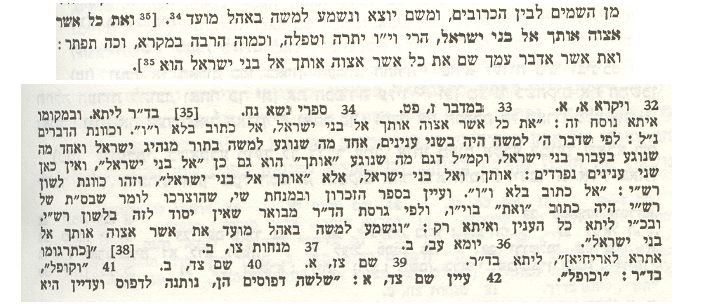
ואת כל אשר אצוה אותך אל בני ישראל - הרי וי"ו זו יתירה וטפלה, וכמוהו הרבה במקרא, וכה תפתר ואת אשר אדבר עמך שם, את כל אשר אצוה אותך אל בני ישראל הוא

This ו of the word ואת is redundant and without import; there are many sentences similar to this in Scripture. However if you wish to explain this ו the verse must be interpreted as follows: [I shall speak with thee from above the cover] and that which (ואת) I shall speak to you will be everything I shall command thee concerning the children of Israel.

So according to Rashi, the letter vav (ו) of the word and (ואת) is redundant. The problem is, none of our Torah scrolls today have the redundant vav. They all spell the word as את, plain and simple, two letters, not three. This means that the Torah scroll Rashi was using (and presumably all of those in the area where he lived) had a different text, at least in so far as this word is concerned, and would be considered invalid for use, until that extra letter was carefully scraped off. To repeat: Rashi was using a possul Sefer Torah.

This was made clear by Berliner in his 1860 commentary on Rashi:

רשי על התורה.  הערות ובאורים ע"י אברהם ברלינר (1866), ירושלום: פלדהיים תש"ל (1970)

Screen Shot 2021-03-30 at 5.54.52 PM.png

It would seem that according to Rashi, the word את is written ואת. And this is found in the explanations of the Ibn Ezra and Chizkuni.

The Editio Princeps of Rashi 1475

Perhaps though, this is an error? Perhaps Rashi never said anything of the sort, and the comment we have of “Rashi” is corrupted? This is the explanation given by Chavel, in his own critical edition of Rashi on the Torah, published in 1982:

1982 פירוש רשי על התורה, שוול ירושלים

Screen Shot 2021-03-30 at 6.12.17 PM.png

At the end of footnote 35 Chavel concludes that “in the manuscripts [of Rashi] this reading is absent.”

Chavel may have been onto something. Here is the editio princeps of Rashi, the 1475 Regio di Calabria edition of Rashi, which was (fun fact) the very first Hebrew book ever printed. It now lives in a library in Parma: Note that it lacks all this business of an extra vav.

פירוש רשי על התורה דפוס ראשון רגי"ו די קלבריה רל"ה (1475)  הספר העברי הראשון שהופיע בדפוס, שנת הדפסתו צויינה  צילום העותק היחיד בעולם מספרית פארמה

פירוש רשי על התורה דפוס ראשון רגי"ו די קלבריה רל"ה (1475)  הספר העברי הראשון שהופיע בדפוס, שנת הדפסתו צויינה  צילום העותק היחיד בעולם מספרית פארמה

Unfortunately, Chavel’s explanation is rather problematic. First, Ibn Ezra and Chizkuni both read ואת, and second, according to Prof. Shnayer Leiman, there are at least 27 Bible manuscripts that read ואת. 

Prof. Shnayer Leiman and the Manuscript Evidence

In a booklet publication that addresses this very problematic Rashi, Prof. Leiman (Professor Emeritus of Jewish History and Literature in the Department of Judaic Studies at Brooklyn College) examined nearly thirty manuscripts. Some of them removed from Rashi anything that conflicts with the accepted text of the Torah. Others (like the Regensburg manuscript) removed the entire problematic Rashi, while still others added a marginal note to try and explain what was going on. Here are Leiman’s findings:

Screen Shot 2021-03-30 at 6.29.40 PM.png
Screen Shot 2021-03-30 at 6.30.28 PM.png

All the evidence uncovered By Leiman points to Rashi’s Torah scroll reading ואת (and so being invalid). “Based on this assumption,” he wrote, “all other readings in the manuscripts and the early printed editions can be accounted for without sophistry and hair-splitting.”

Why we do not make a blessing when writing a Sefer Torah

For some readers this is rather shocking, while others may shrug their shoulders and say, “well of course texts gets corrupted over time.” But according to Rabbi J. David Bleich of Yeshiva University, (With Perfect Faith, Ktav 1983 p365) the Eighth Principle of Maimonides affirms

not simply the validity of the mesorah, or tradition, which postulates that the Torah was transmitted by Moses, but also the belief that the Torah which is in our possession was handed down by Moses in its entirety and that no additions or changes were made at any subsequent time. The Talmud, Sanhedrin 99a, declares that denial of the divine origin of a single word or letter of the Torah is tantamount to rejection of the Torah in its entirety.

Which puts the believing Jew into rather an awkward position, since clearly the text of Rashi’s Torah was not entirely the same as ours.

Why we Cannot make a Blessing over the Writing of a new Sefer torah

The question of the authenticity of the Torah texts was raised by no less a defender of Jewish tradition than Rabbi Moses Schreiber (1762–1839) known as the Chatam Sofer. He was asked why we do not make a blessing when writing a Sefer Torah, since doing so is itself a mitzvah. His answer was simple: since the text is corrupted, we cannot be certain what it being written today conforms to the original text. Here is the original:

שו"ת חתם סופר חלק א (אורח חיים) סימן נב

שלום לתלמידי הותיק האברך מו"ה וואלף כהן נ"י

ועל דברי מכתבך פלפול ארוך שאינו נוגע לדינא הלכה למעשה לשעתו לא אוכל ליקח מועד לעיין ולהשיב מפני טרדות רבות להשיב לנצרכים הלכה למעשה, אך מ"ש מ"ט לא מברכים על מ"ע של כתיבת ס"ת לרמב"ם [ה' ס"ת פ"ז ה"א] ולרוב הפוסקים... יפה הרגשת:

ומה שהשיב לך רב א' הטעם שלא תקנו ברכה משום דעשיית המצוה נמשך זמן רב...

אבל לע"ד אין קושי' זו צריכה לפנים כי אילו היו חז"ל בקיאין בחסרות ויתירות היו מתקנים ברכה לס"ת אבל יען שהם עצמם לא היו בקיאין כמבואר בקידושין למ"ד ע"א דאפילו בפסוקי לא בקיאין, ועוד איכא כמה פעמים דהמסורה פליג אהש"ס וכותבים כהמסורות ולהש"ס פסול הס"ת, ותימא איכא במסכת נדה ל"ג ע"א ובתוס' ד"ה והנושא כתיב חסר וי"ו יע"ש דלדינא קיי"ל כהש"ס ולענין כתיבת ס"ת כתבינן מלא בוי"ו, ואף על גב דמהר"ם לונזאני בספר אור תורה [פ' מצורע ט"ו - י'] נדחק ליישב מ"מ דוחק הוא, ועוד ממעבירם לא תי' שלום וכהאי גונא טובא, וכיון שכן וקיי"ל ס"ת שחסר אות א' לא נקרא ס"ת כמבואר מלשון הש"ס פ' הקומץ [ל' ע"א] אפשר ס"ת חסר אות א' וכו' א"כ ממילא א"א לברך בשום אופן כנלע"ד

…there are many times when the traditional Torah text is not identical with the text cited in the Talmud…and since the rule is that a Sefer Torah that is missing even a single letter cannot be called a Sefer Torah…it is impossible to make a blessing over writing it under any circumstances.

Today’s page of Talmud demonstrates that correcting a Torah scroll with a corrupted text is not a new problem. It goes back to Rashi and a millennium before him. It was a problem that needed fixing even when the Temple in Jerusalem stood.

Want More? You may also like this post: How Many Letters are There in a Sefer Torah?

Print Friendly and PDF

The 2021 Talmudology Passover Reader

Pesach (Passover) begins this Saturday evening, March 27, 2021.

For your delight we present The 2021 Talmudology Passover Reader. It may be downloaded at the links below.

Read, share, and enjoy.

And a Happy Passover from Talmudology

 
Matzah-Avital-Pinnick1.jpg
 
Print Friendly and PDF