
דברים 32:13
וּלְיוֹסֵף אָמַר מְבֹרֶכֶת יְהֹוָה אַרְצוֹ מִמֶּגֶד שָׁמַיִם מִטָּל וּמִתְּהוֹם רֹבֶצֶת תָּחַת׃
And of Joseph he said:
Blessed of God be his land
With the bounty of dew from heaven,
And of the deep that couches below
In this penultimate chapter of the Torah, Moshe blesses each of the Tribes of Israel. On reaching the Tribe of Joseph, Moshe asks that they be blessed with “the bounty of the dew from heaven” - “מְבֹרֶכֶת ה׳ אַרְצוֹ מִמֶּגֶד שָׁמַיִם מִטָּל” Dew is not something we think about very often, and its appearance was long considered a mystery, until a British physician named William Charles Wells spent thirty years solving it.
Dew In the Talmud
The Talmud takes dew very seriously, and in tractate Taanit Rabbi Hanina makes a curious claim: dew never ceases to appear, and the winds never cease to blow - אָמַר רַבִּי חֲנִינָא: לְפִי שֶׁאֵין נֶעֱצָרִין. It is for this reason that there is no requirement to ask them of God in the silent prayer known as the Amidah, (although they may mentioned, for good measure).
But in the Book of Kings, Elijah tells the wicked King Ahab that God will withhold the rain and the dew:
מלאכים א, 17:1
וַיֹּאמֶר אֵלִיָּהוּ הַתִּשְׁבִּי מִתֹּשָׁבֵי גִלְעָד אֶל אַחְאָב חַי ה׳ אֱלֹהֵי יִשְׂרָאֵל אֲשֶׁר עָמַדְתִּי לְפָנָיו אִם יִהְיֶה הַשָּׁנִים הָאֵלֶּה טַל וּמָטָר כִּי אִם לְפִי דְבָרִי
And Elijah the Tishbite, who was of the settlers of Gilead, said to Ahab: As the Lord, the God of Israel, lives, before whom I stand, there shall be no dew or rain in these years but according to my word.
The Talmud explains that there are two kinds of dew: regular dew that appears every day, and a second dew that only appears as a blessing. It was this second kind of dew, which helps the crops to grow, that was being witheld as a punishment. But, rather sneakily, the two dews are indistinguishable, so when God ended the drought of rain, he did not re-introduce the second type of dew, since its presence is imperceptible. In other words, a blessing that you cannot tell from the background is a blessing that does not need announcing. Or something like that.
תענית ג ב
אֲפִילּוּ טַל בְּרָכָה נָמֵי לָא אָתֵי ... מִשּׁוּם דְּלָא מִינַּכְרָא מִילְּתָא
Elijah told Ahab that even the dew of blessing would not come... [and God did not restore it afterward] because the matter is not recognizable. (Taanit 3b)
So Where does the dew come from?
For many centuries, the origin of dew was completely mysterious. The answer took a long time to arrive. Aristotle believed that there was a kind of dew equivalent of the rain cycle. As outlined in his Meteorolgy (Book I, 9-11), the sun's heat lifts moisture from the earth as vapor. Some of the vapor does not rise high during the day, because the heat lifting it is weak relative to the amount of moisture. When it cools and descends at night, it is called dew.
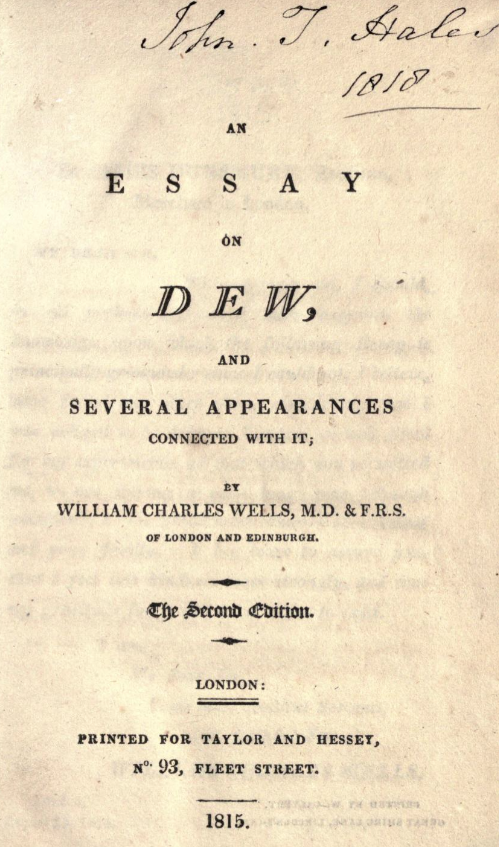
For all his fame, Aristotle’s claims were usually wrong. This one was no different, although it stayed around for a couple of millennia; until 1814 to be precise. The man who finally settled the question was not a meteorologist. He was a physician named William Charles Wells, who practiced St. Thomas's Hospital in London, and in 1812 he began, in his own words, to study dew “with great patience.” In 1814 he published An Essay on Dew, and Several Appearances Connected with It, which won him the Royal Society's Rumford Medal. The physicist John Tyndall later called it "a model of wise enquiry and lucid exposition," and it has been described as the “first foundational paper in modern climate science.”
“If, in the course of the night, the weather, from being calm and serene, should become windy and cloudy, not only will dew cease to form, but that which had previously formed, will either disappear, or diminish considerably.”
Wells' Experiments
Armed with thermometers, wool, paper, string, wood shavings and a friend's suburban lawn, Wells set out to discover how dew forms. He concluded that it is neither invisible rain falling from heaven nor sweat from plants. Rather, it is condensation from air in contact with objects that have cooled by radiating their heat into a cloudless night sky. It forms best on calm, clear nights. Clouds interrupt the radiation, and cloud cover reduces or stops dew. Dark materials and poor conductors of heat collect more dew than pale ones and good conductors. Fine shavings of wood collected more dew than a thick piece of the same wood. Metals, which cool slowly, attract much less.
So rain and dew are intimately connected. Rain needs clouds; dew needs their absence. The Talmud noticed that dew behaves differently from rain, even if it lacked a mechanism to explain why. Strictly speaking, dew is not "never withheld." It depends on clear, still nights, and it will not form under cloud cover or in wind. But look at what the Gemara actually does. It places dew in the same category as wind and groups both with things that are not withheld. And it distinguishes dew from clouds, which it says can be withheld in the later part of the rainy season.
And what of the verse's claim that dew comes "from heaven"? Wells showed that dew does not fall. Rather, it forms in place, from the moisture in the air at ground level. But that is a physicist's quibble. The sky is what cools the ground, so perhaps, after all, the dew does come from heaven.
A Note on Gideon's Fleece
Readers of the ספר שופטים (The Book of Judges) will recall Gideon's famous test. While rallying the Tribes of Israel to join his fight against Ba’al, Gideon asks God for a sign he will be victorious: that a fleece left outside be wet with dew while the ground stays dry. And that’s what happens. Wells's finding that different materials collect very different amounts of dew makes that outcome easy to imagine for a woolly object. Not satisfied, Gideon asks for a different (harder?) miracle: that the fleece now remain dry while the ground became wet with dew. Now that’s much harder to explain, and so, I suppose, it was a really convincing sign.
שופטים 6:36-40
וַיֹּאמֶר גִּדְעוֹן אֶל־הָאֱלֹהִים אִם־יֶשְׁךָ מוֹשִׁיעַ בְּיָדִי אֶת־יִשְׂרָאֵל כַּאֲשֶׁר דִּבַּרְתָּ׃
הִנֵּה אָנֹכִי מַצִּיג אֶת־גִּזַּת הַצֶּמֶר בַּגֹּרֶן אִם טַל יִהְיֶה עַל־הַגִּזָּה לְבַדָּהּ וְעַל־כל־הָאָרֶץ חֹרֶב וְיָדַעְתִּי כִּי־תוֹשִׁיעַ בְּיָדִי אֶת־יִשְׂרָאֵל כַּאֲשֶׁר דִּבַּרְתָּ׃
וַיֹּאמֶר גִּדְעוֹן אֶל־הָאֱלֹהִים אַל־יִחַר אַפְּךָ בִּי וַאֲדַבְּרָה אַךְ הַפָּעַם אֲנַסֶּה נָּא־רַק־הַפַּעַם בַּגִּזָּה יְהִי־נָא חֹרֶב אֶל־הַגִּזָּה לְבַדָּהּ וְעַל־כל־הָאָרֶץ יִהְיֶה־טָּל׃
וַיַּעַשׂ אֱלֹהִים כֵּן בַּלַּיְלָה הַהוּא וַיְהִי־חֹרֶב אֶל־הַגִּזָּה לְבַדָּהּ וְעַל־כל־הָאָרֶץ הָיָה טָל׃
וַיְהִי־כֵן וַיַּשְׁכֵּם מִמחֳרָת וַיָּזַר אֶת־הַגִּזָּה וַיִּמֶץ טַל מִן־הַגִּזָּה מְלוֹא הַסֵּפֶל מָיִם׃
And Gideon said to God, “If You really intend to deliver Israel through me as You have said, here I place a fleece of wool on the threshing floor. If dew falls only on the fleece and all the ground remains dry, I shall know that You will deliver Israel through me, as You have said.” And that is what happened. Early the next day, he squeezed the fleece and wrung out the dew from the fleece, a bowlful of water. Then Gideon said to God, “Do not be angry with me if I speak just once more. Let me make just one more test with the fleece: let the fleece alone be dry, while there is dew all over the ground.” God did so that night: only the fleece was dry, while there was dew all over the ground.
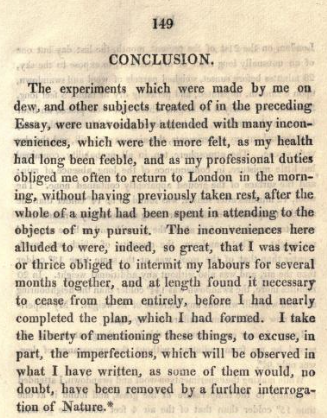
William Charles Wells. An Essay on Dew. London 1815, 149.
